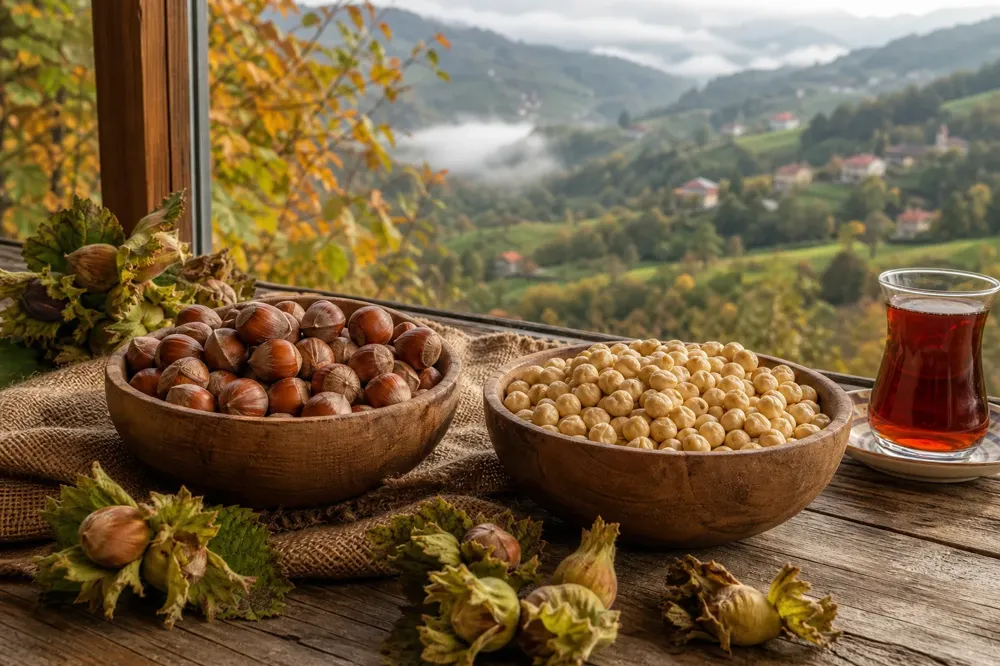
At the end of October the air turns cool in Giresun, the threshing yards empty and the new harvest of hazelnuts starts making its way into homes. At this time of year, one of the questions we hear most is this: should we buy them in the shell or shelled? Both come from the same tree, but they behave quite differently in the kitchen and the pantry.
In this post we put the two options side by side. Our aim is not to criticise either one, but to help you work out which better suits your habits.
The hazelnut's hard shell protects the kernel inside from air, light and other outside influences. The oils in hazelnuts tend to deteriorate over time as they come into contact with oxygen. Because the shell reduces this contact, in-shell hazelnuts generally stay fresh for longer than shelled ones when kept in the right conditions.
That is why in-shell hazelnuts are a sensible choice for anyone planning to store them for a long time, stocking up for winter or keeping large quantities at home.
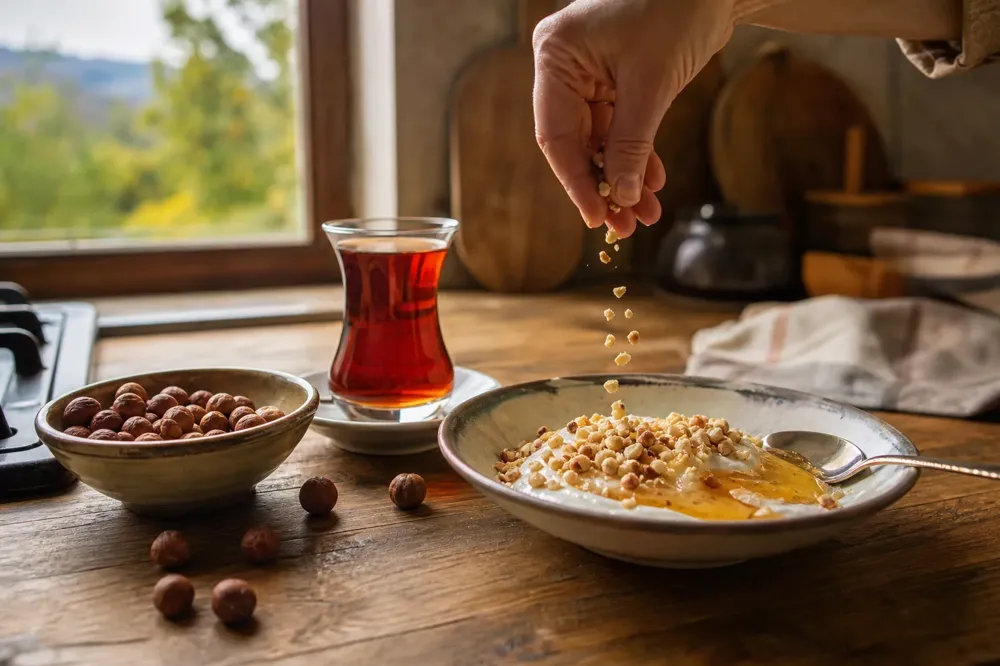
Shelled hazelnuts have already been cracked and separated from their shells, ready to use. You can add them straight to breakfast, desserts, salads or snacks. There is no cracking to do and no shells scattered around the kitchen.
For people with busy lives, or those who mostly use hazelnuts in cooking and recipes, shelled hazelnuts save time. You can also see the colour, plumpness and cleanliness of the kernels with your own eyes before you buy.
There is one thing to keep in mind when buying in-shell hazelnuts: a large part of the weight on the scales is shell. Although it varies with the variety and the harvest, the amount of kernel you get from in-shell hazelnuts is often around half of the total weight.
In other words, a kilo of in-shell hazelnuts does not mean a kilo of kernels. When comparing the two options, it is better to base your calculation on how many kernels you actually need.
Check that the shells are glossy, clean and free of cracks. If any shells have stains, holes or signs of mould, set those nuts aside. When you shake a handful in your palm, there should not be many that rattle as if they were empty.
If possible, crack a few open before buying and look inside. A plump kernel, a skin that looks dry and comes away easily, and a clean smell are all good signs.
Look for kernels that are similar in colour and dry. Shrivelled, darkened or oily-looking kernels may indicate that the hazelnuts are past their best. Give them a sniff: fresh hazelnuts have a slightly sweet, clean aroma. If you notice a bitter, soapy or stale smell, choose something else.
With packaged shelled hazelnuts, an airtight seal also helps to preserve freshness.
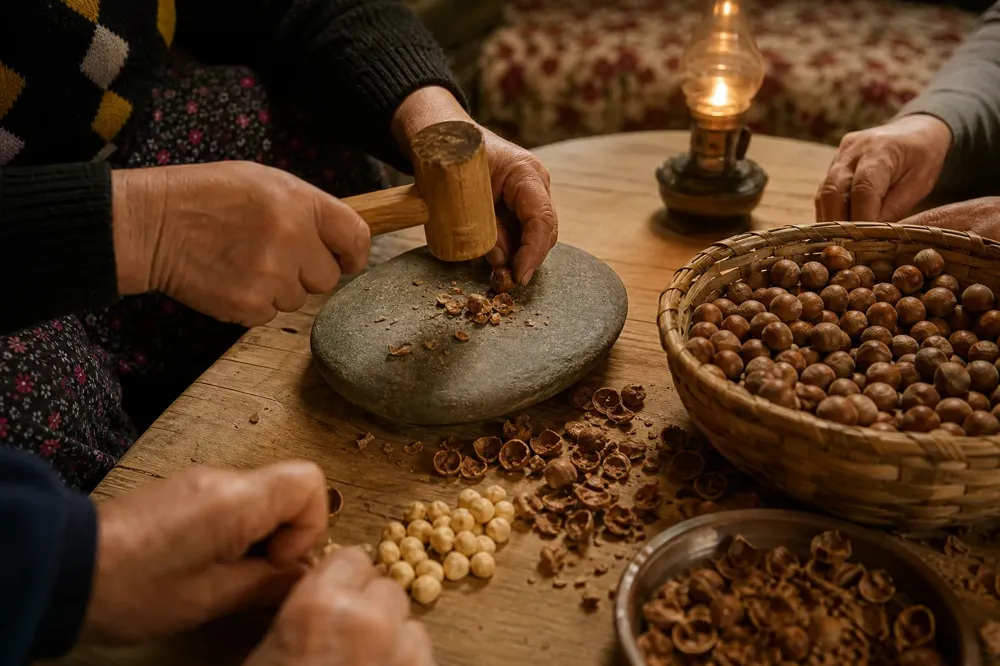
In many homes in Giresun, hazelnuts are still cracked with a stone or a wooden mallet. Laying the nut on a flat stone and giving a controlled tap along the seam of the shell opens it without crushing the kernel.
If you have a nutcracker at home, the job is even easier. Placing the nut near the tip of the cracker rather than in the middle and squeezing gently lets you get the kernel out whole. If you are not going to eat the cracked nuts straight away, put them in a lidded container.
Cracking hazelnuts together as a family on winter evenings is a lovely habit that is still alive in our region. It can be a fun activity at the table for children too, as long as the little ones are not left unsupervised.
You can store in-shell hazelnuts in a cool, dry place out of the sun, in a breathable cloth bag or mesh sack. Moisture is the biggest enemy of in-shell hazelnuts, so keep them away from damp cupboards and cellars.
Shelled hazelnuts are more delicate. They should be kept in an airtight glass jar or a resealable bag in a cool place. If you plan to keep them for a long time, the fridge or freezer is a good option. Let hazelnuts taken from the freezer come to room temperature before using them, so that no moisture collects on them.
Put simply: if you will keep your hazelnuts for months, eat them little by little and enjoy cracking them, in-shell hazelnuts are for you. If you use hazelnuts often in desserts, at breakfast and in cooking and want to save time, shelled hazelnuts are more practical.
Many families choose both: some in-shell hazelnuts for the pantry and shelled ones in the kitchen cupboard for everyday use. That way you don't have to give up either freshness or convenience.
Whichever option you choose, remember that hazelnuts are a natural product. Their smell, taste and appearance will tell you everything you need to know. Do not eat hazelnuts whose taste has changed or turned bitter. If you have a nut allergy or particular dietary needs, consult a specialist about your personal circumstances.
Enjoy the new harvest; a handful of fresh hazelnuts is still one of autumn's finest treats.
Der Herbst ist da und die Haselnüsse der neuen Ernte liegen auf den Ständen. Wir erklären Schritt für Schritt, wie Sie anhand von Farbe, Duft, Knackigkeit und Häutchen frische Nüsse von alter Ware unterscheiden.
Artikel lesen →
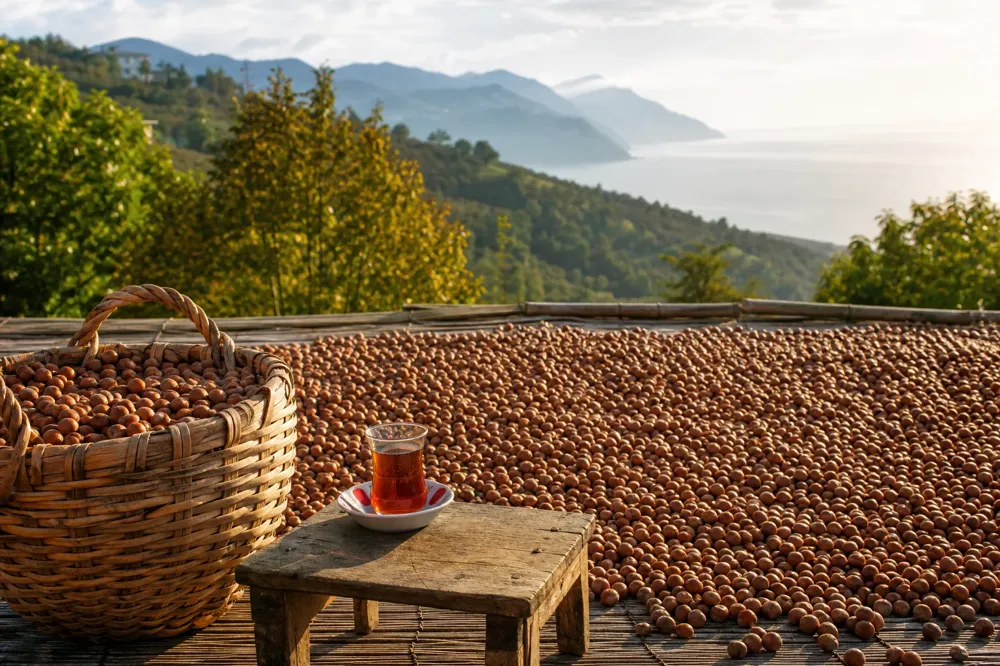
Bevor die frisch gepflückten Haselnüsse auf den Tisch kommen, trocknen sie auf dem Trockenplatz in der Sonne. Wir erklären, warum das Trocknen so wichtig ist, und erzählen von der Tradition am Schwarzen Meer.
Artikel lesen →
Wie Boden, Klima und Höhenlage den Giresun-Haselnüssen ihr besonderes Aroma verleihen.
Artikel lesen →Karadeniz Fırtınası wird nur aus Haselnüssen hergestellt. Wir verwenden keine Füllstoffe, Aromen, Konservierungsstoffe oder Emulgatoren. Was auf dem Etikett steht, ist genau das, was in der Packung ist.
 Schreiben Sie uns auf WhatsApp