
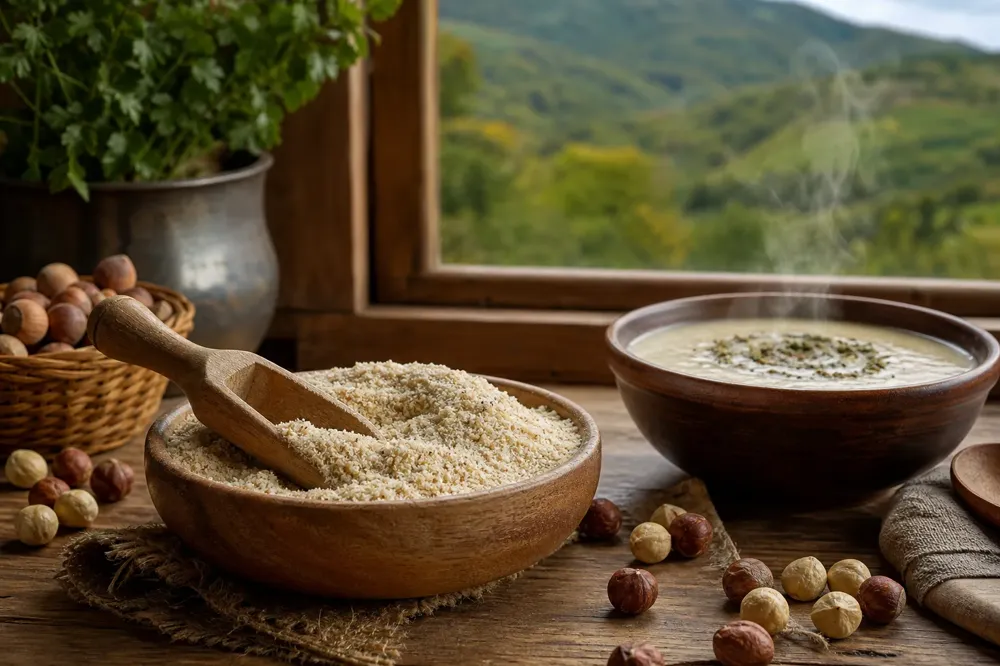
Hazelnut flour is made by finely grinding hazelnut kernels. It resembles wheat flour, but its aroma and flavour are unmistakably hazelnut. You can buy it ready-packed, yet it is easy to make at home with a food processor. The only tricky part is this: grind the hazelnuts a little too long and you end up with hazelnut butter rather than flour. In this post we explain, step by step, how to make hazelnut flour at home, how to keep the right texture and how to cook hazelnut flour soup, a little-known speciality of Giresun cuisine.
As the name suggests, hazelnut flour is made directly from hazelnuts. It can be prepared with raw or roasted hazelnuts. Flour made from raw hazelnuts has a softer, lighter taste, while roasted hazelnut flour carries a more pronounced, warmer aroma. How finely the hazelnuts are ground determines both the colour and the texture of the flour.
The skin also affects the colour. If you want a pale flour, you need to use blanched hazelnuts. Hazelnuts with their skins on turn into flour without any trouble; the colour is simply a little darker. If you are curious why the skin is valued in the kitchen, have a look at our post Why Shouldn't You Throw Away Hazelnut Skins?
The flavour of the flour depends on the freshness of the hazelnuts you use. Before grinding, spread the hazelnuts on a tray and pick out any that look stale, smell bad or taste bitter. A single bad kernel can change the aroma of the whole batch. Late October is the best time for this, as new-crop hazelnuts are on the stalls. We explain how to recognise fresh hazelnuts in detail in our post How to Tell New-Crop Hazelnuts.
If you are using roasted hazelnuts, wait until the kernels have cooled completely. Warm hazelnuts release their oil much faster in the food processor, increasing the risk of turning into butter.
Hazelnut flour and hazelnut butter actually start with the same process. The difference is when you stop. The longer the processor runs without a break, the more the hazelnuts release their oil, and the mixture gradually clumps and turns into butter. That is why the most important rule is to run the processor in short bursts.
Grind the hazelnuts in pulses of a few seconds. After each pause, open the lid and use a spoon to scrape the bits stuck to the sides back into the middle. This ensures an even grind and stops the blade heating up in one spot.
Stop as soon as the kernels look fine. If the mixture falls apart like sand, you are on the right track. If it starts to clump, look shiny or feel oily when you squeeze it between your fingers, you have gone slightly past the stopping point. There is no need to panic: that mixture is still perfect for making butter. We cover this separately in our post Making Hazelnut Butter at Home.
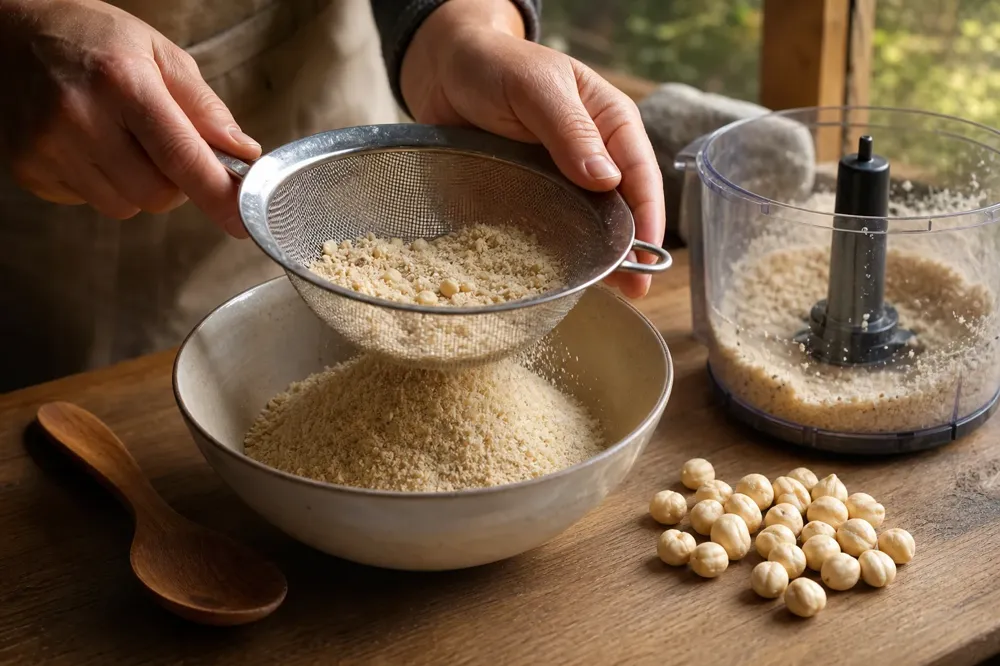
If you want a finer flour, pass the ground mixture through a sieve. Put the larger pieces left in the sieve back into the processor and grind them very briefly again. Repeating these small rounds, rather than trying to make it all fine in one go, keeps the flour dry and light.
Hazelnut flour is most often used in biscuits, cakes and tarts. Added to dough, it gives sweet bakes both a hazelnut aroma and a slight crispness. But in Black Sea cuisine, perhaps the most distinctive use of hazelnut flour is not in desserts but in a soup.
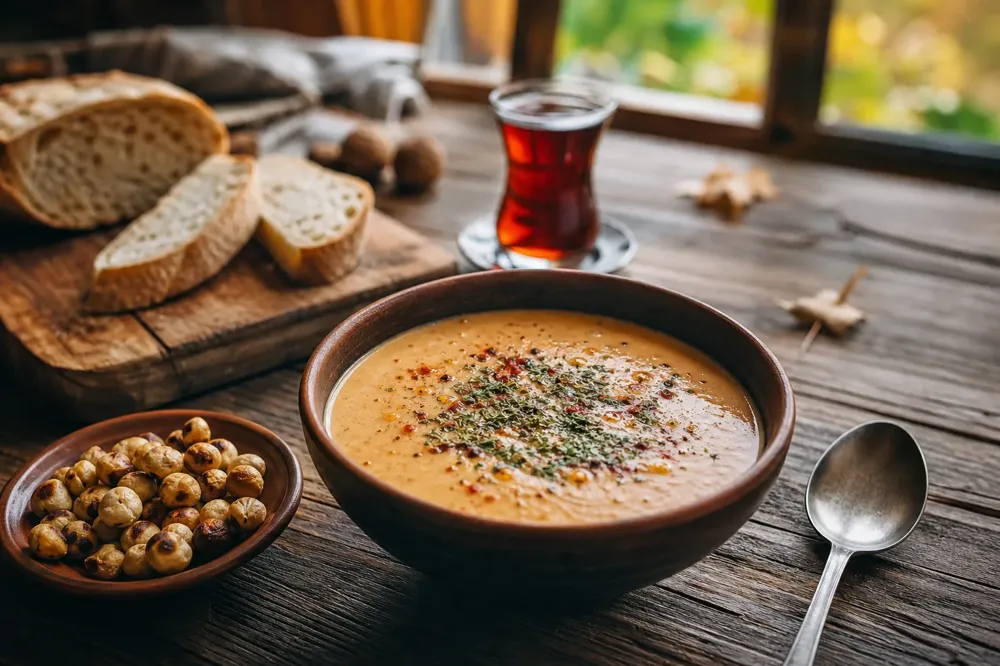
Hazelnut flour soup is presented as a dish unique to Giresun cuisine and is considered one of the most distinctive and least known of the Black Sea soups. Usually served in cold weather, this soup truly captures the taste of autumn when made with new-crop hazelnuts. It also makes a lovely starter at big family meals during the week of 29 October.
The recipe takes about 30 minutes and serves 4 to 6. You will need: 5 tablespoons of hazelnut flour, 3 tablespoons of plain flour, half a tea glass of hazelnut oil, one tablespoon each of tomato paste and pepper paste, 4 cups of water, 1 cup of milk, salt and dried mint. You can also add a little chilli flakes on top if you like. Roasted hazelnut flour is recommended for this recipe, as it gives the soup a deeper aroma.
The method is very simple. First, toast the plain flour in the hazelnut oil over a low heat until it smells fragrant. Then add the hazelnut flour and toast for another 2 to 3 minutes. Next, add the pastes and cook them together. Add the water and milk gradually, stirring constantly to prevent lumps. Simmer the soup over a medium heat for 10 to 12 minutes until it thickens slightly. Adjust the salt and serve with dried mint and, if you like, chilli flakes.
Not every household makes the same soup. In some recipes the soup is made with meat stock instead of milk. In some areas the consistency is bolstered with cornflour or rice flour. There are also recipes using butter or olive oil for those who cannot find hazelnut oil. Feel free to experiment with what you have to hand, but we recommend making it with hazelnut oil the first time so you get to know the original flavour.
As hazelnut flour is made directly from hazelnuts, anyone with a hazelnut allergy should not eat this flour or dishes made with it. If you are having guests, it is a good habit to let them know in advance that the dish contains hazelnuts. For more details, see our post Hazelnut Allergy and Cross-Contamination. If you have particular dietary needs, consult a specialist about your individual situation.
It is best to make your homemade flour in small batches. That way you always work with fresh, fragrant flour.
Yemek.com, Fındık Unu Nedir, Nasıl Yapılır? Nerelerde Kullanılır?
Hürriyet Lezizz, Giresun usulü fındık unu çorbası tarifi
Lezzet.com.tr, Fındık Unu Çorbası Nasıl Yapılır?
DergiPark, RTEÜ Sosyal Bilimler Dergisi, Akyol (2023), Fındık Bitkisinin Tüketimi: Türkiye'de Kullanım Alanlarına Yönelik Bir Araştırma
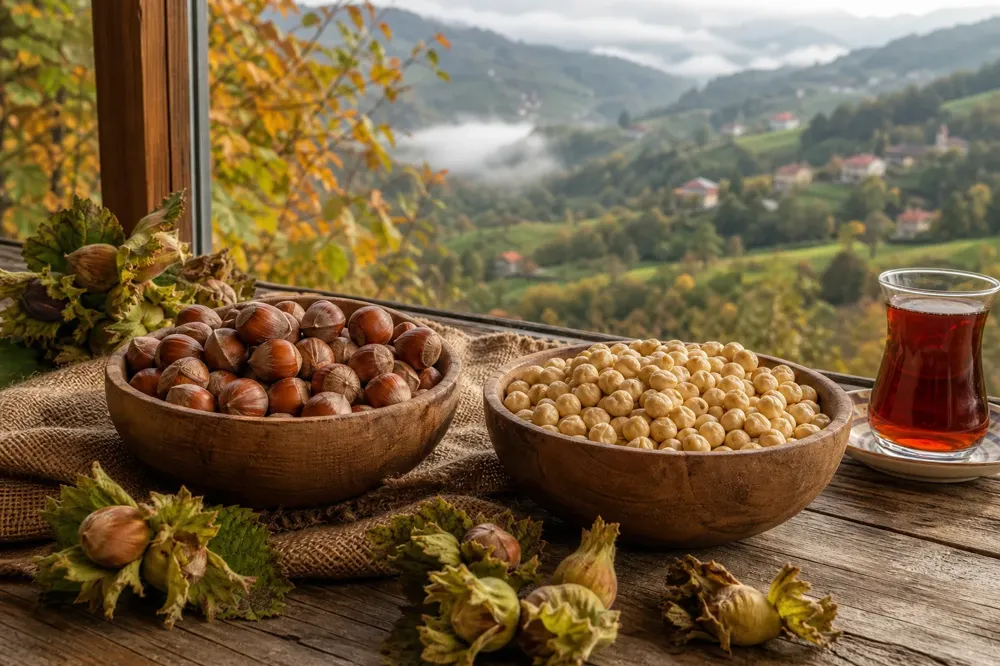
La nouvelle récolte est arrivée et deux options s'offrent à vous. Fraîcheur, conservation, praticité et usage : voici comment choisir entre noisettes en coque et décortiquées.
Lire l'article →
L'automne est là, les noisettes de la nouvelle récolte arrivent sur les étals. Couleur, odeur, croquant et peau : nous expliquons point par point comment distinguer les noisettes fraîches de l'ancien stock.
Lire l'article →
Cueillies sur l'arbre, les noisettes rencontrent le soleil sur l'aire de séchage avant d'arriver sur la table. Pourquoi le séchage est si important et ce qu'est la tradition du séchage en mer Noire.
Lire l'article →Karadeniz Fırtınası est préparé uniquement avec des noisettes. Nous n'utilisons ni agents de charge, ni arômes, ni conservateurs, ni émulsifiants : ce qui figure sur l'étiquette est exactement ce qu'il y a dans la boîte.
 Écrivez-nous sur WhatsApp