
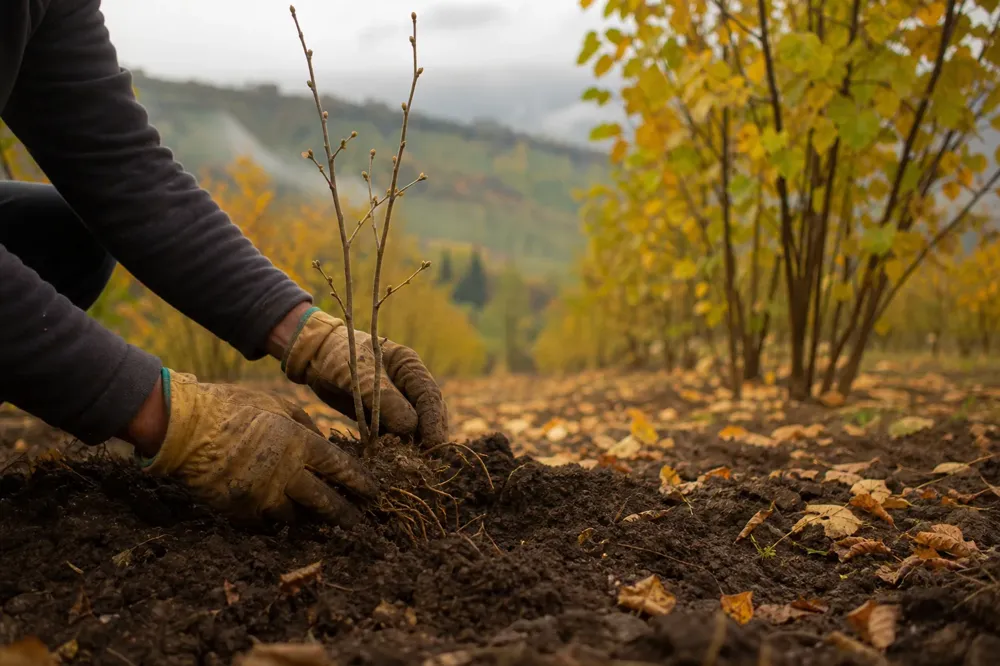
The short answer to the question of when to plant hazelnut saplings is this: for most regions, autumn is the best time. The Hazelnut Research Institute also states that the autumn months are the ideal period for planting. However, your orchard's altitude, how harsh the winter is and when you finish your preparations can all change this calendar. In this post we explain, step by step, which month you should plant in and what needs to be ready before planting.
According to the Institute, planting can also be done in spring in places with harsh winters or when planting has been left too late. The Institute's farmer training leaflet gives February and March for the spring option.
An academic source, the book chapter Hazelnut Cultivation, draws a wider window: saplings can be planted from October until the sap starts rising in spring. So the window is long, but it is worth knowing that not every month gives the same result.
In the Black Sea region, orchards stretch from the seashore up to high slopes, and the climate changes noticeably between these belts. That is why the same book chapter distinguishes by altitude.
In places with mild winters, in the coastal belt and the lower parts of the middle belt, planting in October and November is recommended. In places with cold winters, in the upper parts of the middle belt and in the high belt, planting in February and March, once the cold has passed, is considered better. Building your calendar around the belt your orchard sits in is the first step.
There is a logic to autumn planting. According to the book chapter, saplings planted early develop feeder roots over the winter. Thanks to these roots, which make good contact with soil softened by the rain, the sapling settles in more quickly. The same source also notes that these saplings have been observed to cope better with summer heat.
There is a practical benefit too: if some of the saplings planted in autumn fail to take, new ones can be planted in their place in February and March. This way the orchard is completed without losing a year. For someone planting in spring, this second chance often has to wait until the following season.
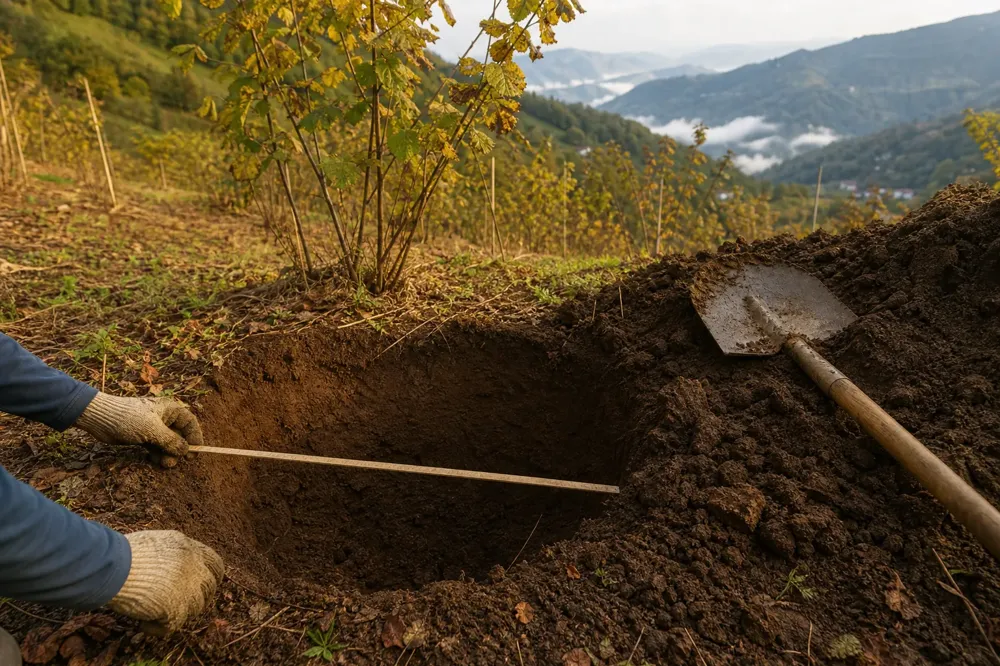
Starting work on planting day is one of the most common bits of haste when establishing a hazelnut orchard. For the clump (ocak) planting system, the Institute recommends digging planting pits at least a month before planting. The recommended size is 120 centimetres in diameter and 60 centimetres deep.
Digging the pit early gives the soil time to aerate and settle before planting day. If you plan to plant at the end of October, the pits should be ready by the end of September. If you are aiming for November, now is exactly the right time.
Before putting the sapling in the ground, you need to know your soil. The Institute advises applying farmyard manure, phosphorus and potassium fertilisers, and lime as recommended on the basis of a soil analysis before planting. November and December are generally considered suitable for liming.
The key word here is analysis. Rather than guessing the amounts of fertiliser and lime, having a soil test done and acting on the results protects both the sapling and your effort. The agricultural office in your area can offer guidance on this.
The traditional method in our region is the clump (ocak) planting system. In this system, several stems are grown together as a single clump. According to the Institute's leaflet, the number of stems in a clump should not exceed 5 to 6. The system can be used on flat land too, but its real value shows on sloping land with shallow soil.
The Institute also presents the hedgerow planting system, which it has researched for many years, as an alternative. Which system you choose depends on the structure and slope of your land and on your maintenance habits.
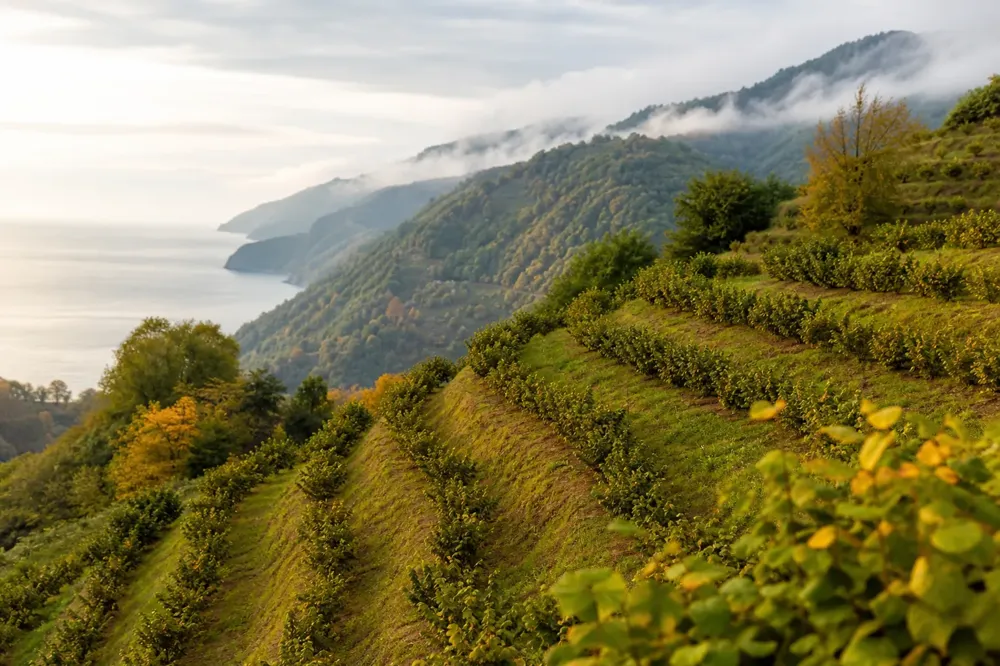
Most Black Sea orchards are on hillsides. According to the Institute, if a planting layout better suited to flat land is to be used on a slope, terracing according to the gradient should be done first. If this step is skipped, soil slippage and water run-off can put strain on the saplings, and maintenance and harvesting become harder.
One thing that is often overlooked when establishing a hazelnut orchard is the pollinator variety. The Institute recommends placing pollinator varieties among the main varieties at a ratio of roughly one in ten. These saplings should not be grouped in one corner of the orchard but spread evenly across the land. It is a good idea to confirm which variety is a suitable pollinator for your main variety with your sapling supplier or an agricultural expert.
Autumn is a time of care not only for new orchards but for existing clumps too. According to the Institute, hazelnut pruning is also generally carried out in autumn. Pruning should begin once growth has stopped and most of the leaves have fallen.
In short, October and November are busy in the orchard: pits are dug for new saplings, planting takes place in the mild belt, pruning begins on old clumps and liming is planned according to the soil analysis results. Here in Giresun, when we return to the orchard after the harvest, we see this part of the year as the foundation of the new season.
On the coast and in the mild belt: pits are dug at least a month before planting, saplings are planted in October and November, and any that fail are replaced in February and March. In the high, cold belt: preparation is done in autumn, and planting takes place in February and March once the cold has passed. In both cases, soil analysis, liming and the pollinator plan should be settled before planting.
Republic of Türkiye Ministry of Agriculture and Forestry, Hazelnut Research Institute, Hazelnut Growing Techniques (planting time, clump system, planting pit, liming, pruning)
Hazelnut Research Station Directorate (Giresun), Hazelnut Orchard Establishment and Planting Systems farmer training leaflet
ResearchGate, Hazelnut Cultivation book chapter (orchard establishment and planting time)
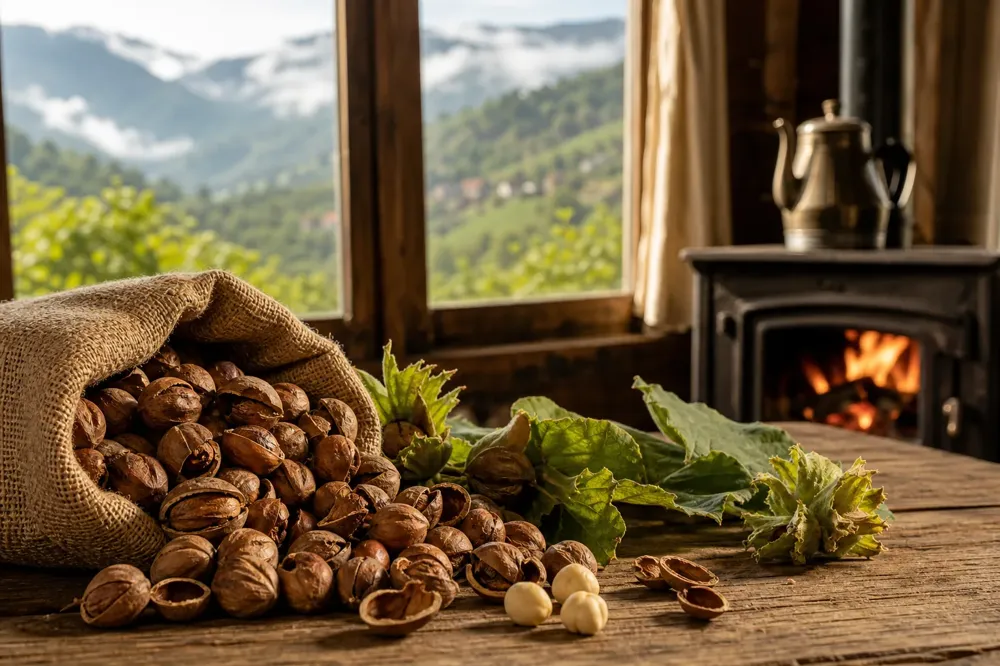
The shell left over after cracking hazelnuts is not rubbish. We follow its journey from the wood stove to university laboratories, and explain how it differs from the husk.
Lire l'article →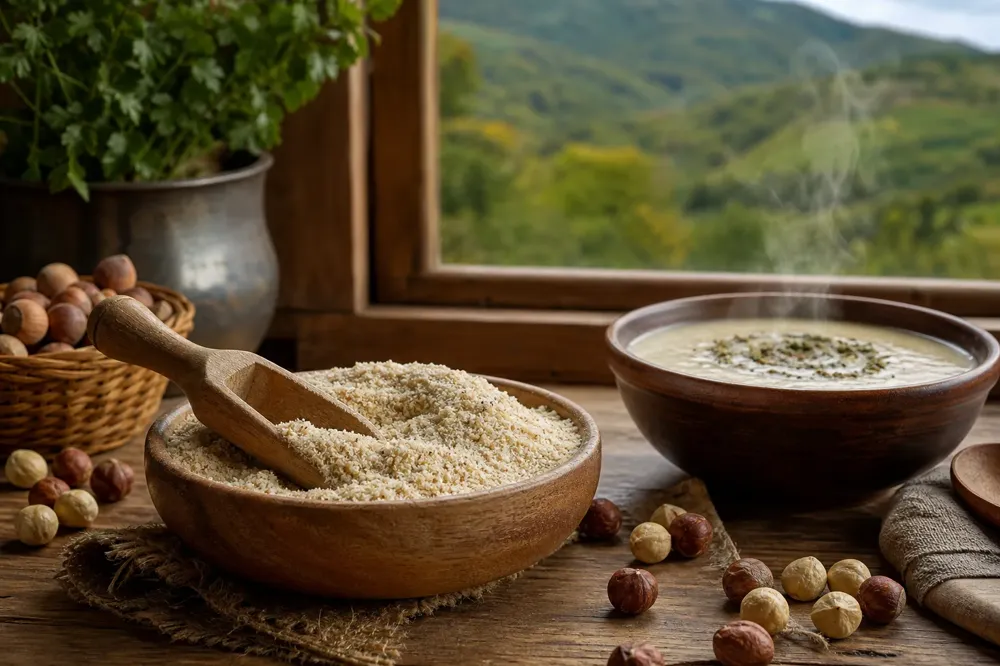
Les astuces pour faire de la farine de noisette maison, la façon d'éviter qu'elle ne se transforme en pâte dans le robot, et la soupe à la farine de noisette façon Giresun, parfaite pour les tables d'automne.
Lire l'article →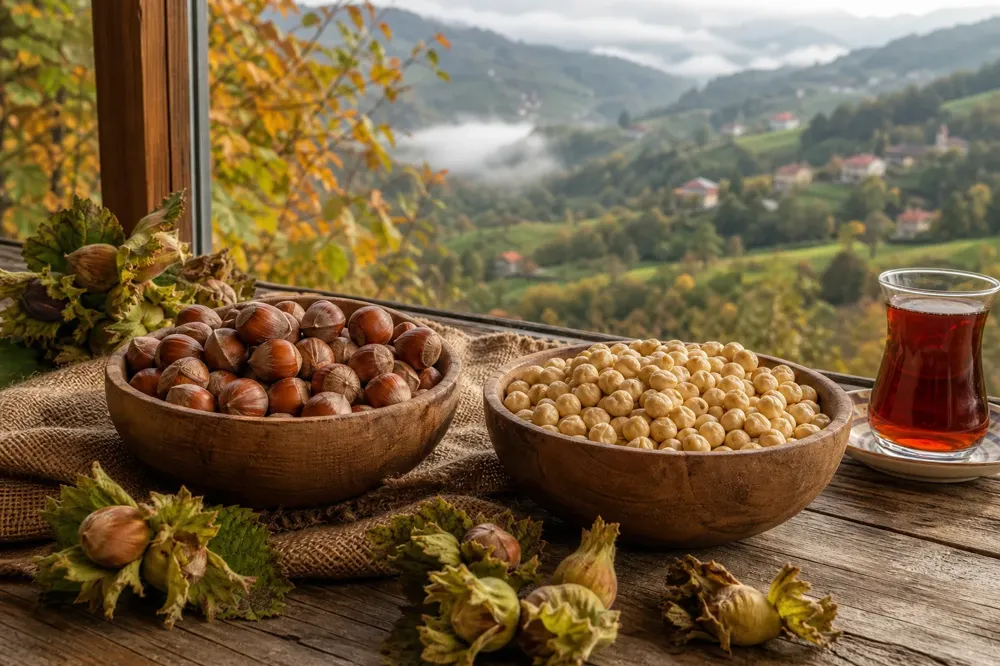
La nouvelle récolte est arrivée et deux options s'offrent à vous. Fraîcheur, conservation, praticité et usage : voici comment choisir entre noisettes en coque et décortiquées.
Lire l'article →Karadeniz Fırtınası est préparé uniquement avec des noisettes. Nous n'utilisons ni agents de charge, ni arômes, ni conservateurs, ni émulsifiants : ce qui figure sur l'étiquette est exactement ce qu'il y a dans la boîte.
 Écrivez-nous sur WhatsApp