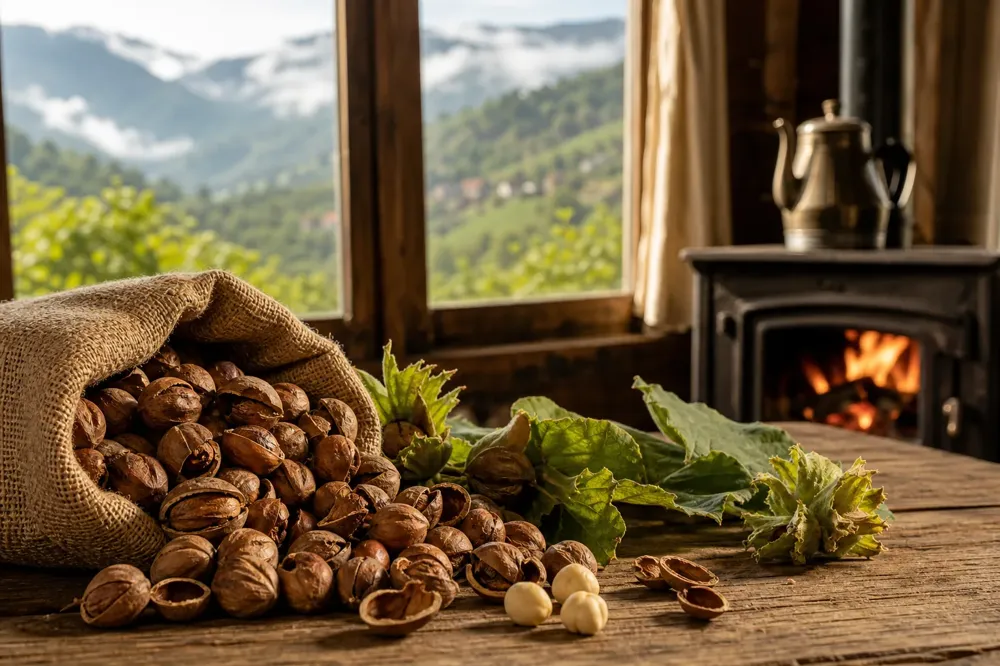
The shortest answer to the question of what hazelnut shells are good for is this: on the Black Sea coast they have been used as fuel for centuries, and today they are becoming a material that scientists regard as a valuable raw resource. At the end of October, as the new crop is cracked and turned into shelled kernels, sack after sack of shells piles up in homes, on threshing grounds and at cracking facilities. In this post we explain, in plain language, where those shells go, how they are used in the stove and where their future may lie.
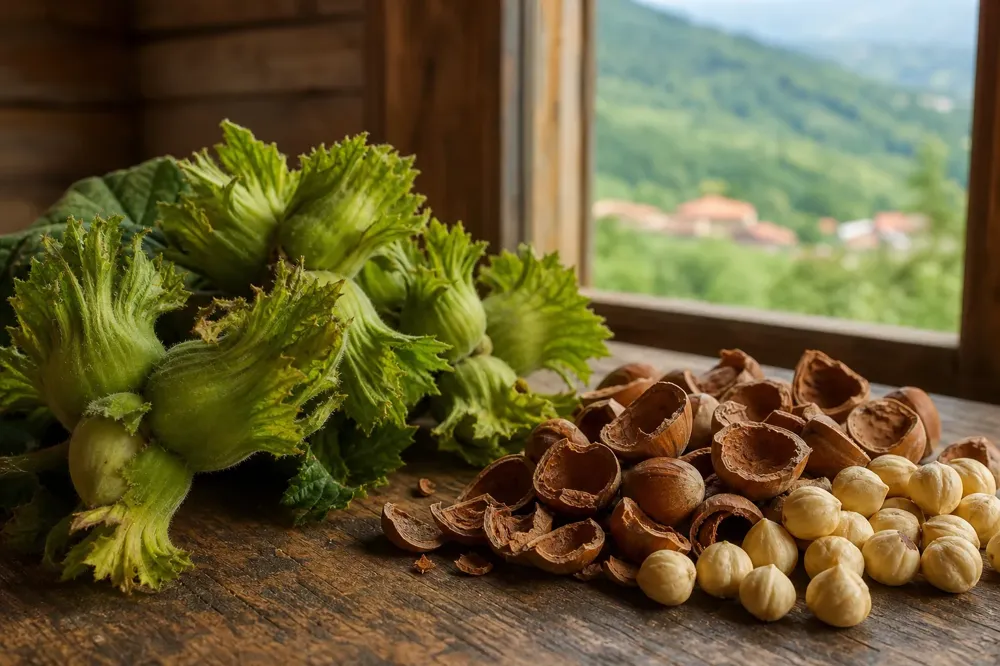
Two terms are often confused when people talk about shells. The husk (zuruf in Turkish) is the green, leafy outer covering that wraps the hazelnut on the branch. After harvest, the nuts are run through a threshing machine and separated from this covering. The hard shell, on the other hand, is the woody, brown part that encloses the kernel. This is what comes away from the kernel when the hazelnut is cracked.
The distinction matters because the two materials differ in both structure and use. An academic book on hazelnut growing, when describing the uses of the hazelnut plant, deals with the wood, the undergrowth beneath the trees, the leaves, the husk and the outer shell under separate headings. What we are talking about in this post is the hard shell left over after cracking.
Anyone who grew up in a house with a hazelnut orchard will remember sacks of shells being stacked in a corner before winter arrived. Shells are used both to get the stove going and to keep the fire lively alongside firewood. The same academic source notes that hazelnut shells are used as a valuable, high-calorie fuel in hazelnut-growing regions.
There is a practical reason for this, too. The shell comes about simply by being separated from the hazelnut itself, so it does not need to be cut or hauled separately. Because it consists of small, uniform pieces, it is easy to put into the stove, and when dry it catches fire quickly.
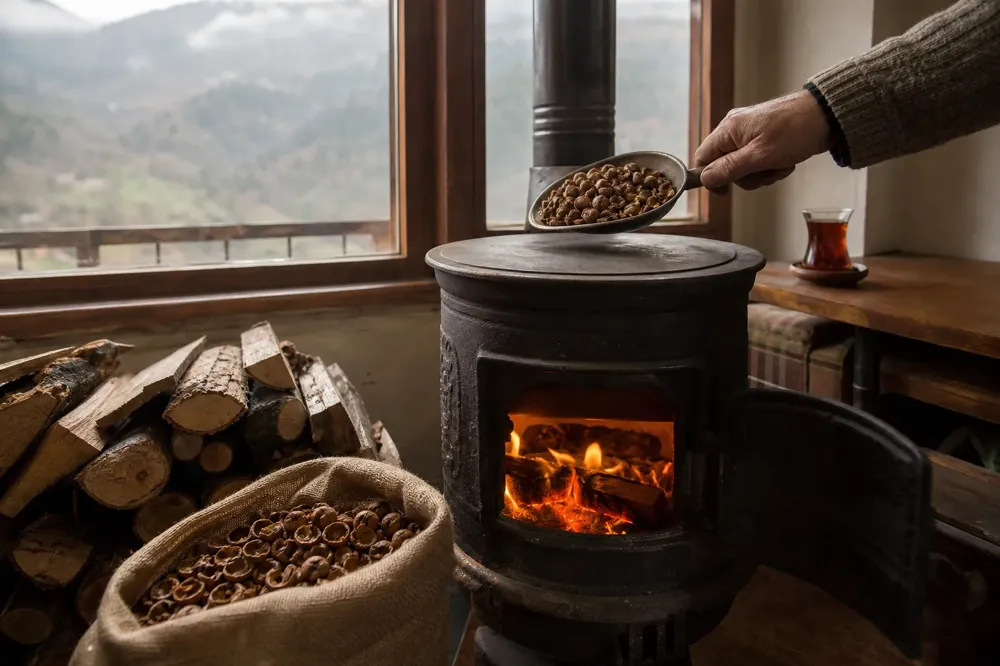
The shell is woody, hard and dense. Well-dried shells contain little moisture, which helps the fire burn more easily and steadily. As for calorific value, the figures we have come not from an independent body but from a commercial website that sells shell fuel. According to this seller, the net calorific value of hazelnut shells is roughly 3,950 to 4,420 kcal per kilogram, and the gross calorific value between 4,420 and 4,590 kcal. The same site lists walnut shells and apricot and peach stone shells in a higher range.
These figures should be read as a rough guide rather than a precise measurement. How dry the shells are, how they have been stored and the design of the stove they are burned in all directly affect the heat you get.
Yes, they are widely burned in the region. However, as with any fuel, basic safety rules must be followed. Store the shells in a dry, well-ventilated place; damp shells are hard to light and produce more smoke. Do not overfill the stove; add shells in small, measured amounts.
It is important to clean the chimney and flue pipes regularly, ventilate the room and not use fuels other than those recommended by the stove's manufacturer. Keeping a carbon monoxide detector in homes with stoves is a widely accepted precaution. If you are unsure whether your stove is suitable for burning shells, consult a technician or an authorised service provider.
Beyond burning, there are other frequently mentioned uses for hazelnut shells. Chief among them are compressing them into pellets or briquettes, spreading them over the soil in the garden as a mulch, and using them as a raw material in the production of activated carbon. Since methods and results in these areas can vary from one application to another, we recommend consulting local experts, such as the chamber of agriculture or the provincial directorate of agriculture, before trying them in your garden or business.
In recent years the shell's story has gone far beyond the stove. According to reports published in October 2026, Bartın University received support from TÜBİTAK's 1002-A programme for a project aimed at processing walnut and hazelnut shells. The project's goal is to process these shells using environmentally friendly methods to obtain value-added raw materials.
The reports emphasise that these shells are generated in large quantities in Türkiye and are mostly used in low-value applications. One of the study's focal points is lignin recovery. Lignin is a natural compound that gives plants their rigidity, and it is also the source of the shell's woody structure.
This is exactly what the biorefinery approach means: rather than confining an agricultural by-product to a single use, breaking it down into its components and turning it into products that can be used in different fields. The idea that the shell burning in a stove today could become the raw material for another material in a laboratory tomorrow is a reminder, once again, that everything that comes out of a hazelnut orchard has value.
For us, the hazelnut is not just the kernel. Every part of it, from the husk on the branch to the shell left after cracking, has its place. This autumn, as you crack your new-crop hazelnuts, collect the shells in a dry sack. They are sure to come in handy in your stove, in your garden or at a neighbour's hearth.
ResearchGate: Fındık Yetiştiriciliği (Hazelnut Growing, academic book), uses of the hazelnut and utilisation of the outer shell
Sondakika.com: TÜBİTAK 1002-A support for BARÜ's walnut and hazelnut shell project
Gazete Rize: BARÜ's project to utilise walnut and hazelnut shells
Organik Yakıt (commercial seller, not an independent source): calorific value of hazelnut shells
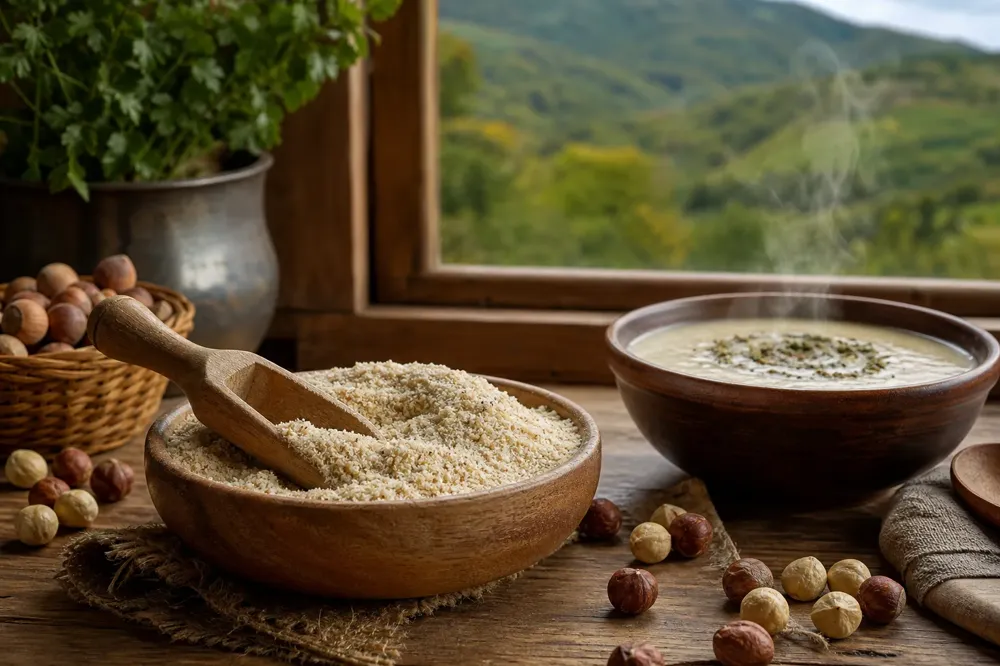
Tips om thuis hazelnootmeel te maken, zo voorkom je dat het in de keukenmachine tot pasta wordt, en een hazelnootmeelsoep op z'n Giresuns die past bij de herfsttafel.
Lees het artikel →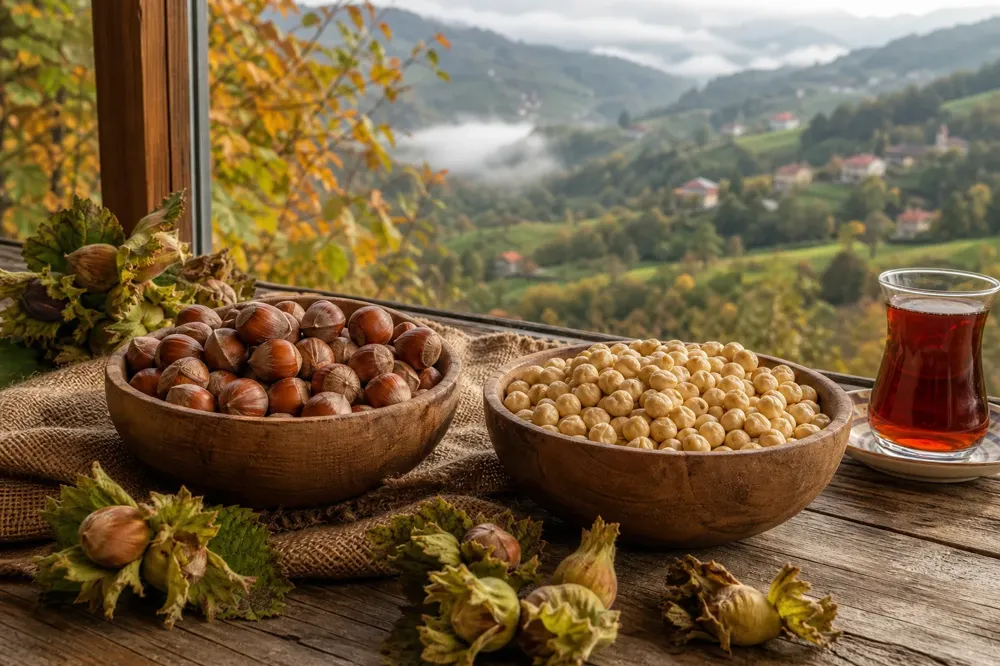
De nieuwe oogst is binnen en je hebt twee opties. We leggen uit hoe je kiest tussen hazelnoten in de dop en gepelde hazelnoten, op basis van versheid, bewaren, gemak en gebruik.
Lees het artikel →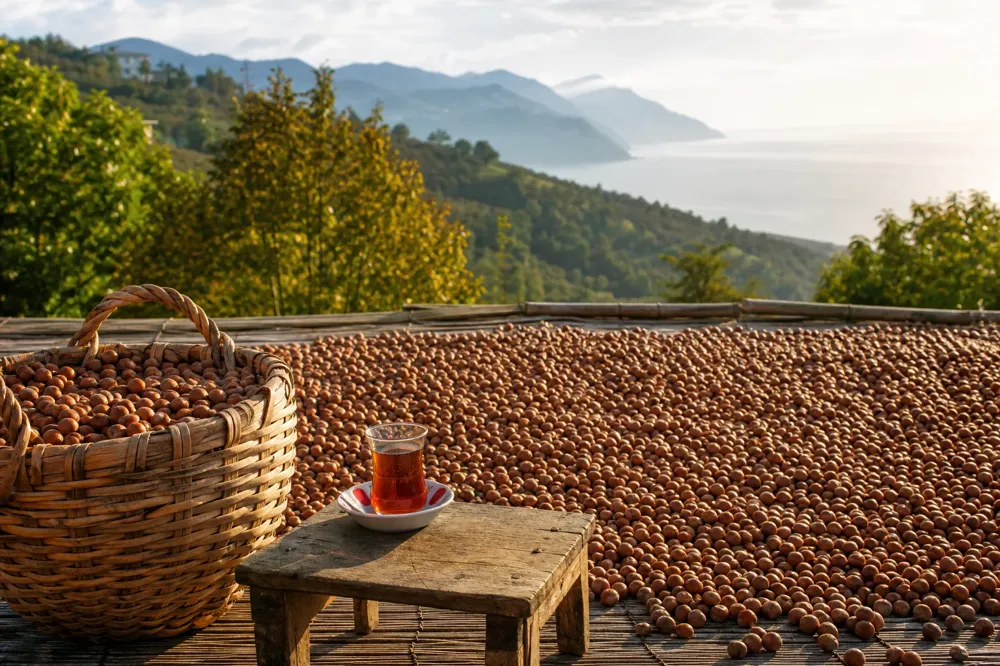
De herfst is begonnen en de nieuwe oogst ligt in de winkel. We leggen stap voor stap uit hoe je aan kleur, geur, knapperigheid en vliesje verse hazelnoten onderscheidt van oude voorraad.
Lees het artikel →Karadeniz Fırtınası wordt alleen met hazelnoten gemaakt. We gebruiken geen vulstoffen, aroma's, conserveermiddelen of emulgatoren: wat op het etiket staat, zit precies zo in de doos.
 Stuur ons een bericht via WhatsApp