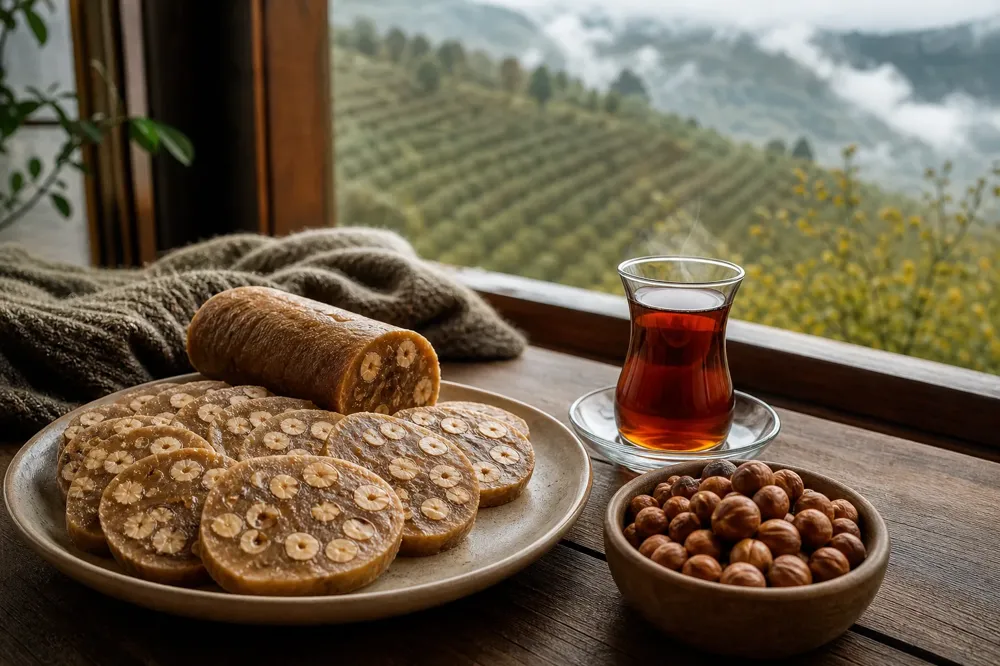
Köme is a traditional Black Sea sweet shaped like a sausage, made by threading hazelnut or walnut kernels onto a string, dipping them again and again into a thickened grape or mulberry molasses mixture and leaving them to dry. The outside is soft and slightly chewy, while the inside is packed with crunchy nuts. If you have come across it hanging from a stall at a Black Sea market or received it as a gift from someone you know, you have most likely tasted this treat from the same family as pestil.
Köme is part of a culinary tradition handed down through the generations in the inland areas and highland pastures of the Black Sea region, where it is always mentioned in the same breath as pestil. Similar sweets are known by different names in different places; in some areas they are called walnut sucuk or molasses sucuk, and they are made in much the same way as köme.
This sweet was born of necessity: carrying the abundant fruit of summer through to winter. Once dried, molasses and nuts become a filling food that keeps for a long time and is easy to carry. In the highlands, where winters are long, it became an important part of the table.
Both start from the same basic ingredient: a thick mixture made by boiling molasses with starch or flour. The difference lies in how that mixture is used.
To make pestil, the mixture is spread in a thin layer over a cloth or tray and left until it dries. The result is a flat, foldable, sheet-like sweet. Pestil usually has no nuts inside; sometimes a little crushed walnut or hazelnut is sprinkled on top, and that is all.
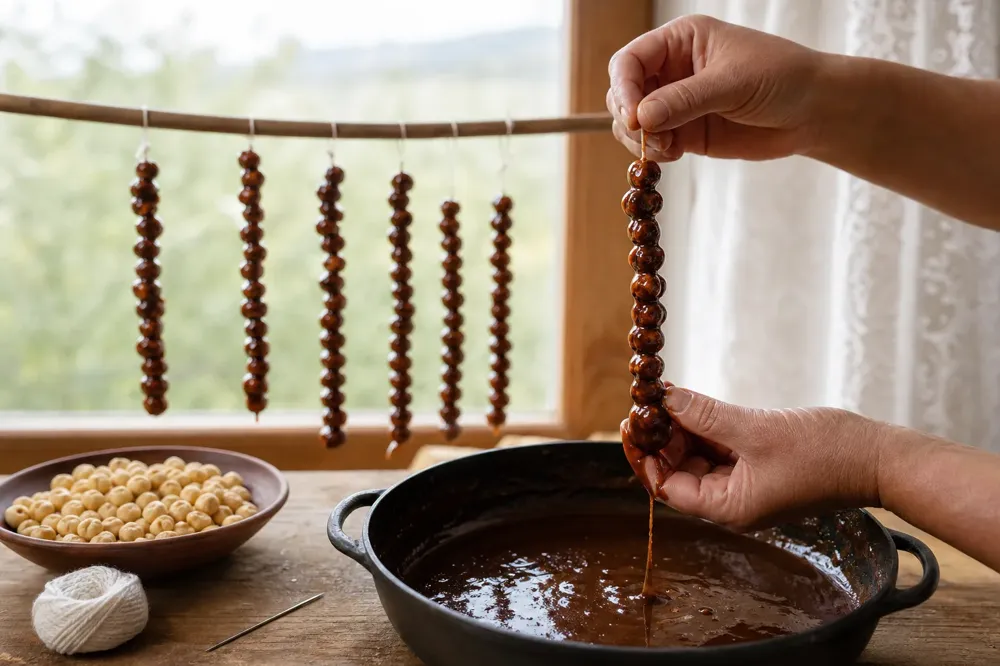
For köme, the nuts are first threaded onto a string. This string of nuts is dipped into the mixture, lifted out, left to dry a little, and the process is repeated several times. Each dip adds a new layer around the nuts. The end result is a long, round sausage with a centre full of hazelnuts or walnuts on a string. In short, pestil is a sheet, while köme is a filled stick.
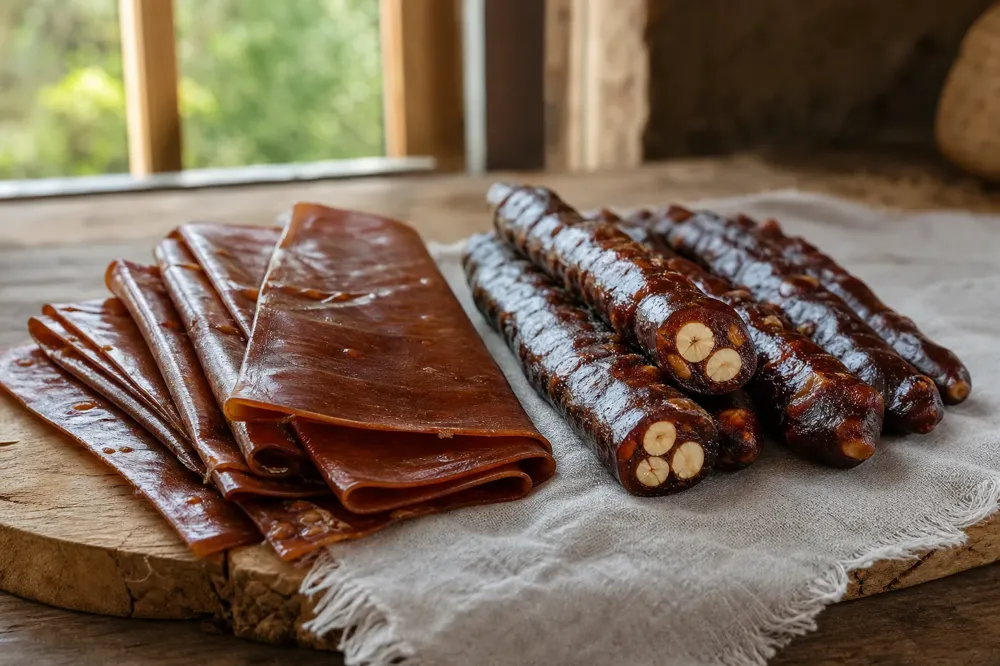
You will find both walnut and hazelnut köme at the markets. In the walnut version, the large pieces of kernel give a slightly softer, richer texture. In hazelnut köme, every bite has a distinct crunch and the characteristic aroma of roasted hazelnuts comes to the fore.
With hazelnut köme, the quality of the nuts directly determines the flavour. Fresh, lightly roasted hazelnuts that have not turned rancid strike a lovely balance with the sweetness of the molasses. Stale hazelnuts, on the other hand, can give the whole köme an unpleasant oily smell within a few weeks. Which one tastes better is purely a matter of personal preference; making both at home and comparing them is an enjoyable experiment too.
Making köme at home takes patience but is not difficult. First, lightly roast the hazelnuts, rub off their skins and leave them to cool. Then thread the hazelnuts one by one using a thick needle and strong cotton thread. Do not forget to leave a loop at the top of the string so you can hang it.
For the mixture, thin mulberry or grape molasses with water and warm it on the hob. Gradually add starch or flour that you have loosened with a little water in a separate bowl, stirring constantly so that it does not form lumps. When the mixture has thickened enough to coat the back of a spoon, take it off the heat and let it cool slightly.
Dip the string of hazelnuts into the mixture, lift it out slowly and hang it so the excess can drip off. Once the first layer has dried a little and is no longer sticky, dip it again. Keep going until the köme reaches the thickness you want. After the final layer, dry the köme in an airy spot out of direct sunlight until it no longer sticks to your finger when touched. Drying time depends on the humidity and the thickness of the layers, so checking by eye and by hand is the best approach.
Köme's two greatest enemies are moisture and heat. In a damp environment its surface becomes sticky and soft, and the risk of mould increases. In the heat, the oil in the hazelnuts spoils more quickly and a bitter taste can develop.
So store köme in a cool, dry place away from sunlight. Wrapping cut pieces in greaseproof paper so they do not stick together and placing them in an airtight container makes things easier. Kitchen cupboards near the hob or a radiator are not suitable for this. If you notice an oily or soapy smell when you unwrap the köme, or see spots on its surface, do not eat it.
Köme goes beautifully with a glass of tea on cold winter evenings. Cutting it into thin slices and arranging them on a plate is an easy way to offer guests something both practical and local. At breakfast, a few slices of köme alongside cheese strike a pleasant balance between sweet and savoury.
Because it is made from molasses, it is high in sugar, so it is best enjoyed a little at a time, savouring every bite. If you follow a special diet or have a condition related to blood sugar, consult a specialist about your personal situation.
As November approaches, if you are looking for a modest but meaningful gift for Teachers' Day, köme could be a lovely choice. Being a regional speciality, evoking handmade care and being easy to share set it apart from an ordinary present. A piece of hazelnut köme wrapped in pretty paper is like a small greeting from the Black Sea winter table.
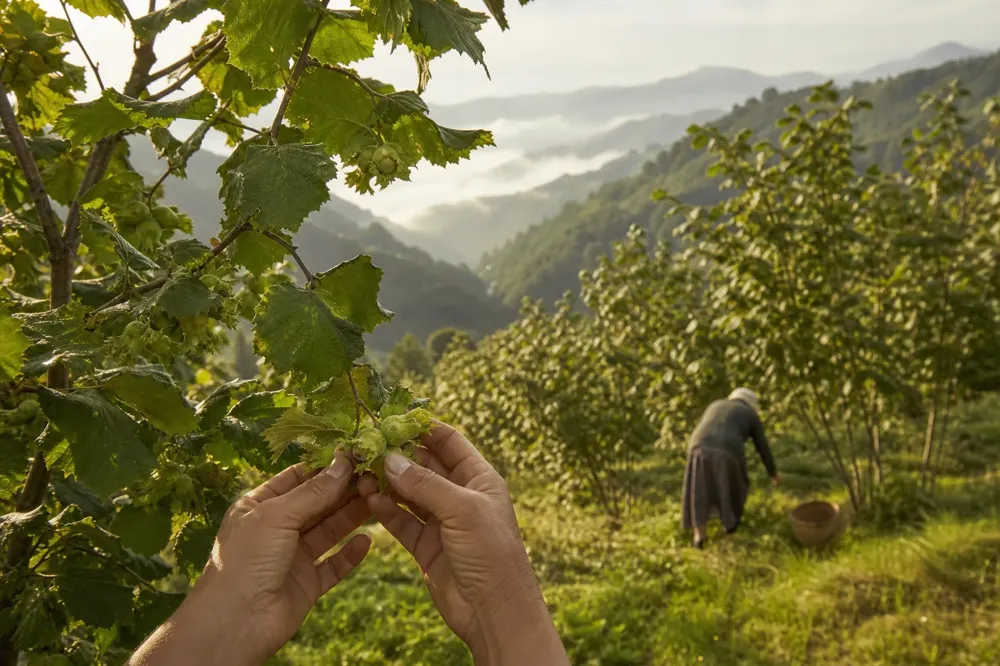
تشوتاناك، أوجاك، هرمان، باتوز... شرحنا واحدة تلو الأخرى الكلمات التي لا تفارق الألسنة في بساتين البندق وموسم الحصاد على البحر الأسود، بمعانيها وحكاياتها.
اقرأ المقال →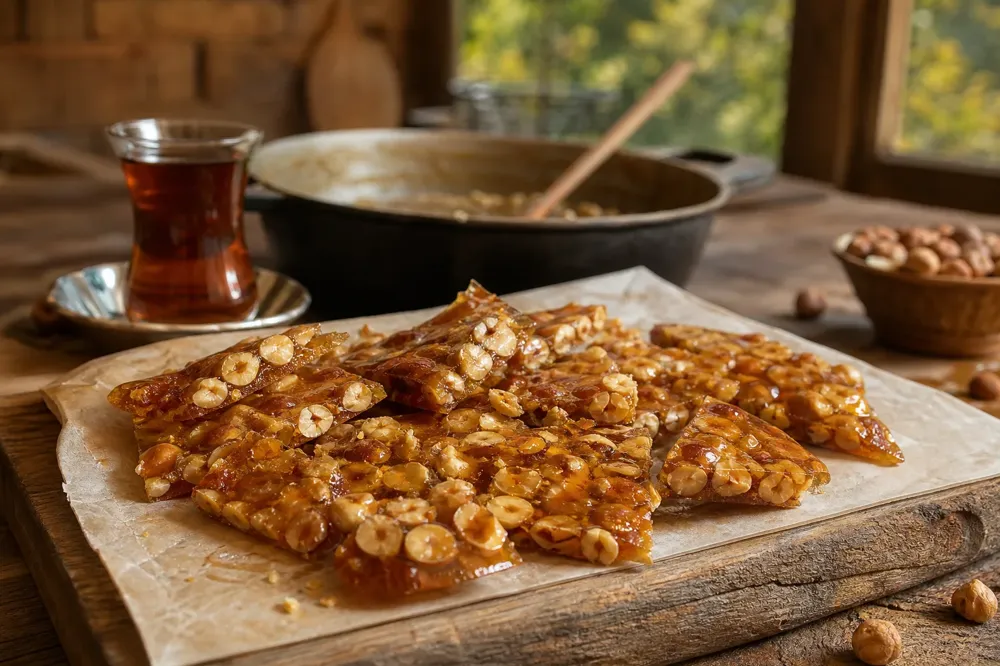
خطوات تحضير كروكان مقرمش في المنزل بالبندق من المحصول الجديد، والقوام الصحيح للسكر، وأسباب التصاق الكروكان أو احتراقه، في هذا الدليل.
اقرأ المقال →
خطوات تحميص بندق المحصول الجديد في الفرن أو المقلاة في المنزل، ودرجات الحرارة المقترحة للبداية، وطريقة سهلة لفصل القشرة، ونصائح لحفظ البندق المحمّص.
اقرأ المقال →يُحضَّر Karadeniz Fırtınası من البندق فقط. لا نستخدم مواد مالئة أو منكهات أو مواد حافظة أو مستحلبات، والمكونات المكتوبة على الملصق مطابقة تمامًا لما في العلبة.
 راسلنا عبر WhatsApp