
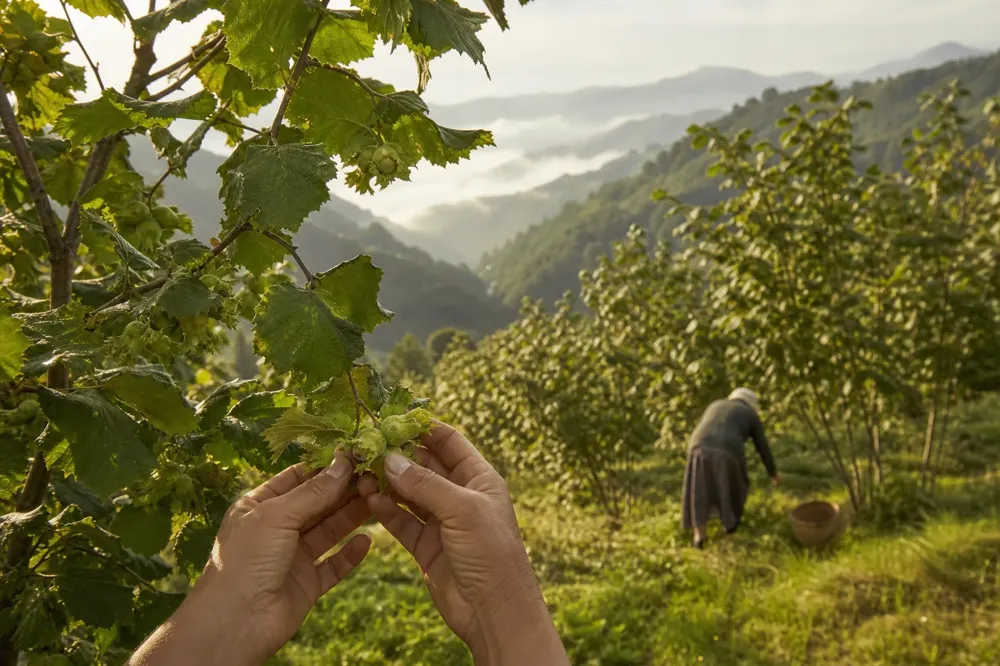
If you have searched for what çotanak means, you most likely heard the word from someone from the Black Sea coast and it stuck in your mind. To put it simply: a çotanak is a branch bearing many hazelnuts. But the language of the hazelnut orchard does not end there. Words such as ocak, harman, patoz and zuruf become the shared language of homes, orchards and village squares in Giresun at the end of every summer.
Now that the harvest has just finished and the new crop of hazelnuts is reaching our tables, we wanted to explain the words you will hear most often in the orchard, in order, like a glossary.
In the Turkish Language Association (TDK) dictionary, çotanak is defined as a branch bearing many hazelnuts. Other dictionary sources also describe the word as the branch on which many hazelnuts grow and sit. It is spelt exactly like this: çotanak.
When people talk in the orchard, the word çotanak is often used to describe that familiar sight of several hazelnuts clustered side by side. Hazelnuts do not grow on the branch one by one; they usually grow a few together. That is what comes to mind when someone says a hazelnut çotanak: hazelnuts sitting together at the tip of a branch, inside their green husks.
Çotanak appears often in Black Sea folk songs and everyday speech, because the word describes the moment when a whole year's work ripens on the branch.
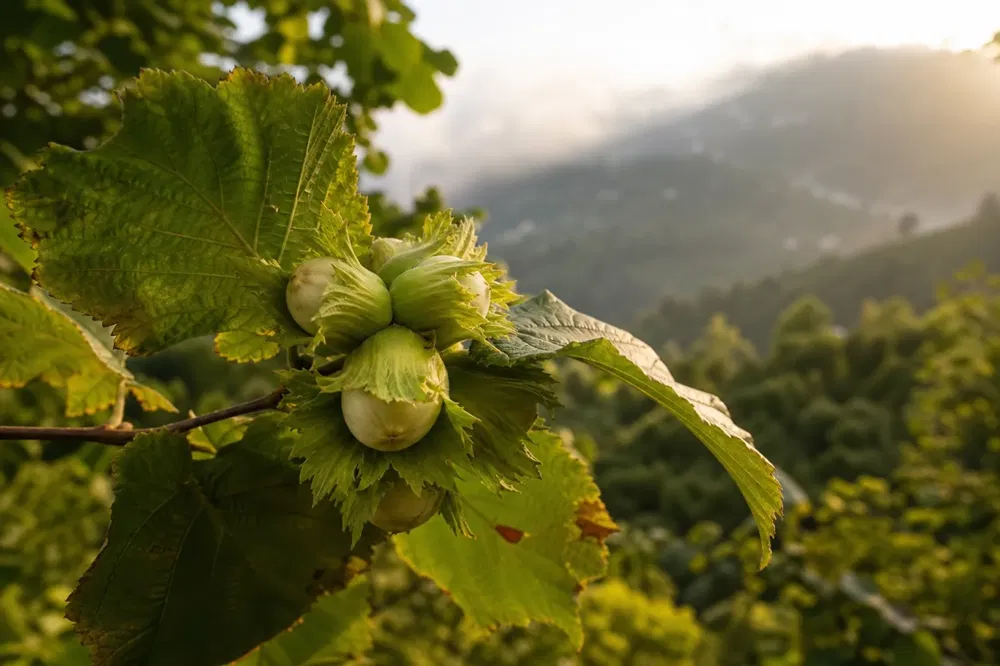
Outside the hazelnut's hard shell there is a green, leafy husk that wraps around it. In the region, this is called zuruf. As the hazelnut ripens, the zuruf dries, its colour fades and the nut begins to come away from the husk more easily.
Hazelnuts picked at harvest often arrive with their zuruf still on. That is why the word zuruf also comes up frequently when people talk about harman and patoz.
When you look at a hazelnut orchard on the Black Sea coast, you will see that the trees do not have a single trunk but look like clumps of several stems rising from one point. These clumps are called ocak.
The answer to the question of what a hazelnut ocak is lies in this very sight: a hazelnut clump made up of several stems growing from a single root or point. Orchard owners often count ocaks rather than trees. When pruning, fertilising or picking is discussed, the unit is usually the ocak. Ducking under an ocak and working your way round it to gather hazelnuts is one of the best-known scenes of the harvest.
This way of growing is an old tradition, adapted to the steep terrain of the Black Sea region and to the hazelnut's own growth habit. As each stem ages over time, new ones are left to replace it, and so the ocak lives on for many years.
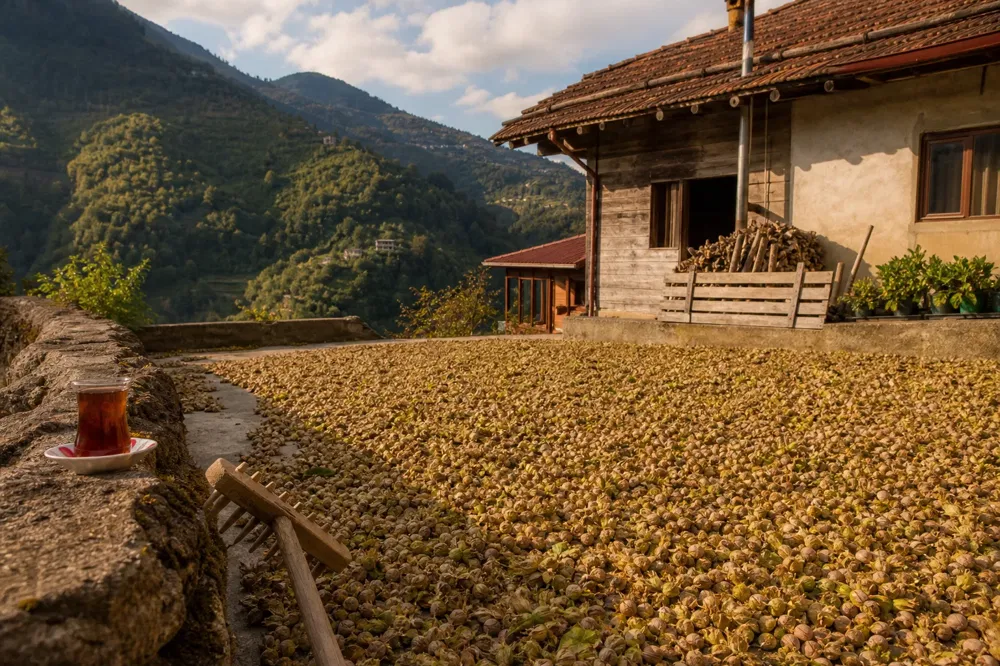
Freshly picked hazelnuts do not go straight into sacks. First they are spread out and dried in the sun. Both the flat, open area where this is done and the work itself are called harman. In villages, the hazelnut harman is set up on concrete yards in front of houses or on level ground.
Harman days are lived according to the weather. The hazelnuts are turned throughout the day, and in the evening or when rain sets in they are covered or gathered up. Given the Black Sea rain, eyes are always on the sky during harman time. Once the hazelnuts have dried thoroughly on the harman, the zuruf comes away easily too.
The word harman also carries a sense of coming together. Harman is where neighbours help one another, the tea is brewed and the conversation goes on and on.
In the past, hazelnuts were separated from their zuruf by hand or by beating them with sticks. Today this job is mostly done by the patoz. For those wondering what a patoz is, in short: it is a threshing machine that separates the hazelnuts dried on the harman from their zuruf and from debris such as leaves and bits of twig mixed in with them.
There is an important detail here: the patoz does not crack the hazelnut's hard shell. Hazelnuts coming out of the patoz are still in their shells. Cracking the shell and extracting the kernel is a separate stage. When patoz time comes, the sound of the machine can be heard across the village, and everyone knows the harman is nearing its end.
The hazelnut harvest needs plenty of hands. On the Black Sea coast, this solidarity, in which neighbours take turns helping in one another's orchards, is called imece. Although working with hired workers from outside has become common at harvest time, the spirit of imece still lives on, especially in family orchards.
Çotanak, ocak, harman and patoz are really like the stops on a journey. The hazelnut ripens on the branch as a çotanak, is gathered from beneath the ocak, dries on the harman and is separated from its zuruf in the patoz. Anyone who knows this sequence also knows how much work has gone into the handful of hazelnuts in their palm.
Black Sea hazelnut culture is not just a farming job. These words carry a way of life handed down from generation to generation. As a family business in Giresun, we live these words anew every year. The next time someone from the Black Sea talks about çotanak or harman, you will know exactly what they mean.
NTV, What does çotanak mean? TDK dictionary definition
Milliyet, What is çotanak? TDK dictionary definition
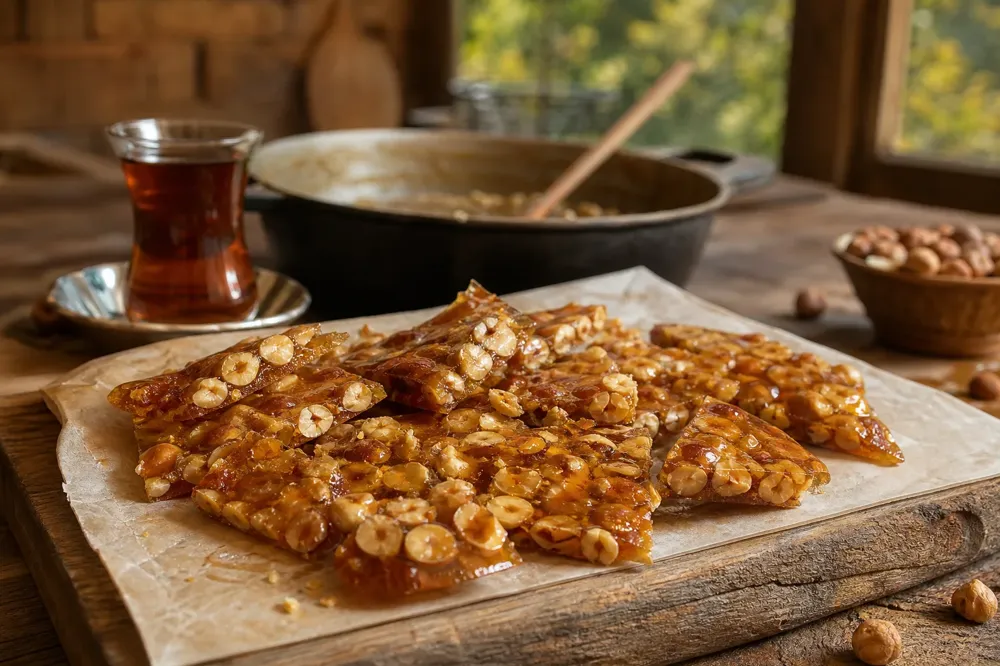
How to make crunchy hazelnut brittle at home with new-crop hazelnuts, the right stage for your sugar, and why brittle turns out sticky or burnt.
Read article →
Steps for roasting new-crop hazelnuts at home in the oven or a pan, starting temperatures, an easy way to remove the skins and tips for storing roasted hazelnuts.
Read article →
The harvest is over and the leaves are falling. When should hazelnut pruning start, when should it finish, and which branches should be cut? We explain, drawing on advice from expert institutions.
Read article →Karadeniz Fırtınası is made with hazelnuts alone. We use no fillers, flavourings, preservatives or emulsifiers, what the label says is exactly what’s in the jar.
 Chat on WhatsApp