Gut flora has become the most talked-about health topic of recent years. What do we actually have on the role of nuts? Let's look at the meta-analysis of randomised controlled trials, the answer differs somewhat from the popular narrative.
A prebiotic is defined as a substrate selectively used by host microorganisms that confers a health benefit.
Put simply: the components your gut bacteria feed on, where that feeding benefits you.
Three components stand out.
**Fibre.** Hazelnuts contain about 9.7 g of fibre per 100 g. Fibre is not digested in the small intestine; it reaches the colon where bacteria ferment it.
**Polyphenols.** Hazelnuts have the highest proanthocyanidin content among tree nuts. Polyphenols have a two-way relationship with the microbiota: bacteria convert polyphenols into absorbable products, and those products in turn shape microbiota composition.
**Fat.** This is the most interesting one. The oil in a hazelnut sits inside intact cell walls that resist digestion, forming a physical barrier in the upper gastrointestinal tract. As a result, some of the fat **reaches the large intestine**, where the microbiota can use it.
Researchers describe this structure as "a unique method of delivering fermentable nutrients to the gut microbiota".
Early in vitro work showed a prebiotic effect of almonds on *bifidobacteria* and of chestnut extract on *lactobacilli*.
Those findings prompted human trials.
A systematic review and meta-analysis of randomised controlled trials examined the effects of nuts on gut microbiota, gut function and symptoms in adults.
The result is more measured than the headlines: **a nut-rich diet did not produce major changes in the overall composition of the gut microbiota.**
That does not mean nuts have no effect. The microbiota is a more resilient ecosystem than often assumed, and hard to shift fundamentally with a single food.
Fermentation of fibre in the gut produces short-chain fatty acids (SCFAs). The most discussed is **butyrate**.
Butyrate promotes contractility and mucus secretion in intestinal epithelial cells, which partly explains the microbiota's beneficial effect on gut function.
SCFAs such as acetate, propionate and butyrate may also influence the production of gut hormones (for example GLP-1), with knock-on effects on metabolic function, epithelial integrity, appetite and glucose homeostasis.
Microbiota diversity requires dietary **variety**, not a single food. Studies on prebiotic blends containing more than thirty plant ingredients point in that direction.
Hazelnuts can be part of that variety, they are not a solution on their own.
Increase fibre gradually. Sudden large increases can cause bloating and discomfort. In one study a participant withdrew because of gastrointestinal discomfort.
The meta-analysis also assessed gut function and symptoms, finding nut consumption generally well tolerated.
For people with irritable bowel syndrome the picture may differ; high fibre and fat content can trigger symptoms in some individuals. That group needs individual trial and dietitian support.
The claim that nuts benefit gut health makes mechanistic sense: there is fibre, there are polyphenols, and even undigested fat reaches the colon.
But the outcomes measured in human trials do not support a "transform your microbiome" message. The effect is subtler, and the microbiota itself is quite resistant.
It is more accurate to see hazelnuts as part of a varied, fibre-rich diet rather than as a treatment for gut health.
If you have digestive complaints, consult your doctor; this article is for information only.
Creedon A.C. et al., "Nuts and their Effect on Gut Microbiota, Gut Function and Symptoms in Adults: A Systematic Review and Meta-Analysis of Randomised Controlled Trials", Nutrients.
"Gut microbiome resists major changes from a nut-rich diet", News-Medical review, 2025.
USDA FoodData Central, hazelnut fibre content.
Alasalvar C., Bolling B.W., proanthocyanidin content of hazelnuts.
How soil, climate and altitude combine to give Giresun hazelnuts their distinctive aroma.
Read article →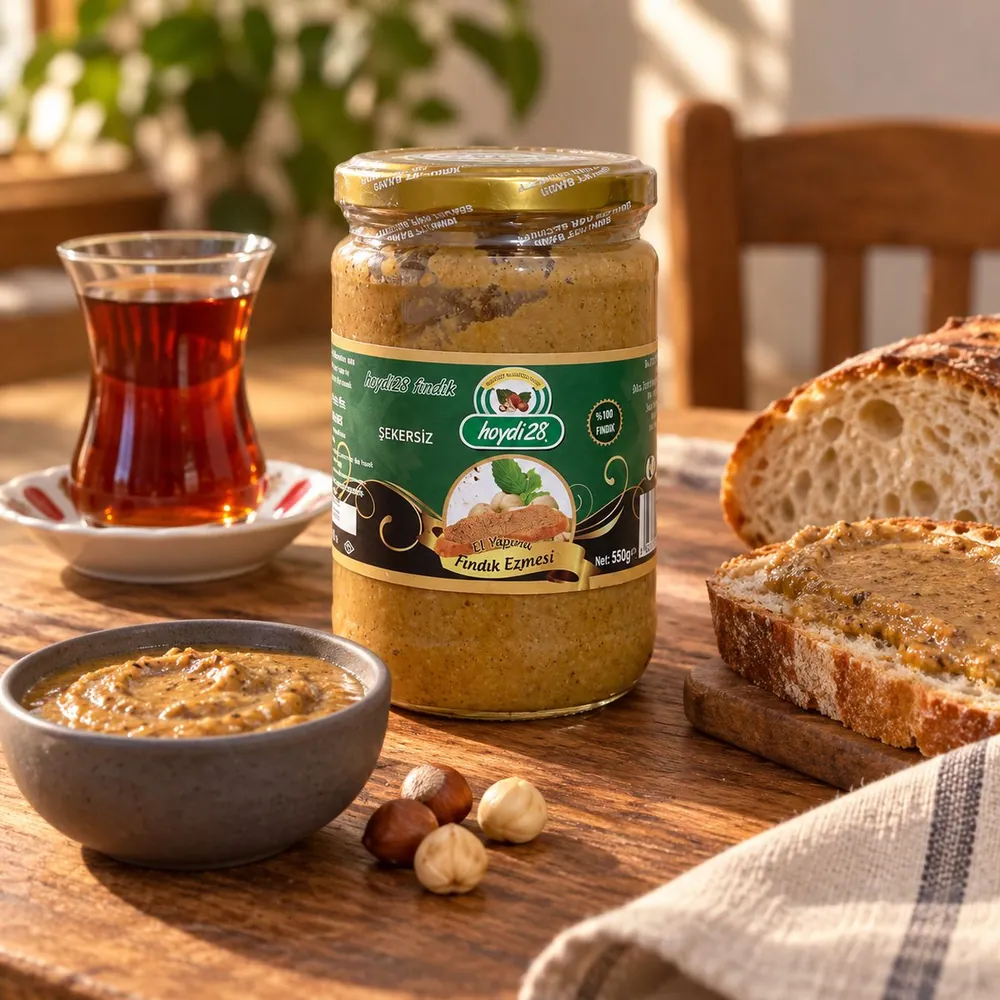
How to keep an opened jar fresh and smooth for months.
Read article →
Why hazelnut boxes stand out for New Year and special-occasion gifting.
Read article →Karadeniz Fırtınası is made with hazelnuts alone. We use no fillers, flavourings, preservatives or emulsifiers, what the label says is exactly what’s in the jar.
 Chat on WhatsApp