
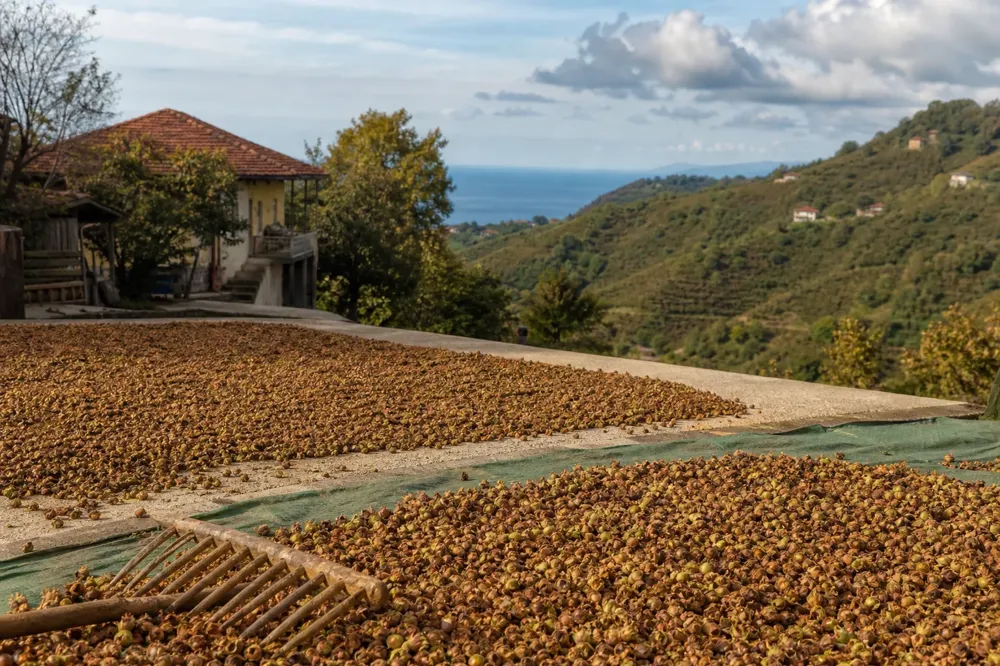
The moment a hazelnut is picked from the branch, it has not even completed half of its journey. The clusters gathered in the orchard go through a vital process lasting several days before they reach the table: drying. On the Black Sea coast this process takes place on the drying ground, known as the harman, and it determines much about the hazelnut, from its flavour to its shelf life.
As new-crop hazelnuts arrive on the shelves in October, knowing how they were dried will help you both when choosing them and when storing them at home.
The hazelnut harvest on the Black Sea coast usually begins at the end of summer. Freshly picked hazelnuts often arrive still inside their husk, the leafy outer casing, which may be green or just starting to turn yellow. At this stage the nuts still contain a great deal of moisture.
If damp hazelnuts are left sitting for long, they can heat up, go mouldy and lose their flavour. That is why the very first rule is to carry the harvested nuts to the drying ground and spread them out without delay.
A drying ground is a flat, open area where hazelnuts are dried in the sun. In the past, bare earth was used, but today concrete surfaces or tarpaulins laid on the ground are mostly preferred. The aim is to stop the nuts drawing moisture from the soil and to keep them free of dust, stones and other foreign matter.
In the villages, drying grounds are often right in front of or close to the house, so the family can keep an eye on the hazelnuts throughout the day.
The hazelnuts are spread over the drying ground in a thin layer. Thick piles slow down the drying of the nuts at the bottom, so the depth of the layer is a detail experienced growers pay close attention to.
During the day the nuts are turned regularly with a rake, so that every one gets an equal share of sun and air. When the weather holds, the husks dry, open up and the nuts begin to separate on their own.
In the evening, or when the sky starts to darken, the hazelnuts are gathered up or covered. Night-time humidity and dew can dampen nuts that have dried all day.
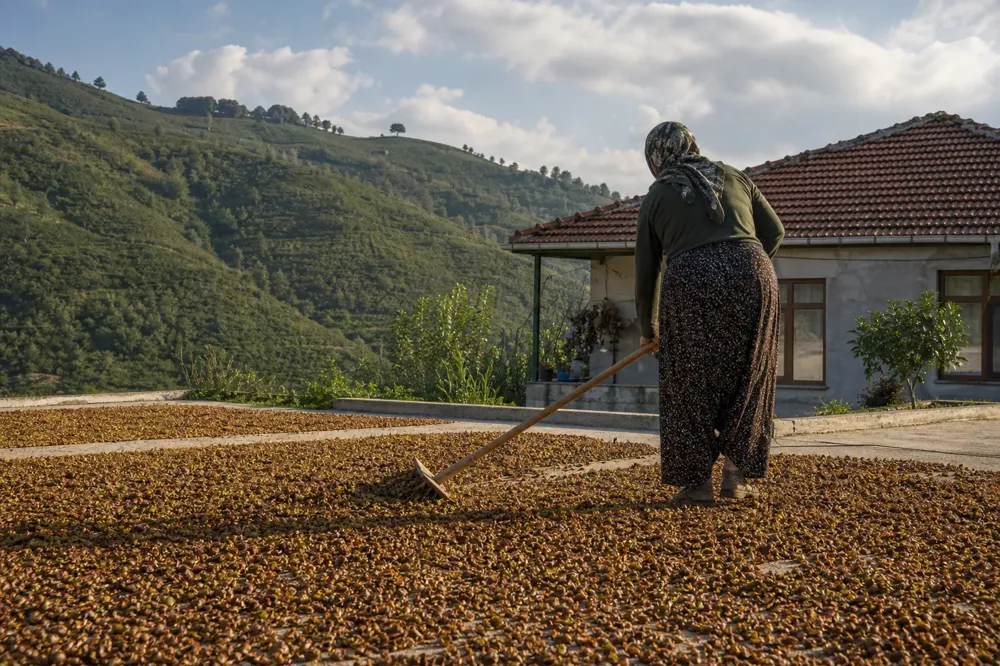
The weather on the Black Sea coast can change in an instant. A sunny morning can turn into a downpour by the afternoon, so during the drying days all eyes are on the sky.
When the rain starts, everyone rushes to the drying ground, the hazelnuts are gathered and the tarpaulins are pulled over. Wet nuts take longer to dry and the risk to quality rises. There is hardly a drying season in the region without this scramble.
Once the husks are dry enough, the hazelnuts are passed through a threshing machine called a patoz. The thresher separates the nuts from their husks and leaves. After that, the hazelnuts carry on drying in their shells for a while longer.
This second stage is just as important as the first. A hazelnut that looks dry on the outside may still be damp inside. Experienced growers crack nuts open and judge whether drying is complete by the texture of the kernel and the sound and colour of the shell.
Well-dried hazelnuts keep their flavour for a long time. Nuts that retain too much moisture are more prone to spoiling, going mouldy and turning bitter in storage. Moisture also creates ideal conditions for moulds to grow, which makes drying a critical step for food safety too.
Leaving the nuts in extreme heat for long periods during drying is also undesirable. The goal is to dry them slowly and evenly. In other words, a good harvest drying calls for patience and care.
The drying ground is not just a place for drying; it is also a meeting place. During the harvest and drying season, families and neighbours come together. Tea is brewed, conversations flow and children run about among the hazelnuts.
The Black Sea tradition of imece, or communal work, stays alive during this period. When one household's hazelnuts are being dried, the neighbours come to help, and when their turn comes, they receive the same help in return. In the region, the hazelnut is not merely a crop but a way of life.
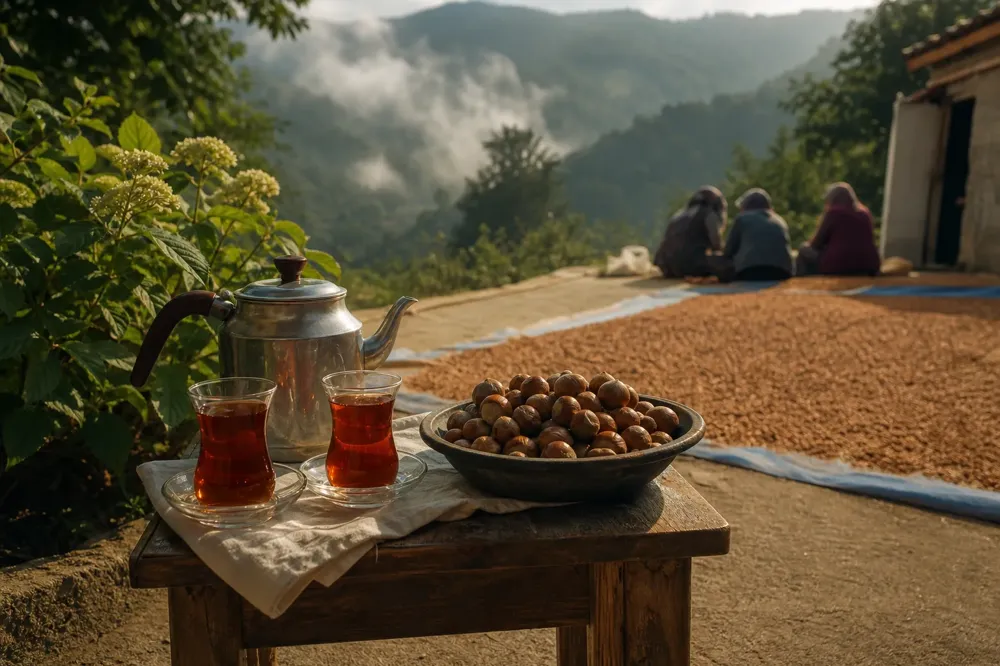
Once well-dried hazelnuts reach you, keeping them that way is up to you. Storing them in a sealed container in a cool, dry place away from sunlight ensures that the effort put in on the drying ground pays off.
A damp kitchen cupboard or a shelf next to the hob can affect even well-dried hazelnuts over time. If you want to keep them for longer, the fridge is a good option.
When you pop a handful of hazelnuts into your mouth, remembering the clusters picked from the branch, the mornings spent turning them with a rake and the races against the rain makes that flavour something else entirely. This autumn, as you taste the new-crop hazelnuts, spare a thought for those critical days on the drying grounds of Giresun.
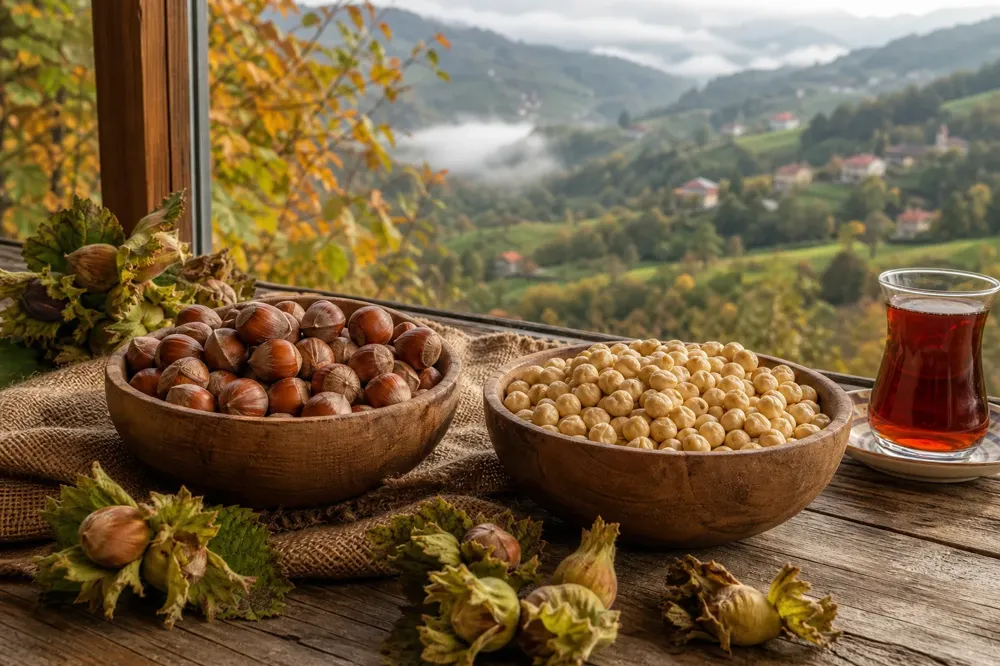
The new harvest is in and there are two options on the counter. We explain how to choose between in-shell and shelled hazelnuts based on freshness, storage, convenience and how you plan to use them.
Read article →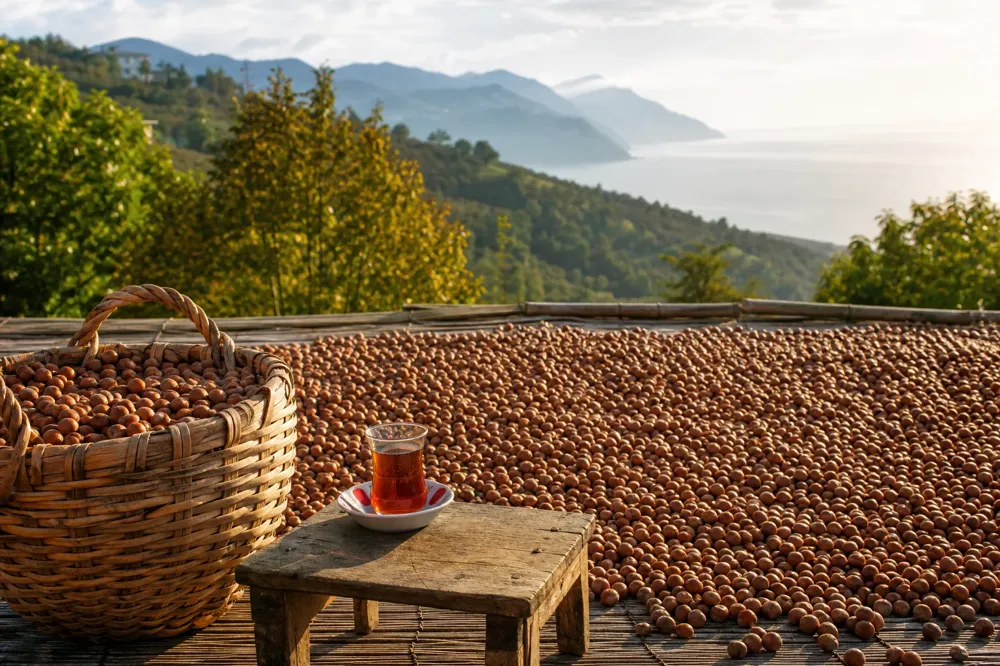
Autumn is here and new-crop hazelnuts are on the stalls. We explain, step by step, how to use colour, aroma, crunch and skin to tell fresh hazelnuts from old stock.
Read article →
How soil, climate and altitude combine to give Giresun hazelnuts their distinctive aroma.
Read article →Karadeniz Fırtınası is made with hazelnuts alone. We use no fillers, flavourings, preservatives or emulsifiers, what the label says is exactly what’s in the jar.
 Chat on WhatsApp