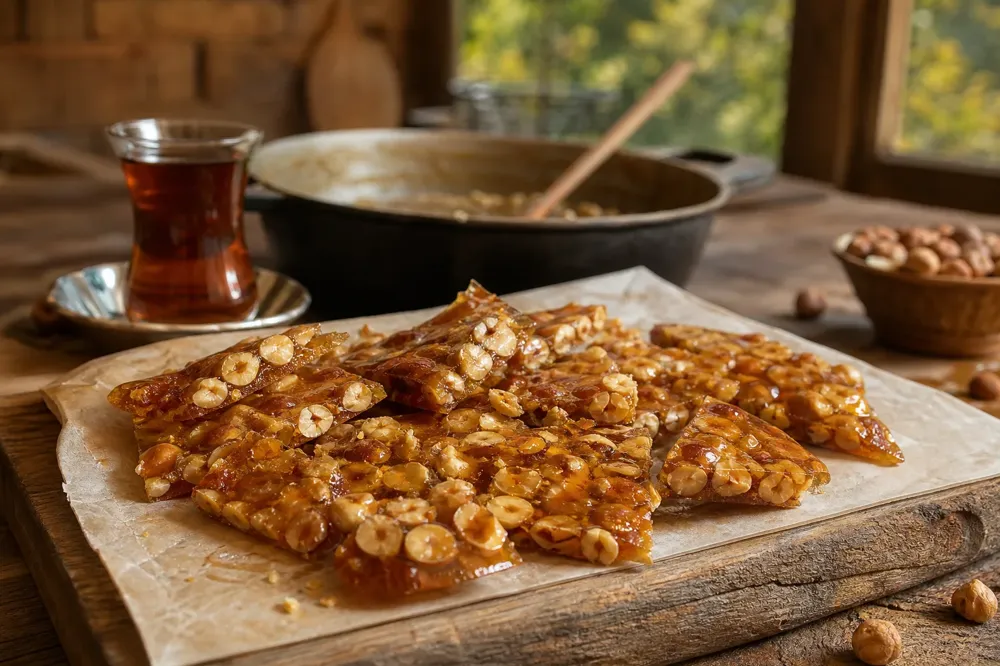
For anyone wondering how to make hazelnut brittle, here is the short answer: melt the sugar until it turns caramel-coloured, stir in the hazelnuts, pour the mixture out in a thin layer and break it up once it has cooled. It sounds simple, but a few small details decide whether your brittle ends up crisp or a lump that clings to your teeth. Now that new-crop hazelnuts are arriving in homes, let us go through those details step by step.
The confection known in English as brittle is made by mixing nuts into a hard sugar mass, flattening it and then breaking it into pieces. What we call krokan in our kitchens is very close to this. It is usually less than 1 centimetre thick.
Nougatine is a relative, but a slightly different sweet. It uses sliced almonds rather than whole nuts, and the almonds are embedded in clear caramel. So you can think of hazelnut brittle as nougatine's more rustic, hazelnut-loving cousin.
A ratio often seen in home recipes is 100 grams of hazelnuts, 1.5 cups of granulated sugar and 1 tablespoon of butter. The hazelnuts are usually halved so that every bite gives you both caramel and nut.
Whether to use roasted or raw hazelnuts varies from recipe to recipe. Roasted hazelnuts give a more pronounced, warmer aroma. Some pastry recipes, however, add raw hazelnuts straight into the syrup, where they cook. If you would like to roast your hazelnuts at home, you will find the oven and pan methods explained in detail in our article 'How to Roast Hazelnuts at Home'.
First, prepare the surface you will pour onto. Line a tray with baking paper or use a lightly greased marble worktop. Once the caramel is ready, you will have no time to wait.
Put the sugar in a wide, heavy-based pan and melt it over a low heat. Do not stir it with a spoon at this stage. Swirling the pan in a circular motion now and then is enough to help the sugar melt evenly. Stirring can make the sugar crystallise and form lumps.
When the sugar has melted completely and turned from golden to a light amber, add the butter. It will foam up, so do not panic. Finally, add the hazelnuts and stir quickly to coat every nut in caramel.
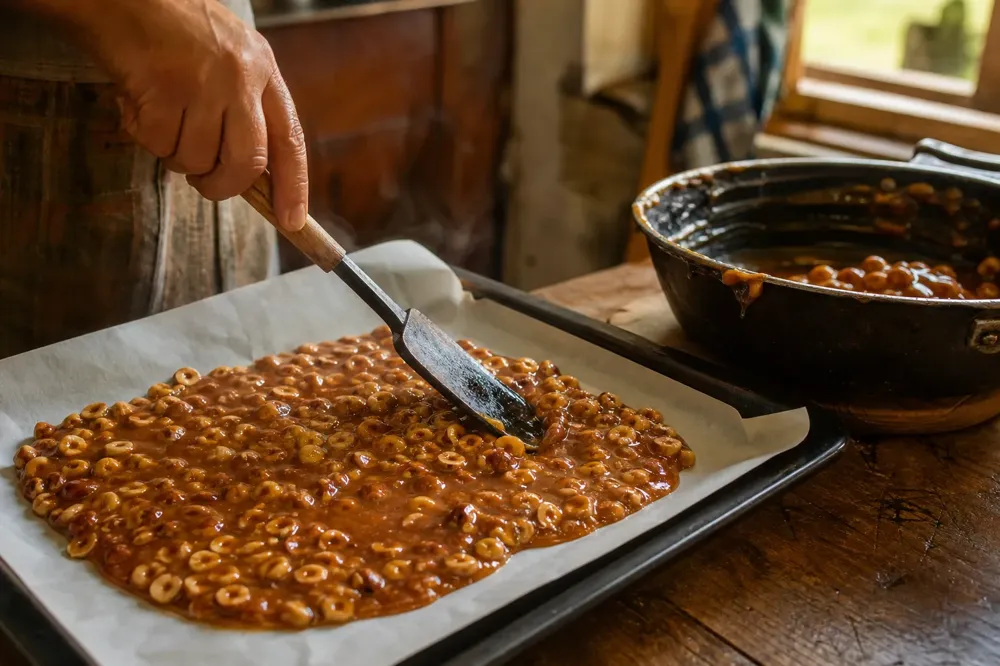
Pour the mixture straight onto your prepared surface and spread it with a spatula as evenly as you can. Once it is cool enough to handle, break it into pieces. It is perfectly normal for the pieces not to match, and part of brittle's charm lies in that irregularity.
If you have a thermometer, things become much easier. Peanut brittle recipes state that the sugar and water mixture is heated to roughly 149 °C. At this temperature, the sugar reaches the hard stage at which it snaps like glass once cooled.
Some recipes follow a more detailed method: the raw nuts are added when the syrup reaches 110 °C, the mixture is taken off the heat at around 155 °C, and only then are the butter, vanilla and a pinch of salt stirred in. If you do not have a thermometer, go by colour. A light amber usually signals the right point.
The most common reason is taking the sugar off the heat before it has cooked enough. Caramel that has not reached the hard stage will not snap when it cools; it bends and sticks to your teeth. If the colour is still very pale, be patient for a few more minutes.
The second reason is moisture. Sugar readily absorbs moisture from the air. Brittle made on a rainy, muggy day, or in a kitchen where tea is brewing, can soften more quickly. That is why it matters to move the cooled brittle into a sealed container rather than leaving it out.
Caramel leaves only a very short window between the right point and burnt. A high heat, a thin-based pan and walking away from the hob are the best-known mistakes. Keep the heat low and act the moment you see the colour deepening. If you notice a bitter smell, the sugar has burnt, and that batch is hard to rescue.
The hazelnuts can burn too. Keeping already dark-roasted hazelnuts in hot caramel for too long can make them bitter. If you are using roasted hazelnuts, a good approach is to add them last and pour the mixture out quickly.
Some recipes add a tiny amount of bicarbonate of soda at the final stage. The bicarbonate creates small air bubbles in the caramel, making the brittle lighter and crunchier. It is not essential, just an option for those who would like to try it.
Molten sugar is far hotter than boiling water and sticks to the skin. Use a long-handled spatula and do not let the pan handle stick out beyond the hob. If you are making brittle with children, an adult should always handle the pouring and spreading. Children can join in the fun by breaking up the cooled brittle.
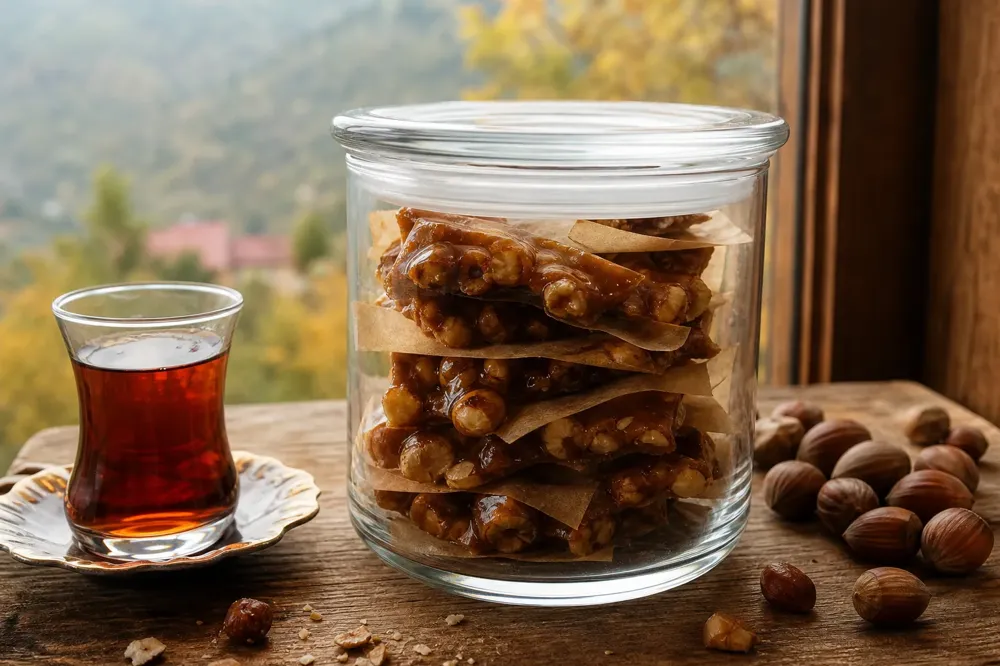
Brittle's greatest enemy is moisture. Store the fully cooled pieces in an airtight container in a cool, dry place. You can put baking paper between the pieces to stop them sticking together. For ways to keep the hazelnuts themselves fresh, have a look at our article 'How to Store Hazelnuts'.
A pan of sugar and a handful of new-crop hazelnuts while the tea brews add a small celebration to autumn evenings. If you do not get the consistency right on your first try, do not be discouraged: brittle is a sweet that gets better as your hand gets used to it.
Wikipedia, Brittle (food) entry: definition, cooling and the difference from nougatine
Simple English Wikipedia, Peanut brittle entry: cooking temperature and preparation stages
Yemek.com, Fındık Krokan Tarifi: home measurements and steps
Pastry Maestra, How to Make Brittle Candy: temperatures for adding nuts and removing from the heat
Miz En Place, The Sweet and Crunchy History of Brittle Candy: the effect of bicarbonate of soda on texture

Pasos para tostar en casa avellanas de nueva cosecha en el horno o en la sartén, temperaturas de partida, cómo quitar la piel fácilmente y consejos para conservar las avellanas tostadas.
Leer artículo →
La cosecha ha terminado y caen las hojas. ¿Cuándo empieza y termina la poda del avellano y qué ramas se cortan? Te lo contamos con las recomendaciones de instituciones expertas.
Leer artículo →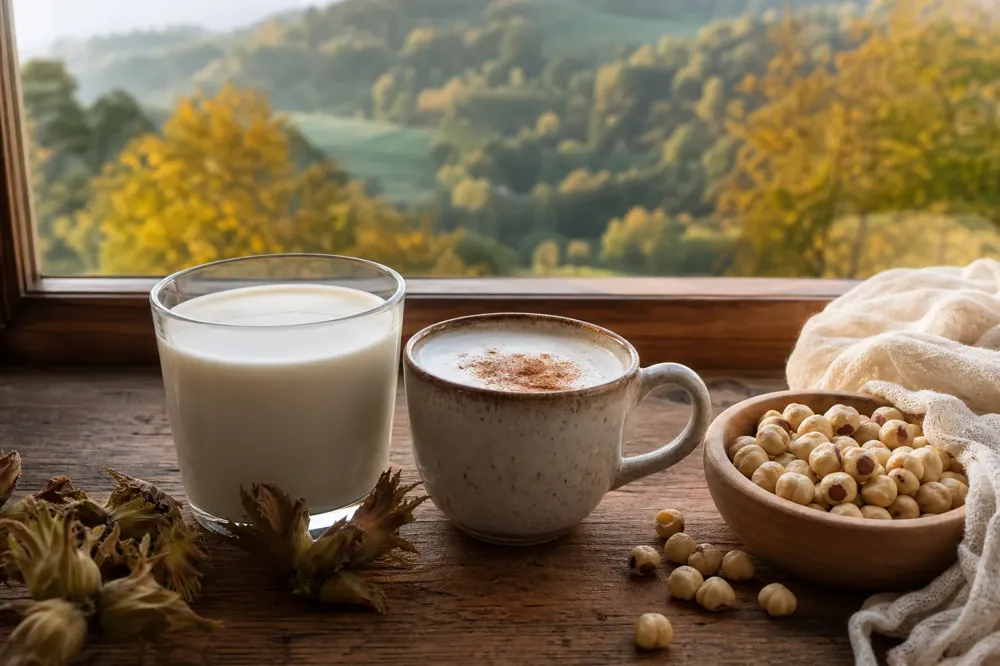
Para hacer leche de avellana en casa basta con remojar, triturar, colar y calentar. Te contamos la diferencia entre avellana cruda y tostada, cómo conservarla y cómo aprovechar la pulpa.
Leer artículo →Karadeniz Fırtınası se elabora solo con avellanas. No usamos rellenos, aromas, conservantes ni emulgentes: lo que pone en la etiqueta es exactamente lo que hay dentro de la caja.
 Escríbenos por WhatsApp