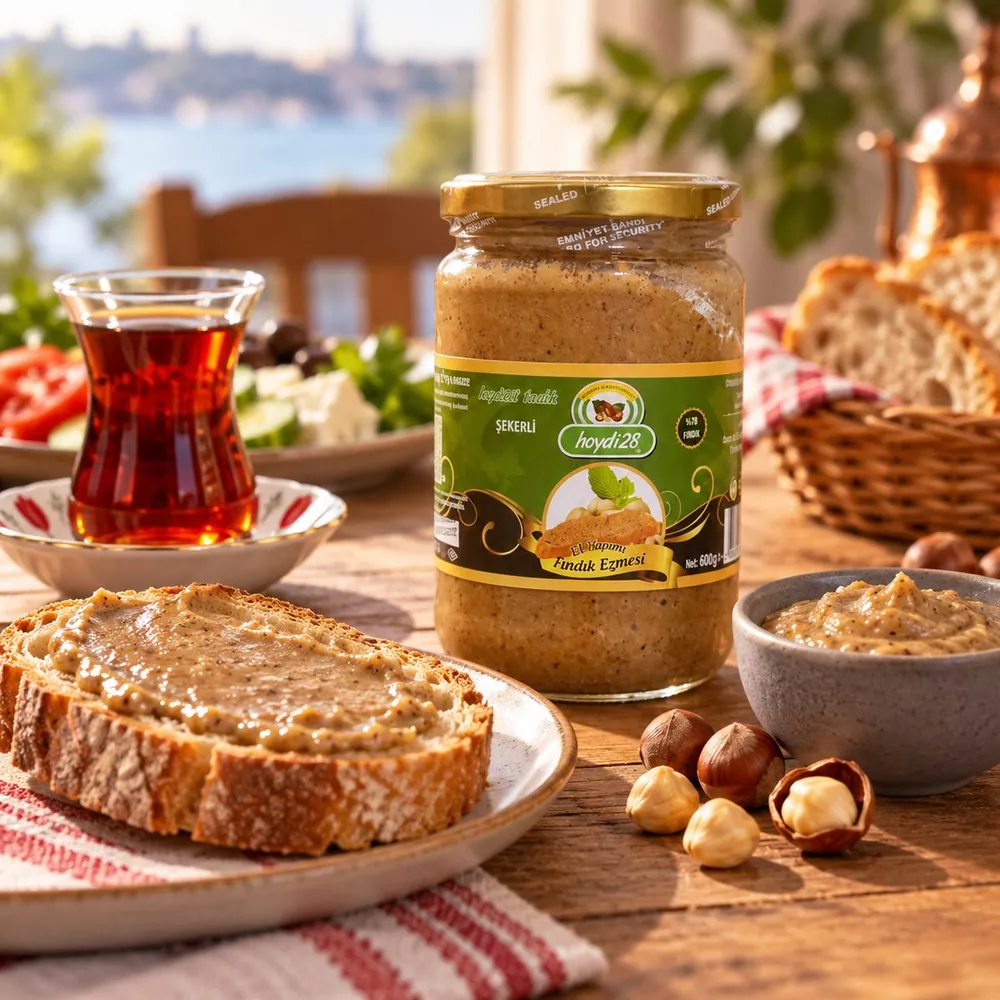
Hazelnut butter is in theory a single-ingredient product: hazelnuts. So why does it turn out differently at home? Let's look at the food science.
Grind hazelnuts long enough and the cell walls break down, releasing the oil inside. The powdered nut first clumps, then, as oil accumulates, shifts to a flowing consistency.
That transition is sudden. For the first few minutes you think nothing is happening, then it becomes butter all at once. Patience is the main ingredient in this recipe.
**Raw hazelnuts** give a butter with a plain aroma. They are the right start if you want to do your own roasting.
**Roasted hazelnuts** give a more intense aroma. Because roasting loosens the cell structure, the oil is released more easily and grinding takes less time.
**Double-roasted hazelnuts** give the most intense aroma but can add a slightly bitter note.
On the skin: butter made with skin-on nuts is darker and has a richer aroma. The skin is rich in polyphenols.
No. Hazelnuts are about 61% fat, more than enough to form a butter.
Some recipes suggest coconut or sunflower oil. That speeds the process but compromises the purity of the product and adds calories. With patience it is unnecessary.
Two reasons.
**Grinding fineness.** Industrial mills reduce particle size far below what a kitchen food processor achieves, creating a smooth mouthfeel. At home a slightly grainy texture usually remains.
**No emulsifier.** Most commercial products contain an emulsifier such as soya lecithin to prevent the oil separating. In homemade butter the oil rises over time.
The second is not a flaw. Additive-free commercial butters separate in exactly the same way, and that separation is the sign that no emulsifier was used.
Butter is essentially a suspension: solid nut particles held in liquid oil. Physics does the rest, heavier particles settle and lighter oil rises.
An emulsifier is an agent that holds the two phases together. Without it, gravity does its work.
The fix is simple: **stir with a dry spoon.** The texture returns to how it was on day one.
Grind hazelnuts at room temperature. Nuts straight from the fridge release their oil more slowly.
Let the processor warm up, but not excessively; very high temperatures damage the aroma. If the machine gets hot, pause.
Scrape down the sides several times. The mixture sticks to the walls and the blade spins in air.
If you want salt or sugar, add it at the end.
Adding cocoa firms up the texture; you may need to grind a little longer to compensate.
Commercial butters are produced under controlled conditions and generally have a longer shelf life.
Homemade butter has no microbiological control, so:
Wash the jar beforehand and dry it thoroughly. Moisture is the biggest risk.
Use a dry spoon every time.
Store somewhere cool and dark; refrigeration is not needed, but do not leave it out in a hot kitchen for long.
Eat it within a few weeks. If you notice any change in smell, do not use it.
Oven at around 150°C, in a single layer, for 12-15 minutes. Stir once halfway through.
The nuts continue cooking after they leave the oven, so take them out slightly before the colour you want.
Let them cool before grinding, but not completely; warm nuts release their oil more easily.
Homemade butter gives you full control over the contents: how much sugar, what degree of roast, skin on or off.
In return you give up some smoothness and shelf life. Both are acceptable trade-offs, it depends which matters more to you.
USDA FoodData Central, hazelnut fat and nutrient content.
Turkish Food Codex Food Labelling Regulation, ingredient list ordering.
Belviso S. et al., effect of roasting temperature on oxidative stability in hazelnuts, 2017.
Reviews on lipid oxidation and storage conditions in hazelnuts.
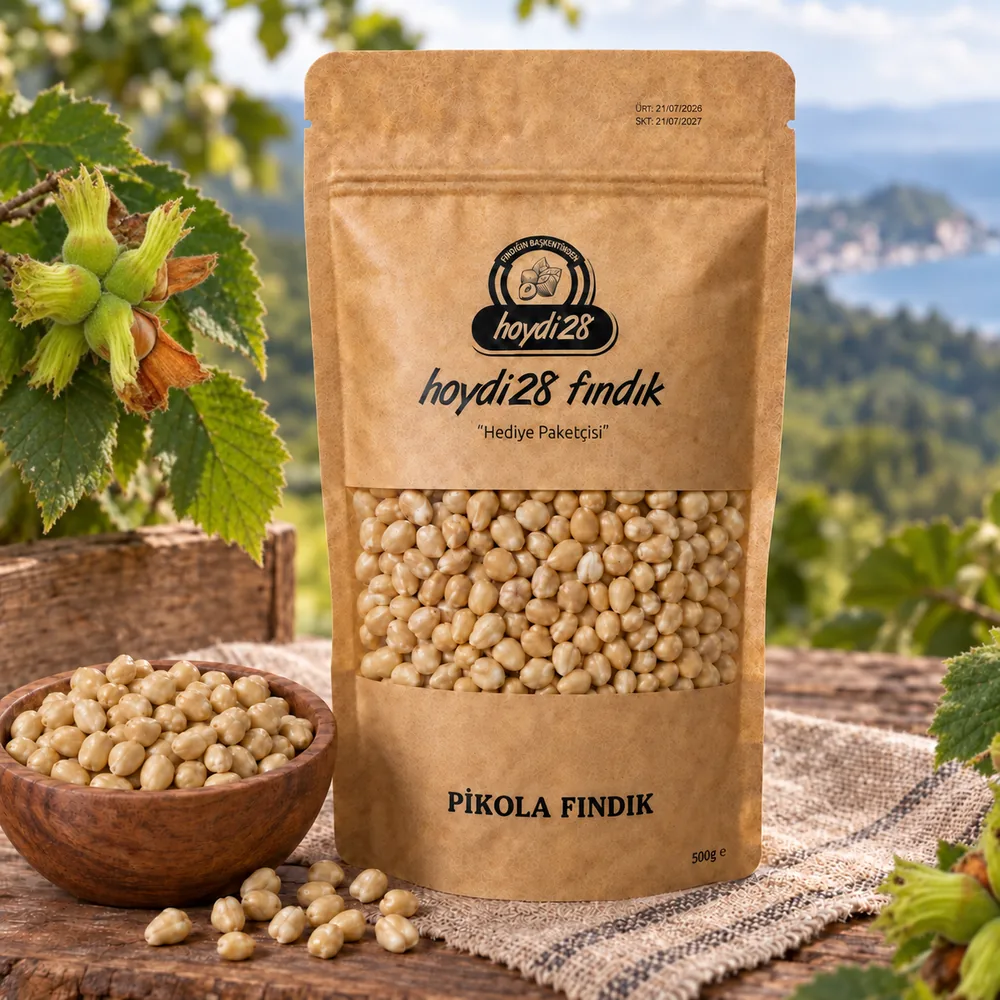
How soil, climate and altitude combine to give Giresun hazelnuts their distinctive aroma.
Read article →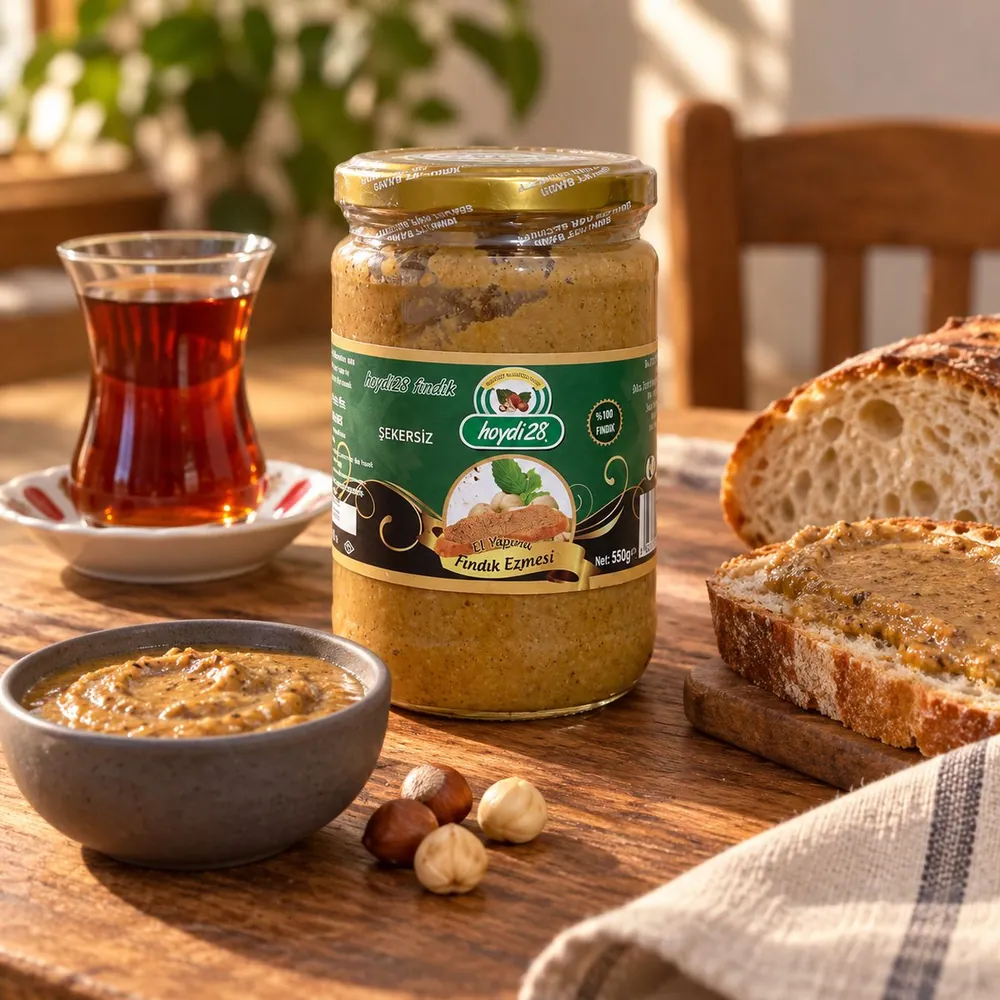
How to keep an opened jar fresh and smooth for months.
Read article →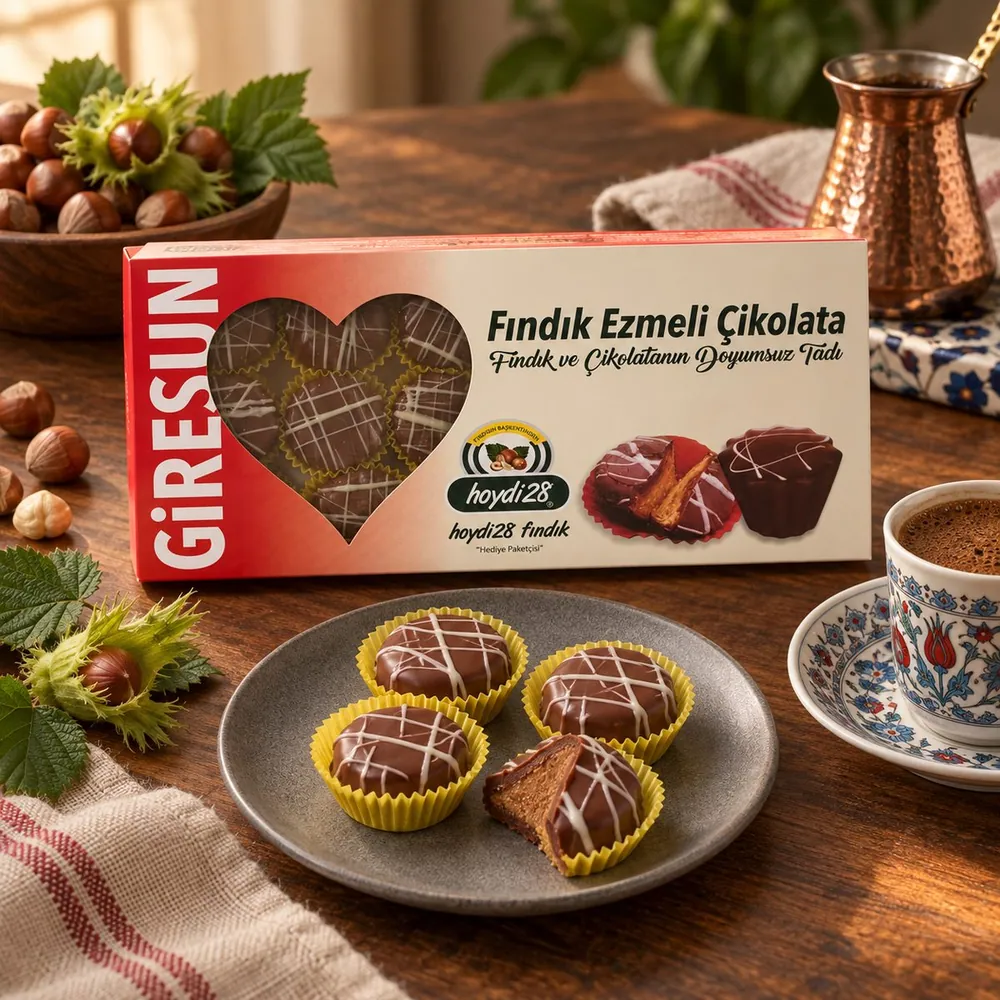
Why hazelnut boxes stand out for New Year and special-occasion gifting.
Read article →Karadeniz Fırtınası is made with hazelnuts alone. We use no fillers, flavourings, preservatives or emulsifiers, what the label says is exactly what’s in the jar.
 Chat on WhatsApp