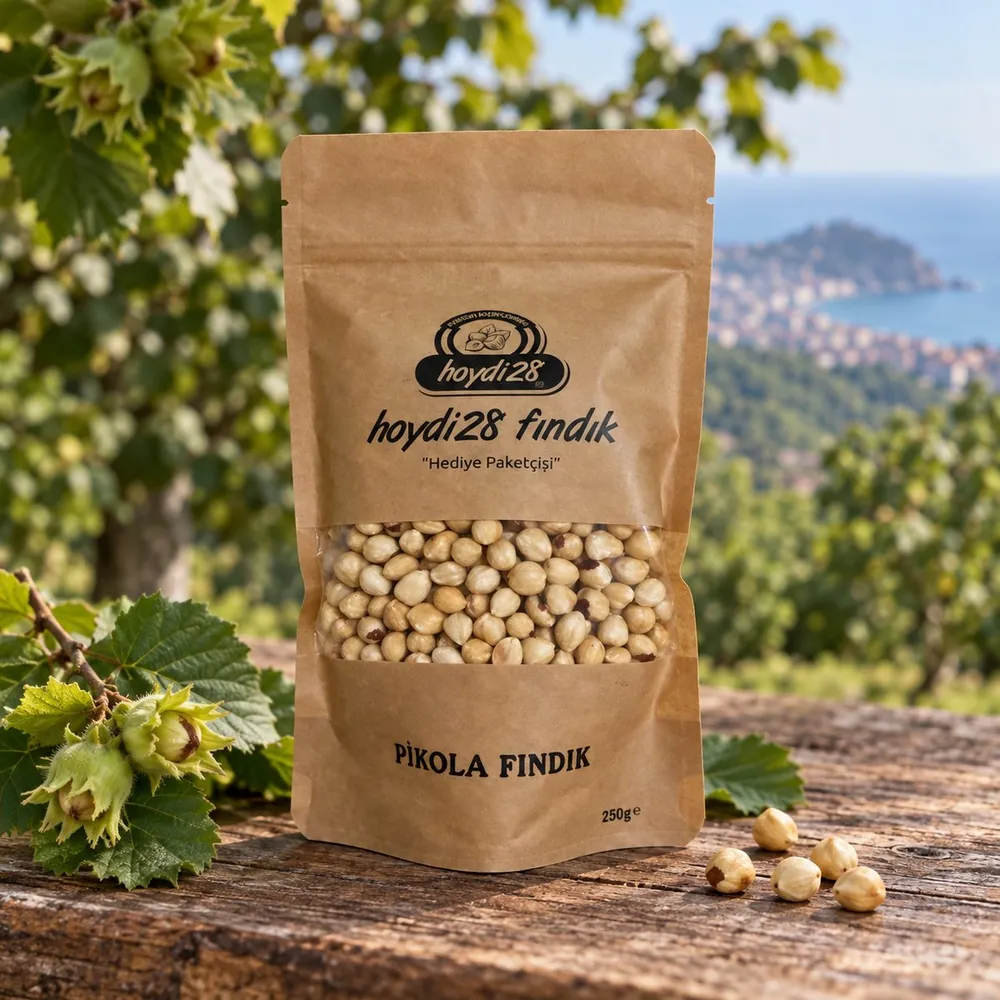
On hazelnut exchanges, “Giresun quality” trades as a separate class. Behind that distinction lies both geography and a formal registration.
Giresun Tombul Hazelnut was registered as a designation of origin by the Turkish Patent and Trademark Office in 2001, under registration number 31. In 2022 it was placed under protection across European Union member states. A designation of origin means the product must be grown, processed and packed within defined geographical boundaries.
Tombul is known for its round shape, thin shell and easily removed skin. An in-shell nut weighs around 1.5 grams. The real difference lies in kernel ratio and aroma: the intense taste it leaves after roasting makes it the first choice of the chocolate and confectionery industry.
Giresun Tombul has a high oil content, most of it oleic acid. High oleic acid does two things: it preserves aroma during roasting and slows the oil’s deterioration. The texture of hazelnut butter is directly tied to this.
Tombul saplings can be planted in other regions, but Giresun’s altitude, sloping land, humidity and soil cannot be moved. That is the logic of geographical indication: what makes the product is not the variety alone, but the ecology it grows in.
Registration means inspection. Products with a geographical indication are regularly checked against defined physical and chemical properties. What you see on the label is a supervised standard, not a marketing promise.
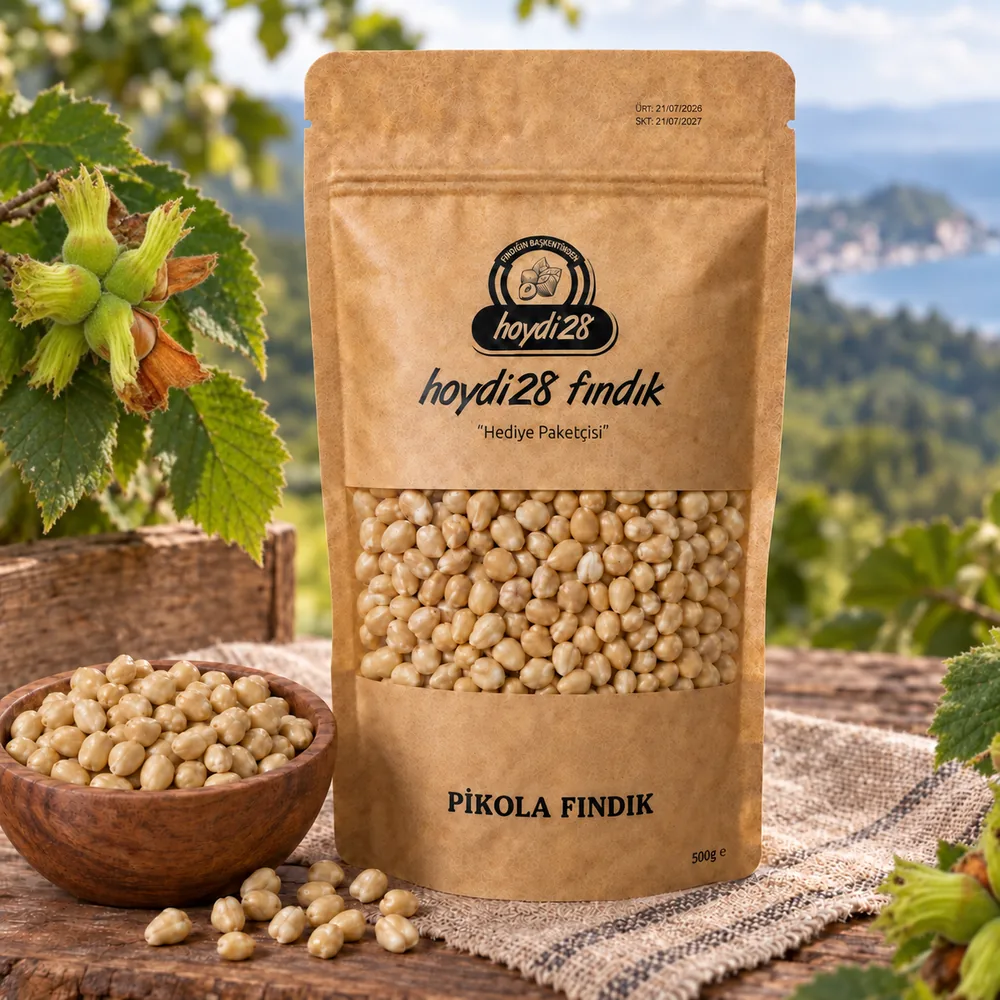
How soil, climate and altitude combine to give Giresun hazelnuts their distinctive aroma.
Read article →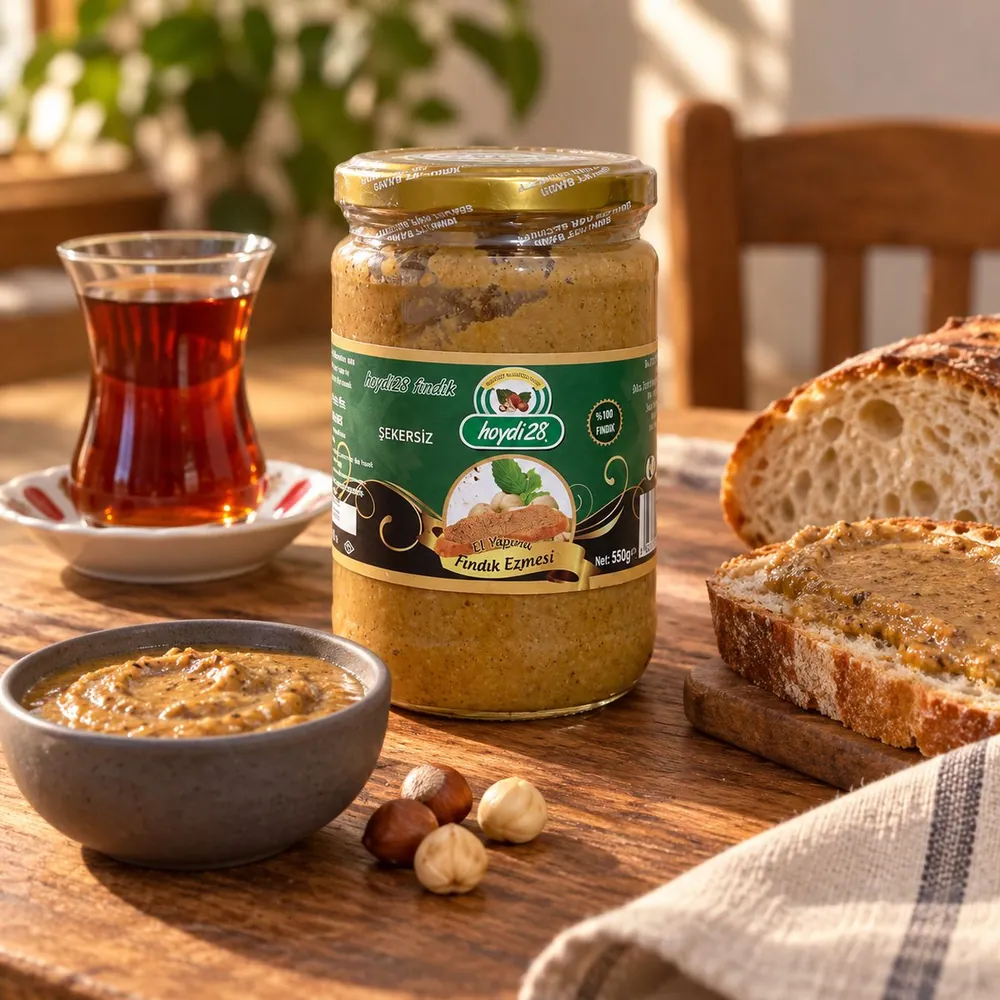
How to keep an opened jar fresh and smooth for months.
Read article →
Why hazelnut boxes stand out for New Year and special-occasion gifting.
Read article →Karadeniz Fırtınası is made with hazelnuts alone. We use no fillers, flavourings, preservatives or emulsifiers, what the label says is exactly what’s in the jar.
 Chat on WhatsApp