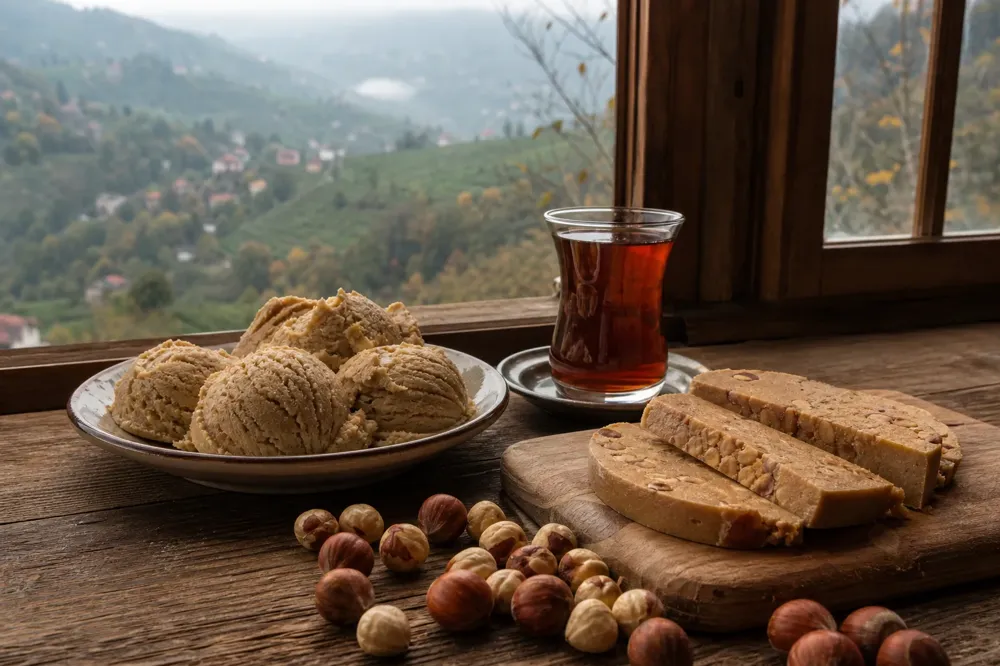
Hazelnut halva is a single name that describes several different sweets around the Black Sea. In some places it brings to mind a firm halva made from hazelnuts and sugar pounded for hours; in some homes, a warm dessert made by adding hazelnuts to flour toasted in butter. In this post we tell the three types apart, describe an intriguing Giresun tradition and answer the question people ask most when making hazelnut flour halva at home: when do you add the hazelnuts?
Say Giresun and the first thing that comes to mind is hazelnut orchards. But in Şebinkarahisar, in the province's interior, the climate is different, and according to a report in Karadeniz'de Sonnokta Gazetesi, hazelnuts do not grow in the district. Even so, Şebinkarahisar has its own distinctive pounded hazelnut halva.
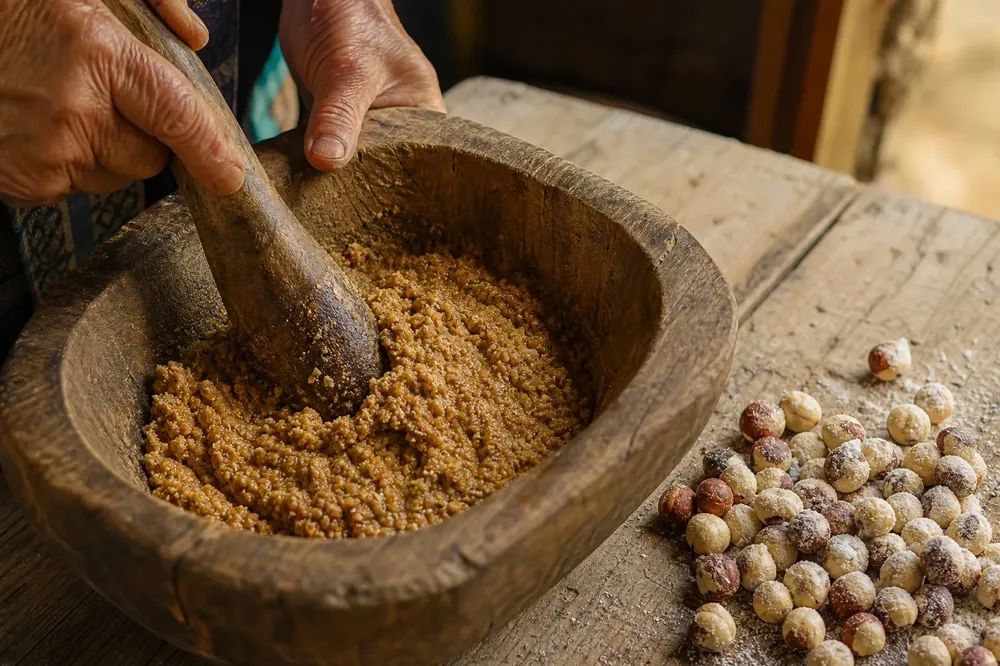
According to the same report, this halva uses double-roasted Giresun hazelnuts. The hazelnuts are not ground by machine but pounded the traditional way in a bucket carved from a log. In other words, hazelnuts from the coastal orchards are transformed into an entirely different treat in a district beyond the mountains.
According to a local producer quoted in the report, 1 kilogram of pounded, crushed hazelnuts is mixed with 2 kilograms of icing sugar and the mixture is pounded again. This ratio is the producer's own method; bear in mind it may vary from home to home and from maker to maker.
The real effort lies in the pounding. The hazelnuts and sugar are pounded for hours, so the hazelnuts' own oil combines with the sugar to form a dense consistency that can be sliced. The producer says this halva can keep for a year without spoiling. This has not been independently verified and should be read as a producer's claim. Whatever the case, storing it in a cool, dry, airtight container at home is a good habit.
Because it starts with crushed hazelnuts, pounded halva is a relative of hazelnut paste. The difference is that it is worked with sugar for a long time until it becomes a firm mass. It is known as a sweet often made at home in the winter months and offered to guests alongside tea.
Another hazelnut halva from the Black Sea is Ordu's Kabataş halva. One seller's product page lists the ingredients as pear or apple molasses, shelled hazelnuts, wheat flour, sugar and egg white. Here some of the sweetness comes from the molasses, and the egg white changes the texture. Set side by side with Şebinkarahisar's pounded halva of plain hazelnuts and sugar, it is clear how differently two neighbouring provinces interpret the same ingredient.
On recipe websites the name hazelnut halva is sometimes used in a fourth sense too: roasted hazelnuts, icing sugar and a little hazelnut oil are blitzed in a food processor to make a thick paste. It is a practical method, but it gives a different result from the traditional halvas.
In short, you will come across three main types. The first is pounded halva: hazelnuts and sugar combined by pounding for a long time. The second is hazelnut flour halva: made by toasting flour in butter and bringing it together with syrup. The third is Kabataş-style halva with molasses: prepared with molasses, flour and egg white. Knowing which one you want when searching for a recipe saves you from ending up with a sweet of the wrong consistency.
Pounded halva calls for patience and special equipment. The easiest version to make at home is hazelnut flour halva. The Black Sea cuisine recipe on Lezzet.com.tr serves 8 and uses these ingredients: 250 grams of butter, 3 tea glasses of flour, 2 tea glasses of granulated sugar, 1 coffee cup of water and 1 tea glass of finely ground hazelnuts.
Melt the butter in a wide pan and add the flour. Toast the flour over a low heat, stirring constantly, until it turns lightly golden. Sahrap Soysal's recipe recommends that this stage take at least 15 minutes, until the flour reaches the colour of milky coffee. If you rush it, the halva will taste of raw flour.
Once the flour reaches the colour you want, add the sugar moistened with 1 coffee cup of water and keep stirring. The mixture may foam a little as the sugar melts, so take care.
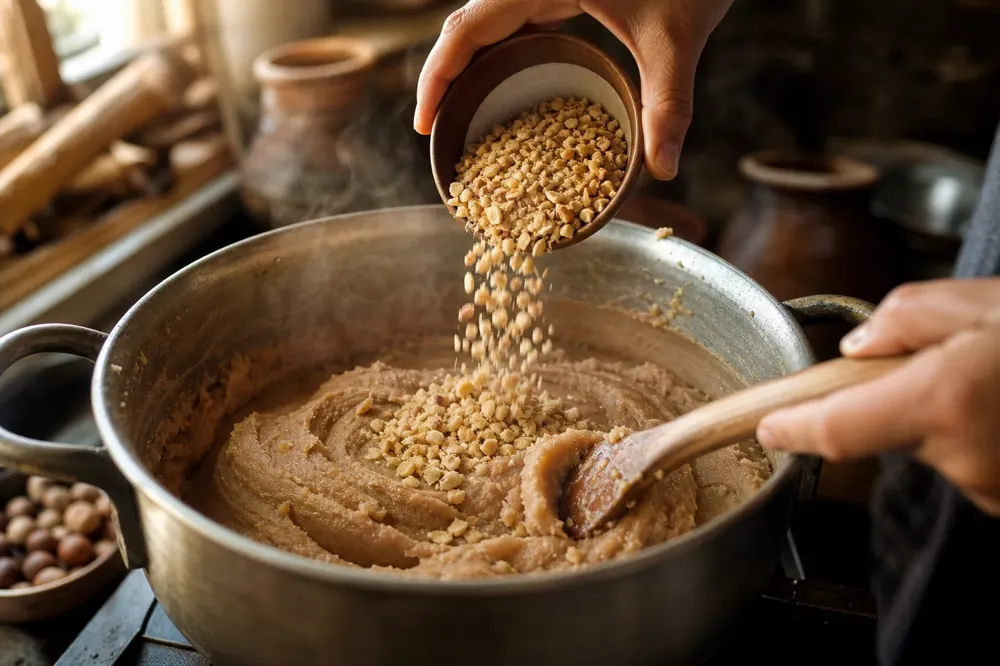
The most common mistake is to tip the hazelnuts into the pan at the very start along with the flour. According to a report in Artı Gerçek, roasted hazelnuts should be added towards the end of toasting. Hazelnuts added at the start stay on the heat for too long, can burn and may leave a bitter taste in the halva.
In Sahrap Soysal's recipe, too, the hazelnuts are added after the flour has taken on its colour and toasted for just 2 to 3 more minutes. In the Lezzet.com.tr recipe, the hazelnuts go in last and the pan is taken off the heat. Both approaches agree on one point: the hazelnuts should spend only a short time in the pan. This matters even more if you are using hazelnuts that are already roasted, as there is no need to roast them a second time for long.
After taking it off the heat, let the halva rest for a few minutes, then shape it with a spoon. Hazelnuts with their skins on add a slight astringency, while skinned hazelnuts give a milder flavour.
Now that the weather is turning cold, hazelnut flour halva is a treat you can make quickly with ingredients already in the house. It can be served warm with a strong cup of tea on a winter evening, or taken round to a neighbour on a plate. And if you would like to try pounded halva, knowing that it is a tradition made with the patience of skilled makers makes every bite all the more precious.
Please remember that anyone with a hazelnut allergy should avoid these sweets, and consult a specialist about your personal dietary circumstances.
Karadeniz'de Sonnokta Gazetesi, report on Şebinkarahisar's pounded hazelnut halva
Lezzet.com.tr, hazelnut flour halva recipe from Black Sea cuisine
Artı Gerçek, report on when to add hazelnuts to flour halva
Sahrap Soysal, hazelnut flour halva recipe and toasting time
Orion Organik, ingredients information for Ordu Kabataş hazelnut halva
Tarifkafe, recipe for paste-style hazelnut halva made in a food processor
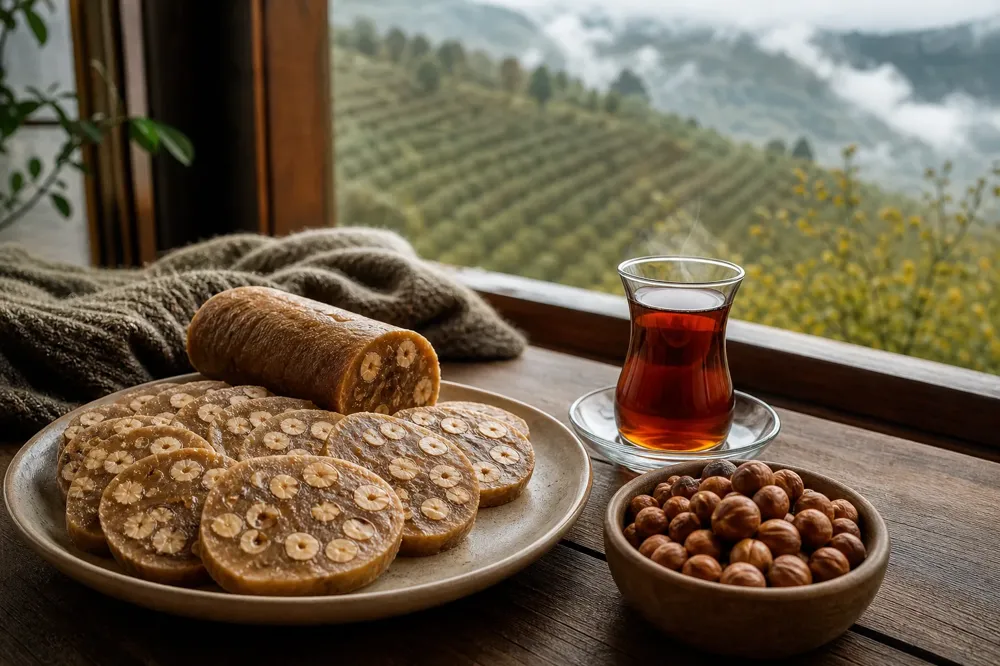
We explain what the hazelnut köme you spot at the market or receive as a gift actually is, how it differs from pestil, how it is made at home and how to store it all winter.
Read article →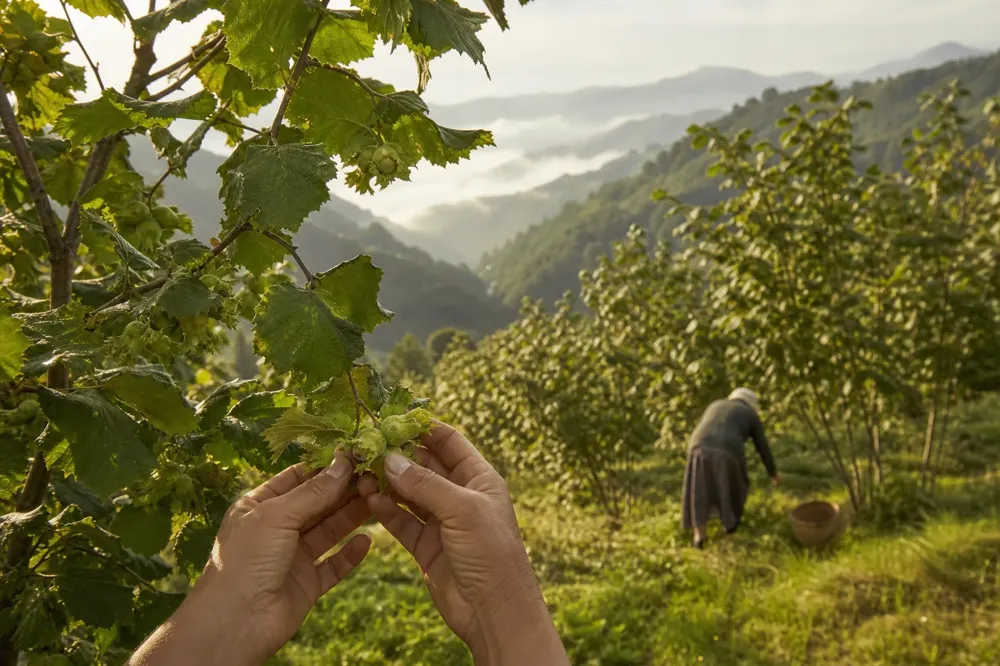
Çotanak, ocak, harman, patoz... We explain, one by one, the words you hear all the time in Black Sea hazelnut orchards and at harvest, with their meanings and their stories.
Read article →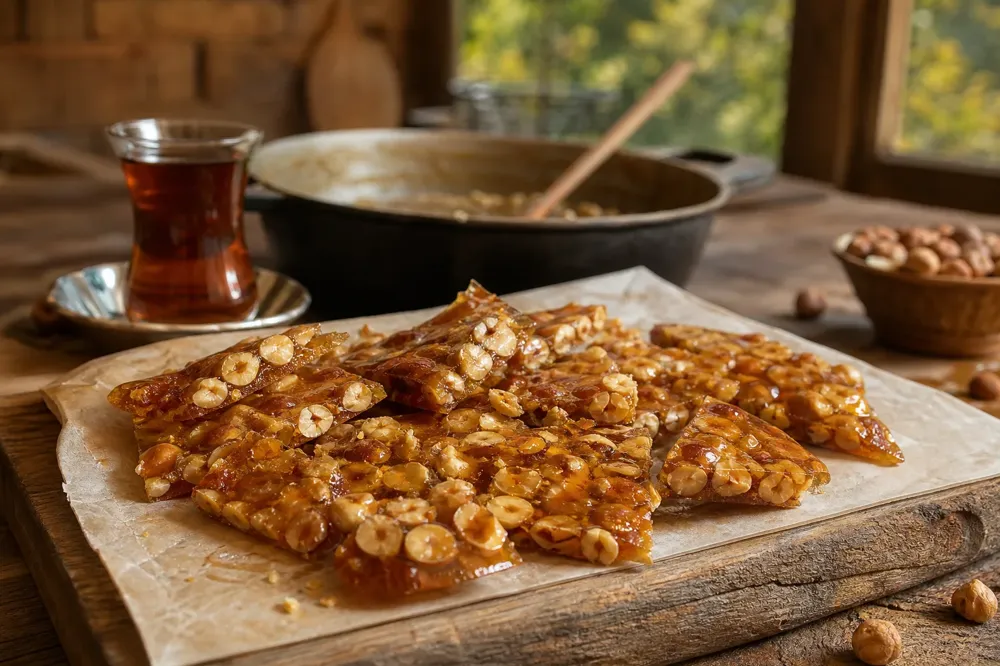
How to make crunchy hazelnut brittle at home with new-crop hazelnuts, the right stage for your sugar, and why brittle turns out sticky or burnt.
Read article →Karadeniz Fırtınası is made with hazelnuts alone. We use no fillers, flavourings, preservatives or emulsifiers, what the label says is exactly what’s in the jar.
 Chat on WhatsApp