The thin brown skin of a hazelnut is usually removed during roasting and discarded. Laboratory analyses show that this discarded fraction is the nut's densest store of antioxidants.
In a study published in the Journal of Agricultural and Food Chemistry, skins from different hazelnut samples were examined for total polyphenol content and total antioxidant capacity.
The results are striking: total antioxidant capacity ranged from 0.6 to 2.2 mol of reduced iron per kilogram. That is roughly:
**3× that of whole walnuts**, **7-8× that of dark chocolate**, **10× that of espresso coffee** and **25× that of blackberries**.
Another study measured polyphenols in the skin at about **70 mg GAE/g**, 7 grams of polyphenol per 100 grams of skin. For comparison, total phenolic content in the kernel is in the range of 0.07-0.47 mg GAE/g.
The skin is therefore hundreds of times more concentrated than the kernel.
HPLC-MS/MS analysis identified **flavan-3-ols** as the main group: monomeric and oligomeric forms account for **more than 95%** of total polyphenols. Flavonols and dihydrochalcones make up 3.5%, and phenolic acids less than 1%.
An analysis of skins from Oregon-grown hazelnuts measured (+)-catechin at 49-130 mg/100 g, epigallocatechin gallate (EGCG) at 21-35 mg/100 g, dimeric procyanidin B2 at 7-21 mg/100 g and quercetin 3-rhamnoside at 12-21 mg/100 g.
EGCG is the most discussed compound in green tea; finding it in hazelnut skin is notable.
Hazelnuts are reported to have the **highest total proanthocyanidin content among tree nuts**: around 500 mg per 100 g. They also contain a significant amount of hydrolysable tannins.
An interesting detail: some polyphenols are bound to plant proteins and polysaccharides, so-called "bound polyphenols". In a study on Tombul hazelnuts, alkaline hydrolysis of the extraction residue liberated a significant amount of proanthocyanidins; including the bound fraction nearly **doubles** the natural proanthocyanidin content.
This means standard measurements may understate the true antioxidant content of hazelnuts.
There are two reasons.
The first is consumer preference: skinless nuts look cleaner and taste milder.
The second is food safety: aflatoxin studies found the toxin concentrates mainly in the skin. Residual aflatoxin in the skin after roasting was measured at 80-100%. Removing the skin therefore serves a protective function.
This second point matters: simply saying "the skin is good for you, don't discard it" would be incomplete advice. Using the skin in products that have passed controlled processing is a separate question.
Researchers now treat hazelnut skin not as waste but as a **valuable by-product**.
In a study of roasted hazelnut skin extract, the extract was found rich in polyphenols (308.4 mg GAE/g) and proanthocyanidins (169.3 mg CE/g), showed strong antioxidant activity, and had antimicrobial effects against *Staphylococcus aureus* and *S. epidermidis*. The same extract also enhanced the UV absorbance of synthetic filters, of interest for cosmetic formulations.
Another study measured antifungal activity against *Candida albicans*.
The skin also contains **64-70% dietary fibre**, which makes it a subject of functional food research.
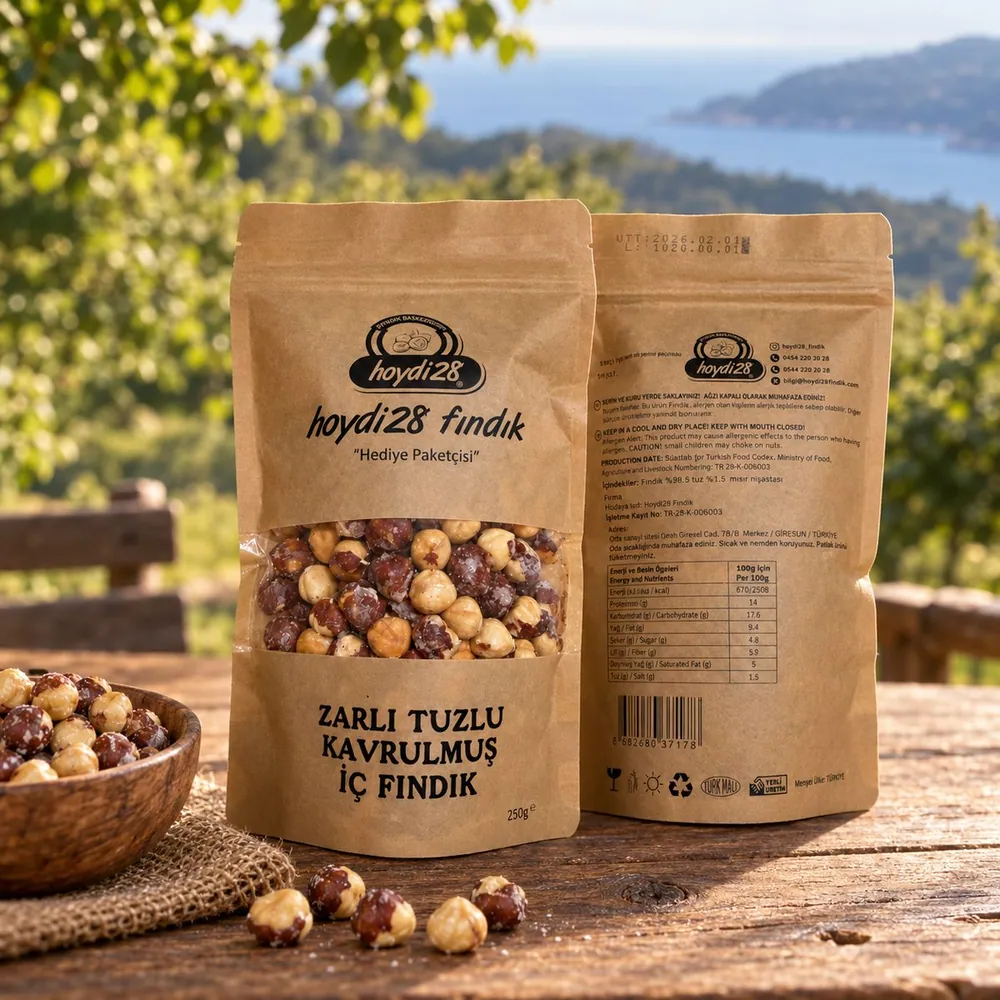
Skin-on hazelnuts are an option for those who enjoy the rich, distinctive aroma the skin adds. Our skin-on salted roasted product caters to that preference.
But to be honest: in a clinical trial with children, no clear difference was found between skin-on and skin-off hazelnuts in their effects on blood lipids.
High antioxidant capacity measured in a laboratory does not automatically translate into a measurable health outcome. Having a high antioxidant content and producing an effect in the body are different things; absorption, bioavailability and dose all come into play.
Hazelnut skin carries an antioxidant density far out of proportion to its weight, and it is attracting increasing scientific interest.
That is not enough to claim "skin-on hazelnuts are healthier", but it explains why this discarded by-product is being studied.
Del Rio D. et al., "Polyphenolic Composition of Hazelnut Skin", Journal of Agricultural and Food Chemistry.
Alasalvar C., Bolling B.W., assessment of proanthocyanidin and hydrolysable tannin content in hazelnuts.
"Effects of roasting on proanthocyanidin contents of Turkish Tombul hazelnut and its skin", Journal of Functional Foods, 2016.
"Chemical composition, phytochemical content, and antioxidant activity of hazelnut skins from Oregon", LWT, 2024.
"Valorization of Hazelnut Skin By-Product as a Multifunctional Ingredient for Cosmetic Emulsions", 2025.
Piccinelli A.L. et al., "HRMS Profile of a Hazelnut Skin Proanthocyanidin-rich Fraction", J. Agric. Food Chem., 2016.
How soil, climate and altitude combine to give Giresun hazelnuts their distinctive aroma.
Read article →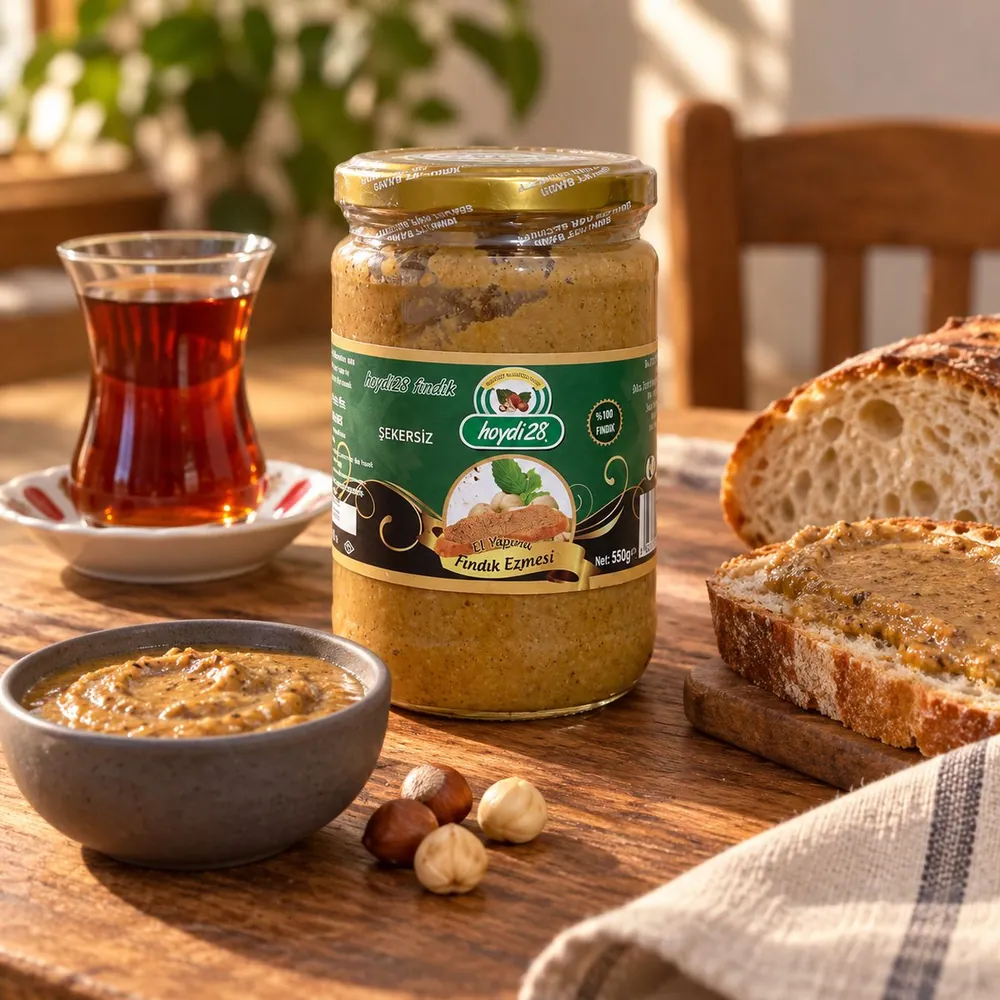
How to keep an opened jar fresh and smooth for months.
Read article →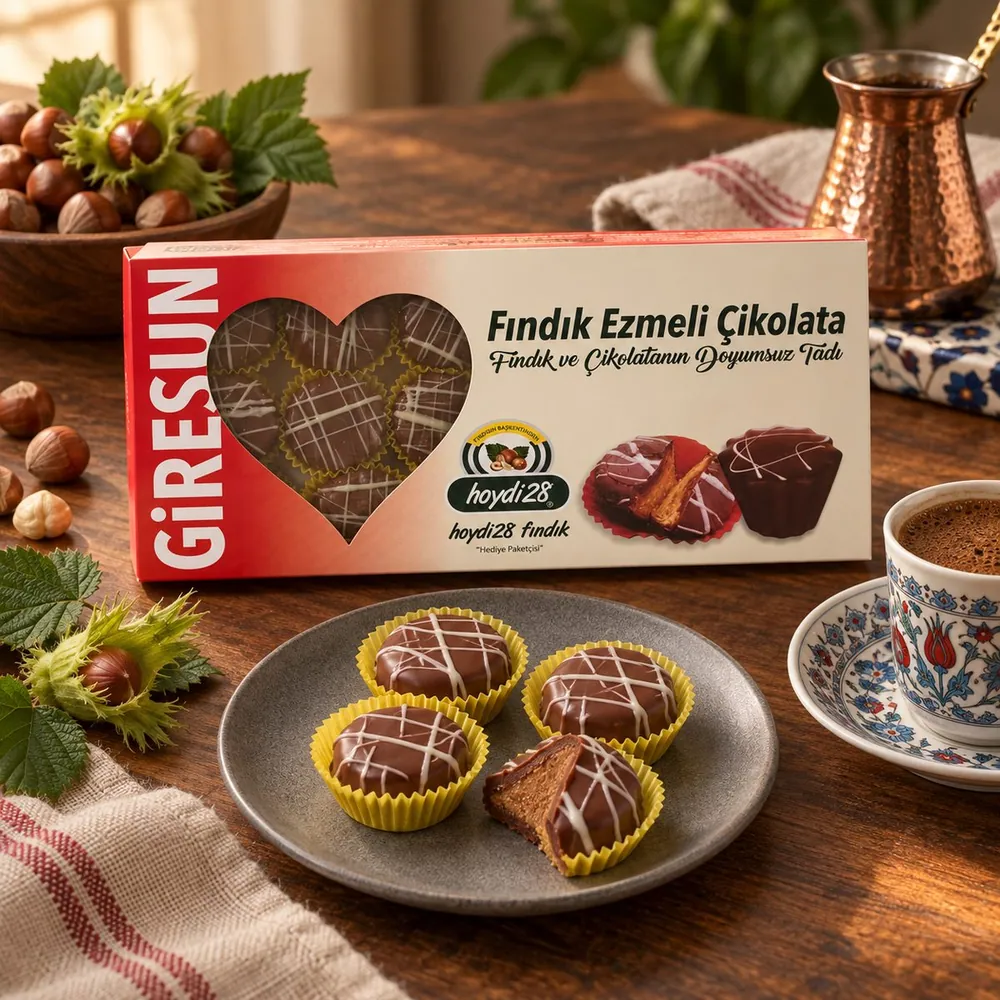
Why hazelnut boxes stand out for New Year and special-occasion gifting.
Read article →Karadeniz Fırtınası is made with hazelnuts alone. We use no fillers, flavourings, preservatives or emulsifiers, what the label says is exactly what’s in the jar.
 Chat on WhatsApp