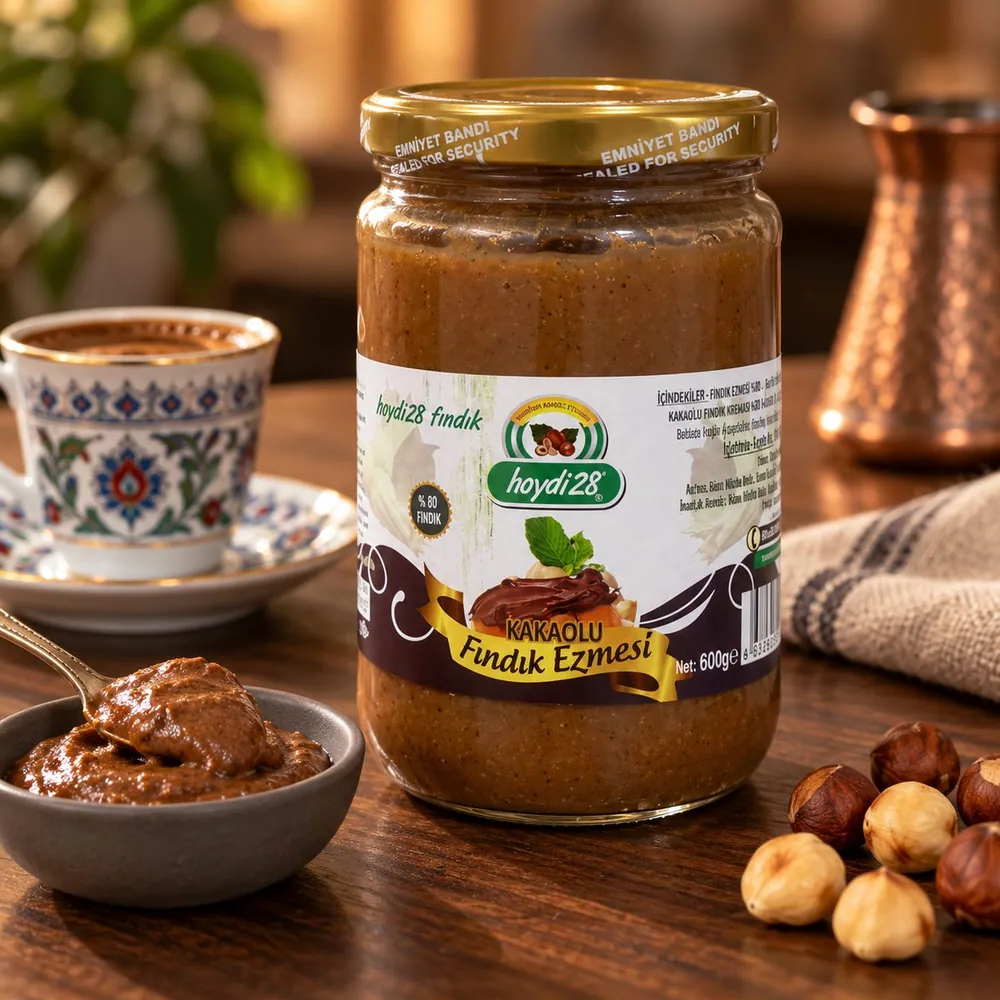
Two jars side by side at breakfast. Both brown, both spreadable, both with hazelnut in the name. Read the labels and the picture changes.
Ingredients are listed in **descending order of weight**. Whatever appears first is what the product contains most of.
This simple rule is the most powerful tool in label reading. Ignore the product name and look at the first two lines.
In common products the list usually begins: sugar, vegetable oil (often palm oil), hazelnuts, milk powder, cocoa, emulsifier (soya lecithin), flavouring.
So sugar comes first, not hazelnuts. Hazelnut content varies by product; in some popular spreads it is around 13%.
This is not an accusation but a matter of definition: these products belong to the "cocoa spread with hazelnuts" category, not to hazelnut butter.
In a product sold as hazelnut butter, hazelnuts come first. In our 1000 g jar the hazelnut content is 78%; the remainder is sugar.
In what we call our sugar-free product, the list is a single line: hazelnuts.
Palm oil is widely used in spreads because it stays solid at room temperature and is inexpensive. It gives the spread body and prevents oil separation.
When the nut's own oil is used, that convenience disappears. The butter separates over time and a layer of oil forms on top. This is the state most consumers mistake for spoilage but which actually **signals that no emulsifier was used**.
Stir with a dry spoon and the texture returns.
An emulsifier, usually soya lecithin, prevents the oil from separating from the other ingredients, keeping the product homogeneous throughout its shelf life.
It is a functional additive and approved as safe. But its presence shows the product is a formulated blend.
Both products are similar in calories; both are high-fat foods. Hazelnut butter is not a "diet product".
The difference is not the number of calories but where they come from. In hazelnut butter most of the energy comes from the nut's monounsaturated fat; in a cocoa spread it comes from sugar and vegetable oil.
That is a matter of preference. For someone who loves the taste of cocoa spread, hazelnut butter will not deliver the same experience.
But if you are eating cocoa spread thinking "I'm eating hazelnuts", the label is telling you something different. When choosing between the two, the first two lines of the list are enough.
There is a middle option: cocoa hazelnut butters. In these, hazelnuts come first, the cocoa is real cocoa and there is no palm oil, though they still contain sugar.
Children's preferences are usually driven by taste. Cocoa hazelnut butter, being close to chocolate spread in flavour, can work as a transition product.
When giving a hazelnut product to a small child for the first time, starting with a small amount is recommended so that any allergic reaction is noticed early.
Look at the first two lines. Note the hazelnut percentage if given. Look for palm oil, glucose syrup and emulsifiers. Glance at the sugars line in the nutrition table.
These four steps tell you more than every claim on the front of the jar.
Turkish Food Codex Regulation on Food Labelling and Consumer Information, ingredient list ordering rule.
USDA FoodData Central, nutrient composition of hazelnuts and cocoa.
Product labels and manufacturer declarations (hazelnut percentages vary by product).
How soil, climate and altitude combine to give Giresun hazelnuts their distinctive aroma.
Read article →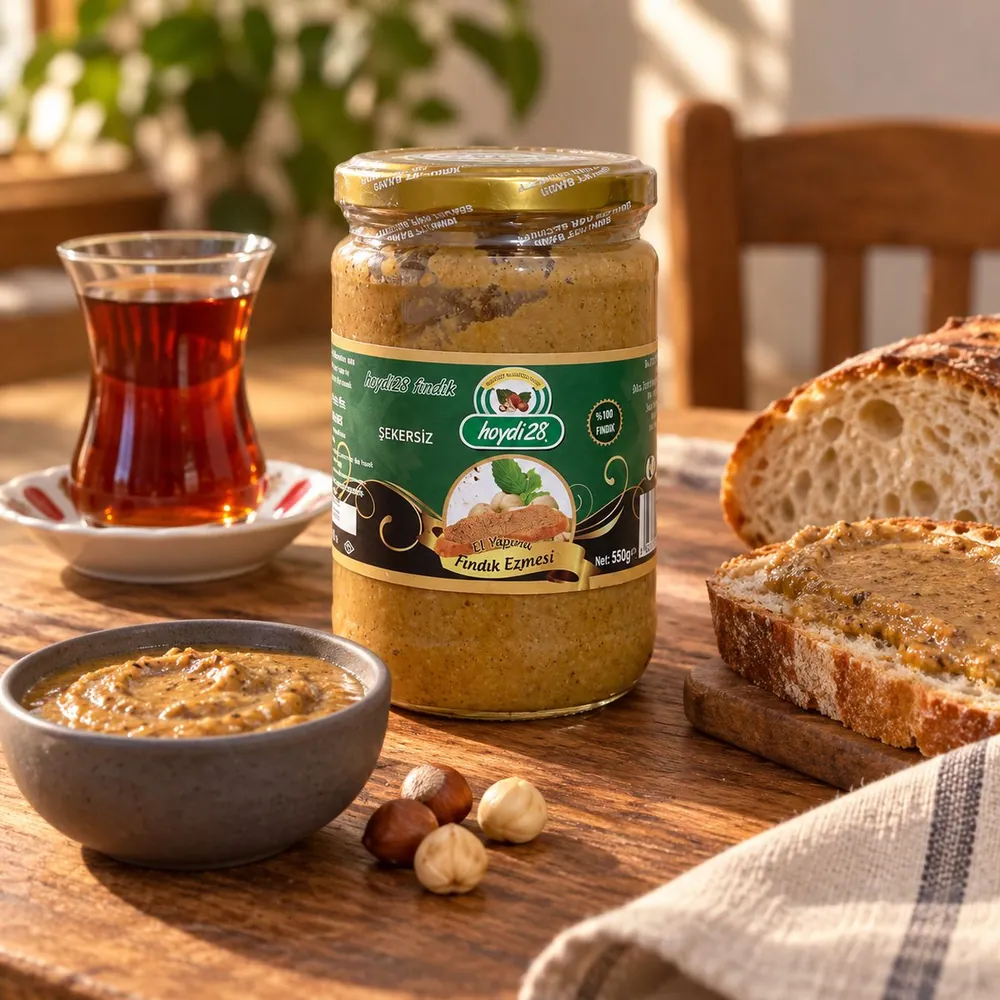
How to keep an opened jar fresh and smooth for months.
Read article →
Why hazelnut boxes stand out for New Year and special-occasion gifting.
Read article →Karadeniz Fırtınası is made with hazelnuts alone. We use no fillers, flavourings, preservatives or emulsifiers, what the label says is exactly what’s in the jar.
 Chat on WhatsApp