
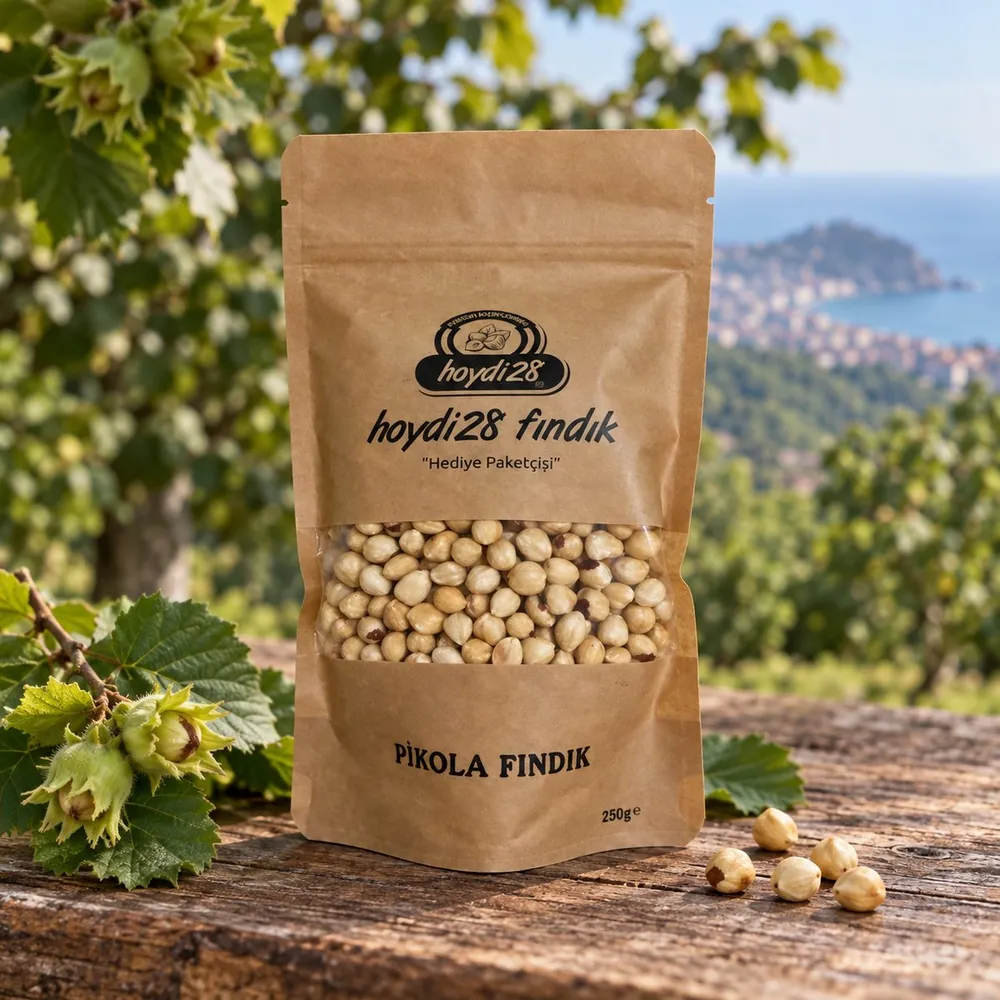
That the hazelnut's homeland is the Black Sea is widely accepted. But is there archaeological evidence? An excavation in Kayseri answered from an unexpected direction.
Kültepe-Kanesh Karum in Kayseri is a settlement dating back 6,000 years and home to Anatolia's earliest written tablets. It was the centre of the trade network established by Assyrian merchants around 1950 BC.
Among the archaeobotanical samples from these excavations were **charred hazelnut shells**.
The critical point is this: **hazelnuts do not grow naturally in the Kayseri area.** The hazel is a native element of the broadleaf woodlands of Türkiye's Black Sea region.
So the shells found at Kültepe did not arrive on their own. They must have been brought there.
The shells came from both the upper and lower city and were restricted to the Middle Bronze Age Karum II level, the phase that saw the greatest development of the Assyrian trade network, of which Kanesh was the administrative centre.
The researchers' interpretation: hazelnuts were probably imported on a small scale as **luxury items**, facilitated by the Assyrian trade network.
One detail increases the value of the find: claims that hazelnuts were traded at Kanesh had previously rested on **analysis of cuneiform tablets**.
The archaeobotanical discovery provided independent support for that historical claim. Both the written record and the physical remains say the same thing.
The authors also note something striking: given that Türkiye dominates the world hazelnut market, archaeological evidence for the use of hazel in Anatolia is surprisingly scarce.
The second part of the story is more recent. Associate Professor Kahraman Gürcan of Erciyes University conducted a **decade-long DNA study** on the 4,000-year-old hazelnut shells from Kültepe.
Before this work, the hazelnuts in question were believed to be of **European origin**.
Gürcan also examined hazel trees in the Kayseri region, and after ten years of research set out a different picture of their origin.
It is a good example of how archaeobotany and genetics used together can overturn settled assumptions.
The hazelnut's name is tied directly to the Black Sea. The word "pontic" derives from **"Pontus Euxinus"**, the ancient name of the Black Sea.
The Roman naturalist **Pliny the Elder** (AD 23-79) referred to hazelnuts in his *Natural History* as "Pontic nut" and "Avellinea", because they were brought from the shores of Pontus.
The Latin species name *Corylus avellana* comes from the Italian town of Avella; hazelnuts were taken from northern Anatolia first to Greece and then to Italy, where they were widely grown around Avella.
**Herodotus** (490-425 BC) wrote in his *Histories* that hazelnuts were grown east of the Black Sea. He also described how hazelnut oil was extracted: by placing the kernels in a bag and pressing them.
That method bears a striking resemblance to the technique still used in rural areas today to obtain oil from olives and hazelnuts.
**Theophrastus** (372-287 BC), a student of Aristotle, wrote about the hazelnut in his botanical works. He noted that the "Pontic nut" could be domesticated by transplanting it from the wild, and distinguished two main varieties: **round and long-pointed**.
That distinction still holds, the Tombul (round) and Sivri varieties.
Archaeological excavations show hazelnuts formed part of **Mesolithic diets around 10,000 BC**, the foraging period before agriculture.
Chinese written sources state that hazelnuts were cultivated in 2838 BC and counted among "the five sacred fruits bestowed by God on people".
The spread of hazelnut culture among the Turks is described in three periods.
**The Central Asian period:** the hazelnut was called "kosık" or "kosuk".
**The Western Turkic period:** the word "çetlevük" was used.
**The Anatolian period:** under Arabic influence the name "bunduk" was adopted, becoming "fındık" over time.
Persian has "fonduk", Arabic "bunduk", Greek "leptokarion", German "haselnuss", French "noisette", Spanish "avellana".
Geographical indication registrations protect a product's link to a particular place. The registration of Giresun Tombul Hazelnut in Türkiye in 2001 and in the EU in 2022 is the formal record of that link.
The shells at Kültepe show that the same link existed 4,000 years ago: hazelnuts spread from the Black Sea into inner Anatolia and from there to the world.
Behind the jar in your hand lies not just one harvest season but a trade route thousands of years old.
Fairbairn A., Wright N.J. et al., "Archaeobotanical evidence for trade in hazelnut (Corylus sp.) at Middle Bronze Age Kültepe (c. 1950-1830 B.C.), Kayseri Province, Turkey", Vegetation History and Archaeobotany, Springer.
Gürcan K., Erciyes University, DNA analysis of Kültepe hazelnut shells (ten-year study), reported by Arkeonews.
Herodotus, *Histories*; Theophrastus, botanical works; Pliny the Elder, *Natural History*.
Directorate for EU Affairs, EU registration of Giresun Tombul Hazelnut, 2022.
How soil, climate and altitude combine to give Giresun hazelnuts their distinctive aroma.
Read article →
How to keep an opened jar fresh and smooth for months.
Read article →
Why hazelnut boxes stand out for New Year and special-occasion gifting.
Read article →Karadeniz Fırtınası is made with hazelnuts alone. We use no fillers, flavourings, preservatives or emulsifiers, what the label says is exactly what’s in the jar.
 Chat on WhatsApp