Most people heading for the gluten-free shelf assume the same thing: these products must be healthier. Research does not support that assumption, and often shows the opposite.
Dr Charlene Elliott of the University of Calgary bought 374 child-targeted products from two large supermarket chains and compared those labelled gluten-free with their conventional counterparts.
The result: roughly **80% of child-targeted gluten-free products** were high in sugar. **88%** of packaged gluten-free foods aimed at children fell into the "poor nutritional quality" category because of sugar, sodium and/or fat levels.
Elliott summed it up: "For many consumers, gluten-free is the new 'better-for-you'. But when you look at the nutritional profile of packaged gluten-free foods, this is not the case."
A University of Hertfordshire study examining more than 1,700 products from five supermarket chains found a similar picture.
Apart from crackers, every gluten-free food surveyed contained more saturated fat, sugar and salt than its counterpart. Gluten-free white and wholemeal breads had **more than double the fat** of standard breads.
Gluten-free products also contained significantly less protein and cost more.
The reason is technical. Gluten is the protein group that gives dough its stretch and chew. Remove it and the product crumbles, dries out or turns gummy.
To solve this, manufacturers turn to refined starches such as rice flour, tapioca starch and potato starch. These are calorie dense but nutritionally empty compared with wholemeal flour. Extra sugar and fat are then added to make up for lost flavour and mouthfeel.
In other words, making something gluten-free usually makes it more processed.
"Gluten-free" says one thing only: the product contains no wheat, barley or rye protein. It is **allergen information**, not a health claim.
In one study, adding only a gluten-free claim to two products with identical nutrition figures led consumers to rate the product as healthier and lower in calories. This is called the "health halo".
That perception gap has a consequence: someone who thinks a gluten-free cookie is the lighter choice may eat two instead of one.
For people with coeliac disease or gluten sensitivity, a gluten-free diet is a medical necessity and not up for debate.
However, according to consumer research in the US, only **6%** of people buying gluten-free products do so because of intolerance or sensitivity. The majority choose them believing they are healthier.
For someone without a medical need, claims that gluten-free eating helps weight control or general health have not held up under scientific scrutiny.
The critical distinction is between **naturally gluten-free foods** and **processed products made gluten-free**.
Hazelnuts, walnuts, almonds, eggs, vegetables, fruit, pulses and meat contain no gluten and need no processing to become gluten-free. No starch is added, no sugar increased, no fat topped up.
Gluten-free biscuits, cakes and snacks, by contrast, are reformulated products. That is where the problem begins.
A cookie made only from hazelnuts, without flour, is not a product with gluten "removed", gluten was never in it. There is no texture loss to compensate for with starch, because the hazelnut itself provides the texture.
This does not automatically make it "healthy", portion size matters with any food. But it avoids the trap described in the research above: adding sugar and fat to make up for removing gluten.
The length of the ingredient list is a good indicator. A short list means fewer compensating additives.
Look for starch types (corn, tapioca, potato), sugar derivatives (glucose syrup, invert sugar) and vegetable oils. An abundance of these suggests the product has been rebuilt to remove gluten.
Also be wary of "gluten-free" labels on products that should never have contained gluten in the first place, that is usually marketing.
Elliott C., "Nutritional Quality of Gluten-Free Products Marketed to Children", Pediatrics, 2018 (University of Calgary release).
University of Hertfordshire, comparison of 1,700+ gluten-free products across five supermarket chains.
Fry L. et al., nutritional composition of gluten-free products, UK market, 2018.
Clemson University, "Many gluten-free foods are high in calories and sugar", Plant Foods for Human Nutrition, 2025.
How soil, climate and altitude combine to give Giresun hazelnuts their distinctive aroma.
Read article →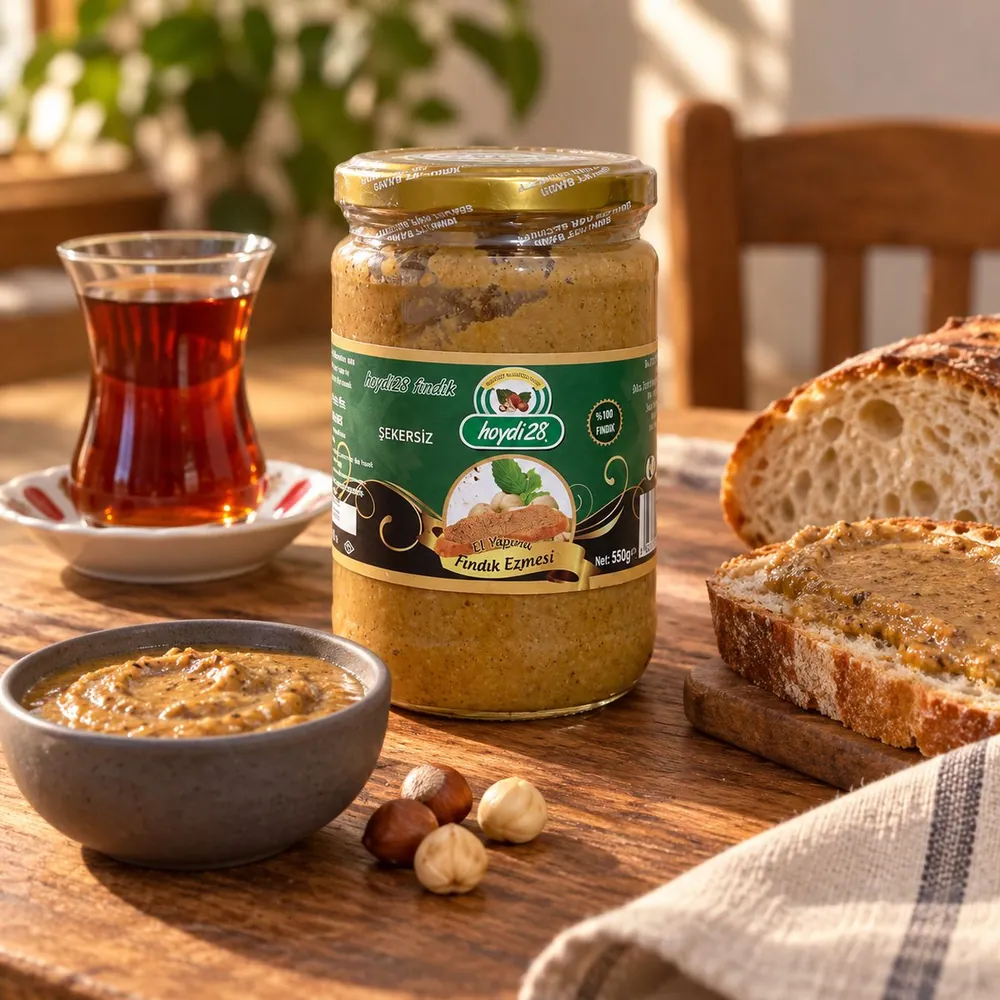
How to keep an opened jar fresh and smooth for months.
Read article →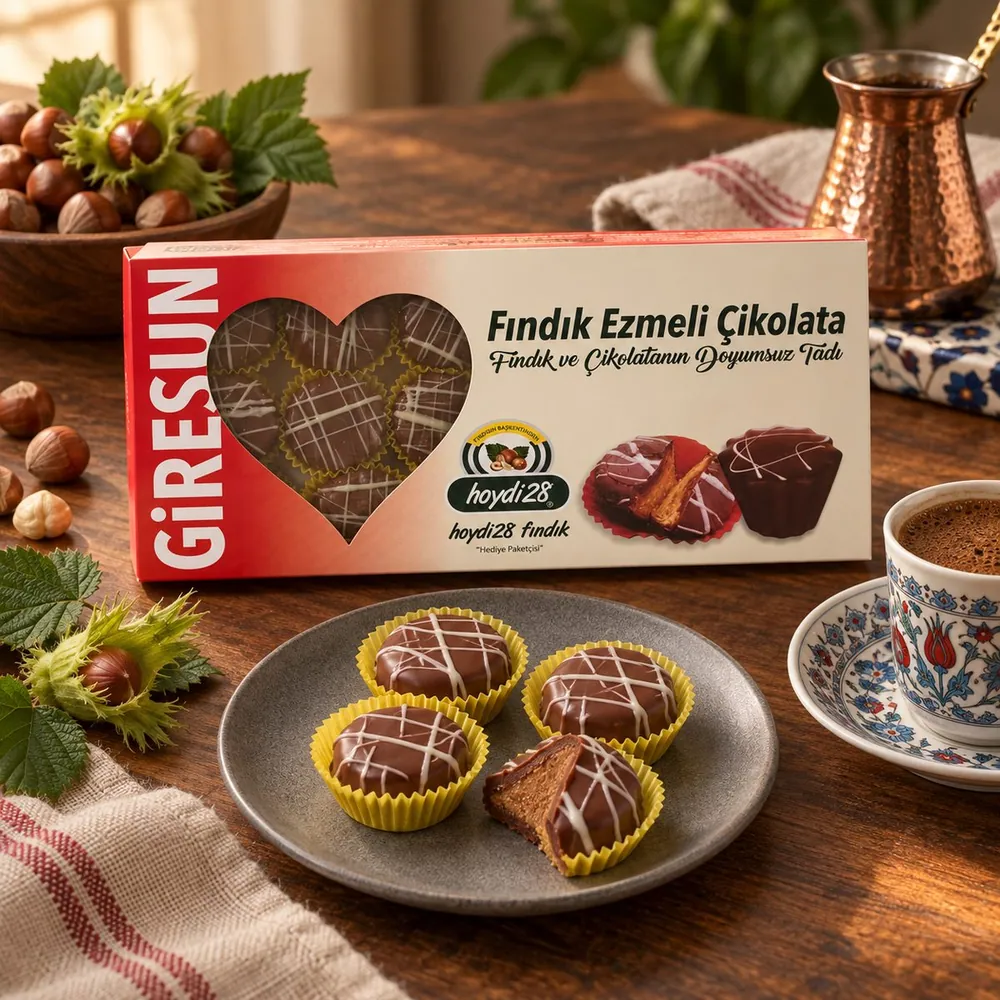
Why hazelnut boxes stand out for New Year and special-occasion gifting.
Read article →Karadeniz Fırtınası is made with hazelnuts alone. We use no fillers, flavourings, preservatives or emulsifiers, what the label says is exactly what’s in the jar.
 Chat on WhatsApp