Roasting hazelnuts is not simply a few minutes in a pan. The combination of temperature and time determines both the taste and how long the product will last. Scientific studies have measured that balance.
Three things happen at once.
Moisture falls. Water inside the nut evaporates; the texture becomes brittle and that crunch appears.
The Maillard reaction begins. Sugars and amino acids react at high temperature, and the characteristic roasted aroma is the product of that reaction.
The oil mobilises. Cell walls weaken and oil moves towards the surface. That dense mouthfeel comes from here.
In Belviso and colleagues' 2017 work, hazelnuts roasted in a hot-air system at **120°C for 40 minutes** showed improved oxidative stability.
More interestingly, the antioxidant activity of nuts roasted under these conditions was maintained at an optimal level through six months of storage at 4°C.
In other words, correct roasting does not just add flavour; it makes the nut more resistant to oxidation.
Intuitively we expect heat to destroy antioxidants. Yet studies show roasting can **increase** antioxidant activity.
The reason lies in new compounds formed during the Maillard reaction, some of which have antioxidant properties. Heat also loosens the cell structure, making existing phenolic compounds more accessible in measurement.
In a study on microwave-assisted roasting, trials across 70-110°C and 9-21 minutes found significant differences between methods in antioxidant capacity and total phenolic content.
This does not mean "the more heat the better".
As temperature rises, so does lipid oxidation. Peroxide value and free fatty acidity increase; these are the laboratory markers of deterioration.
Removing the skin by roasting is a common method, since consumers prefer skinless nuts. But the process triggers undesirable reactions such as lipid oxidation. A **pressurised water technique** was therefore developed as an alternative.
In a study comparing the two methods over 12 months of storage, free fatty acidity, total antioxidant capacity and fatty acid content were generally unaffected by the peeling method. Before storage, nuts peeled by the water technique had slightly higher total phenolic content and slightly lower protein and oil content.
In two-stage roasting the first pass removes moisture and the second concentrates aroma. This is a more controlled process than applying high heat in one go.
The result is a more brittle texture and a pronounced aroma. But because the cell structure opens further, the oil also becomes more accessible, which is why double-roasted products should be eaten more quickly once opened.
If you roast in the oven, a lower temperature for longer works better than high heat for a short time. Around 150°C for 12-15 minutes is a common starting point.
Spread the nuts in a single layer; stacked, some will burn while others stay raw.
Stir once halfway through.
Nuts continue to cook after leaving the oven, so take them out slightly before they reach the colour you want.
Let them cool before sealing the container. Sealing while hot traps steam and creates a moisture problem.
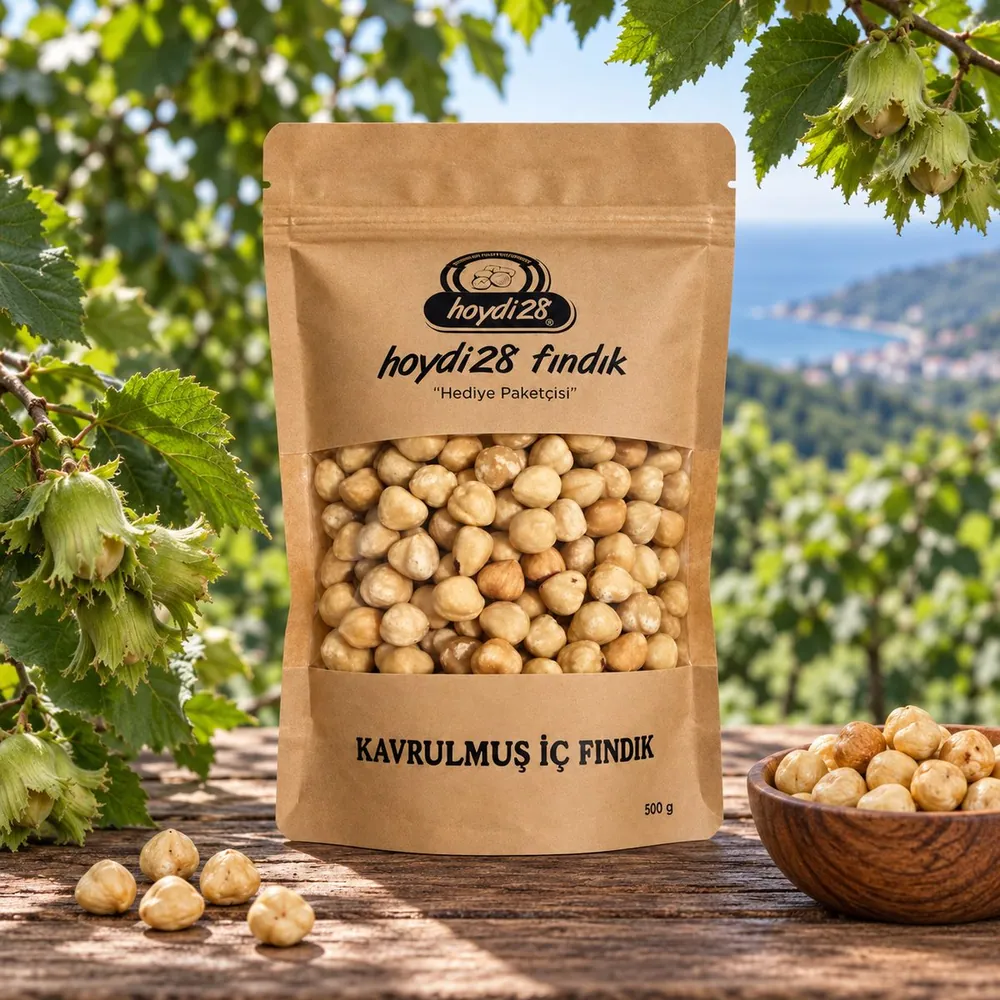
Raw (natural) hazelnuts are the starting material for homemade butter and recipes; you create the aroma yourself.
A single roast brings out the nut's natural taste and is balanced for everyday eating.
Double roasting is for those seeking intense aroma and for serving guests.
Skin-on roasting suits those who enjoy the richer, more distinctive aroma the skin adds.
Belviso S. et al., effect of hot-air roasting on the oxidative stability of hazelnuts, 2017.
Siciliano I. et al., "Static Hot Air and Infrared Rays Roasting are Efficient Methods for Aflatoxin Decontamination on Hazelnuts", Toxins, 2017.
Uysal N. et al., effect of microwave-assisted roasting on nutritional and chemical properties of hazelnuts, 2015.
Comparison of pressurised water and roasting peeling techniques over 12 months of storage, quality parameter study.
How soil, climate and altitude combine to give Giresun hazelnuts their distinctive aroma.
Read article →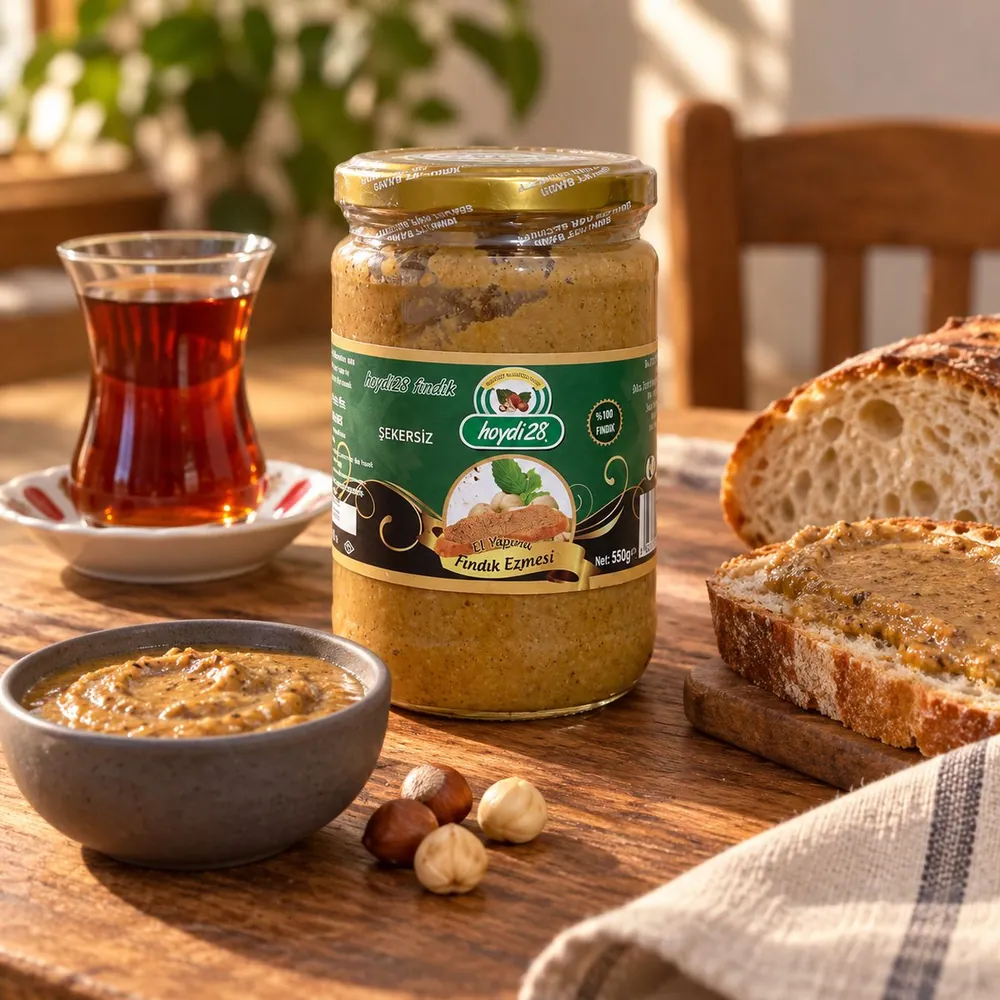
How to keep an opened jar fresh and smooth for months.
Read article →
Why hazelnut boxes stand out for New Year and special-occasion gifting.
Read article →Karadeniz Fırtınası is made with hazelnuts alone. We use no fillers, flavourings, preservatives or emulsifiers, what the label says is exactly what’s in the jar.
 Chat on WhatsApp