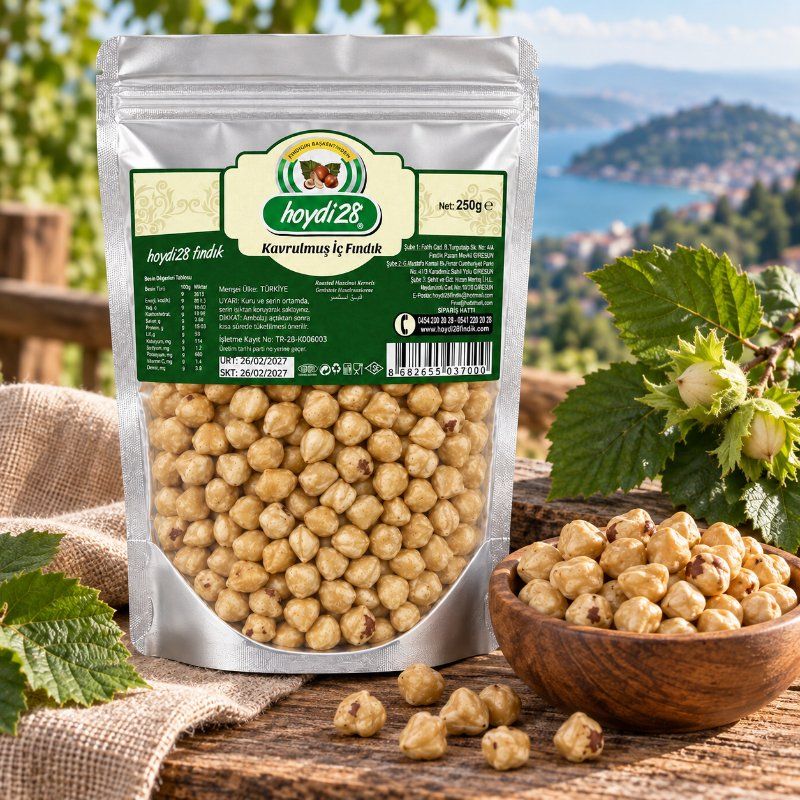
A handful of hazelnuts is roughly 190 calories. You could eat two slices of bread for the same. And yet studies on nuts consistently fail to show weight gain. The reason is interesting.
In a 24-week randomised controlled trial with 95 healthy adults, participants added either about 40 g of mixed nuts or an equivalent number of calories from pretzels to a weight-loss diet.
After the first 12 weeks both groups had lost weight: 1.6 kg in the nut group and 1.9 kg in the pretzel group. The pretzel group had lost slightly more.
The real difference appeared in the second half. At 24 weeks, at the end of the weight-maintenance phase, **the nut group was the only one that kept the weight off.** In the same group, satiety had increased significantly compared with baseline.
It is a good example of why short-term and long-term results can diverge.
The calorie figure on a pack of nuts comes from a standard calculation using Atwater factors. Research shows, however, that the energy actually obtained from nuts is **lower** than that estimate.
The reason is the food matrix: the oil in a hazelnut is locked inside intact cell walls. Chewing ruptures some of those cells but not all. The fat in unruptured cells passes through undigested.
So you are not getting all 190 calories from that handful. The effect varies with how thoroughly the nut is chewed and with its form, in butter, where the cell walls are already broken, absorption is higher.
Nut consumption has been shown to influence appetite-regulating hormones. GLP-1, GIP, PYY, pancreatic polypeptide and ghrelin all play a part in this system.
In a randomised trial with 140 adults with overweight, those eating almonds were compared with those eating an isocaloric carbohydrate-rich snack bar. The almond group showed improvements in appetite-regulating hormones, but there was no significant difference in **self-reported hunger**.
That distinction matters: measurable changes in body chemistry do not always match what a person feels.
In a four-week pecan trial with older adults, both enhanced satiety hormone secretion and dampened appetite intensity were reported.
When you eat a handful of hazelnuts, you are not eating something else. Nutrition research calls this displacement.
In a meta-analysis of 31 trials, nut consumption raised daily energy intake by an average of 76 kilocalories. That sounds negative at first. But the critical point is that the increase is **smaller** than the calories of the nuts themselves, meaning people spontaneously cut back elsewhere.
Compensation is not complete, so a small increase remains, but that increase does not translate into weight gain in the trials.
A review in the American Journal of Clinical Nutrition notes that satiety effects may be greater for **whole nuts consumed as snacks**.
In practice: a handful of hazelnuts between meals may be more filling than the same hazelnuts spread as butter over a meal. Chewing time and the integrity of the food matrix both play a role.
It does not mean nuts cause weight loss. In these trials, nuts replaced another snack rather than being added on top of the existing diet.
If you add 100 grams of hazelnuts on top of your usual meals, none of the mechanisms above will offset that surplus.
Hazelnuts are calorie dense: about 628 calories per 100 g. Without portion discipline, no mechanism helps.
A handful, about 30 grams, is close to the amounts used in the trials.
Measuring your daily share into a small bowl is far more reliable than eating from the jar. A "handful" can vary twofold between people.
Eating nuts on their own at snack time is more effective for satiety than adding them alongside a meal.
Wang J. et al., "Mixed Tree Nut Snacks Compared to Refined Carbohydrate Snacks Resulted in Weight Loss and Increased Satiety during Both Weight Loss and Weight Maintenance: A 24-Week Randomized Controlled Trial", Nutrients, 2021.
Baer D.J. et al., "Nuts, Energy Balance and Body Weight", Nutrients, 2023.
Carter S. et al., "Acute feeding with almonds compared to a carbohydrate-based snack improves appetite-regulating hormones", European Journal of Nutrition, 2022.
Nikodijevic C.J. et al., meta-analysis of 31 trials on nuts, energy intake, hunger and fullness, 2019.
Mattes R.D. et al., "A review of the effects of nuts on appetite, food intake, metabolism, and body weight", American Journal of Clinical Nutrition.
How soil, climate and altitude combine to give Giresun hazelnuts their distinctive aroma.
Read article →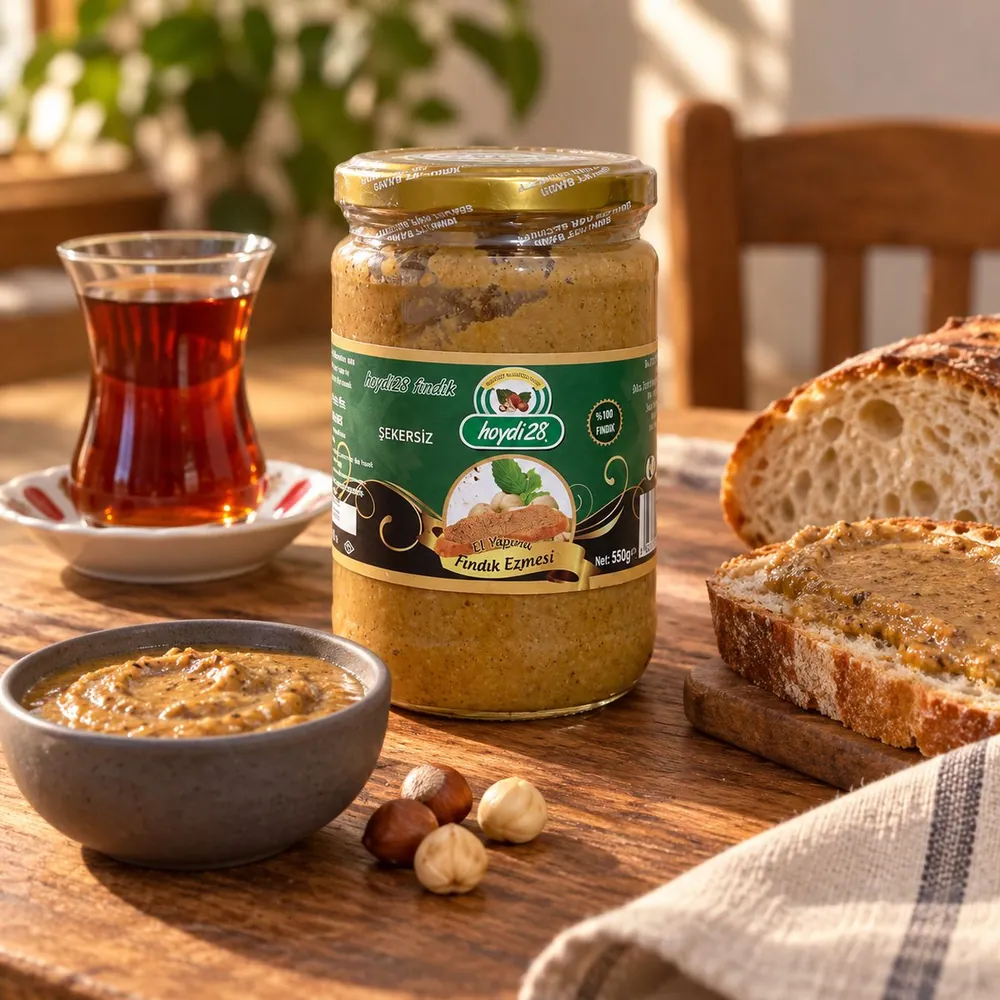
How to keep an opened jar fresh and smooth for months.
Read article →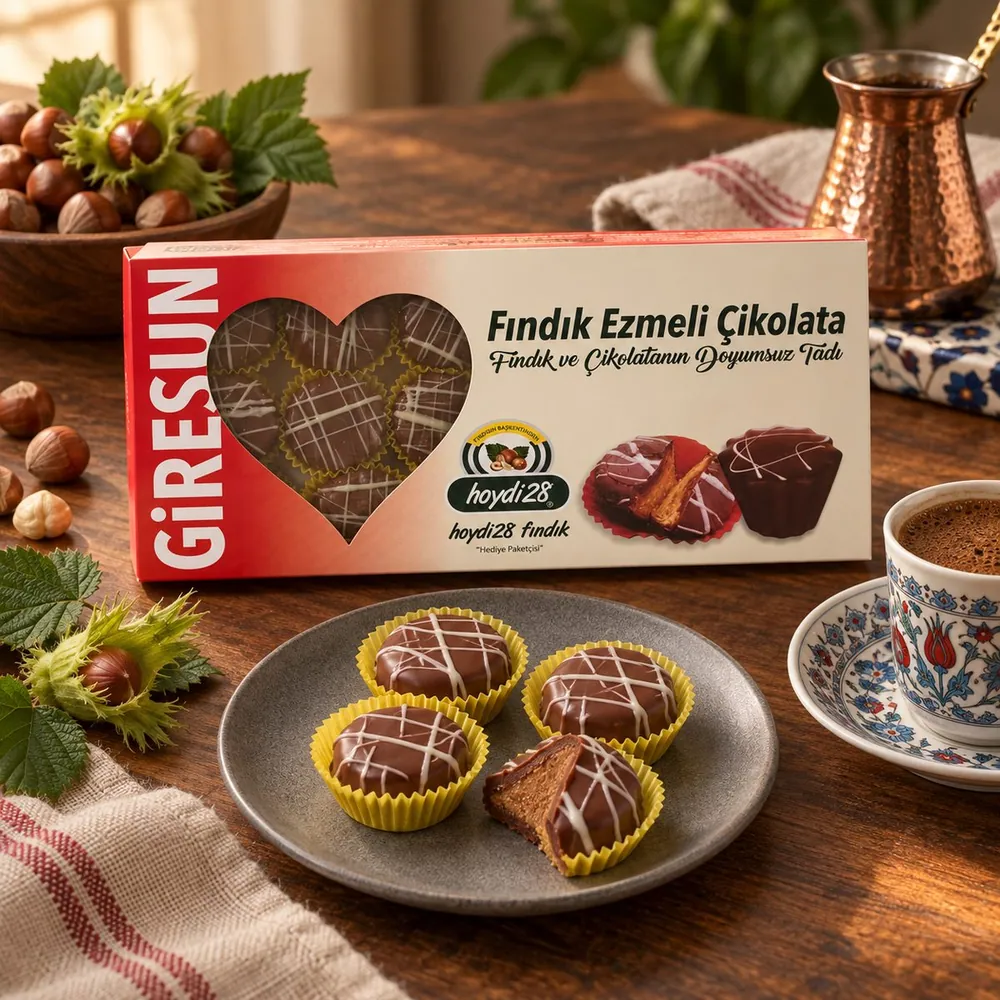
Why hazelnut boxes stand out for New Year and special-occasion gifting.
Read article →Karadeniz Fırtınası is made with hazelnuts alone. We use no fillers, flavourings, preservatives or emulsifiers, what the label says is exactly what’s in the jar.
 Chat on WhatsApp