Türkiye supplies roughly 70% of world hazelnut production. Yet the income earned from hazelnuts is not proportionate to that share. Let's look at the current figures.
According to the Black Sea Hazelnut and Products Exporters' Association, Türkiye exported **186,400 tonnes** of hazelnuts between 1 September 2025 and 31 July 2026, earning **$2.4 billion**.
The previous full season had seen 295,046 tonnes exported.
The nine-month figures are more striking: 150,592 tonnes exported for $1.982 billion. In the same period of the previous season, 260,143 tonnes brought in $2.128 billion.
So **volume fell by more than 42% while revenue declined only 6.83%.**
A smaller crop reduced supply and international prices rose. Nearly the same revenue was earned from far less product.
The May comparison shows it clearly: May 2025 saw 22,280 tonnes exported for $186.5 million; in May 2026 revenue rose to $212.6 million, a **14% increase**.
The sector is moving from a volume-driven period to a value-driven one.
The Turkish Grain Board announced its purchase prices for in-shell hazelnuts for the 2026/27 season. On the basis of 50% sound kernel yield:
Giresun grade: **255 TL/kg** (up 27.5% year on year). Levant grade: **250 TL/kg** (up 28.2%). Sivri grade: **245 TL/kg** (up 28.9%).
Purchase criteria are also defined: moisture must not exceed 6.5%, sound kernel ratio must be at least 40%, shrivelled kernels must not exceed 10%, rotten or defective kernels 7%, and foreign matter 0.5%.
These criteria are not arbitrary, the moisture limit relates directly to aflatoxin risk.
Türkiye has long been the world's largest hazelnut exporter. Until the 1980s, however, almost all exports consisted of in-shell and shelled nuts.
Today around **28 different processed hazelnut products** are exported. That is progress; but the picture remains weighted towards raw material.
The comparison can be framed simply: sell hazelnuts by the sack and you get a price per kilogram. Turn the same hazelnuts into butter, cookies or chocolate and sell them as a branded product, and the same raw material generates several times the income.
That difference is called **added value**.
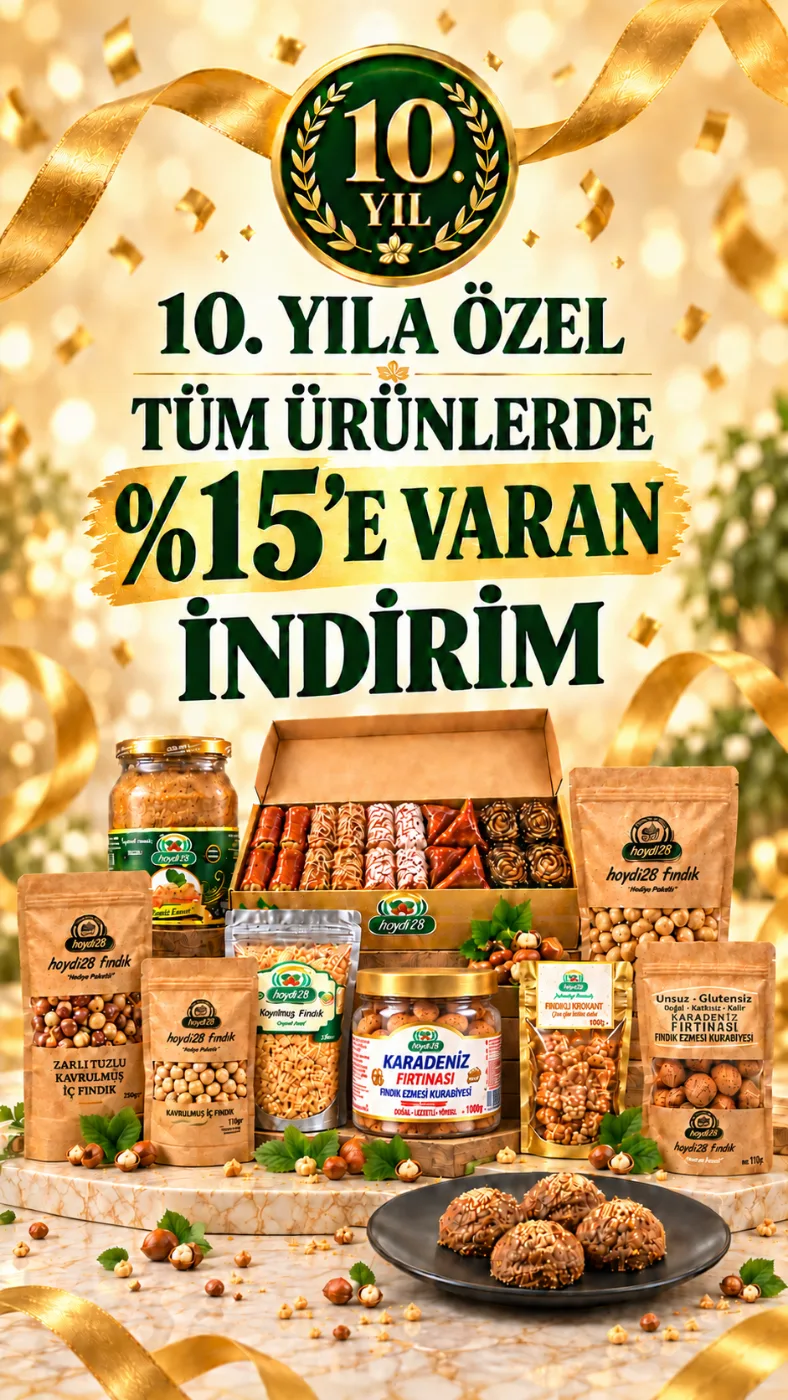
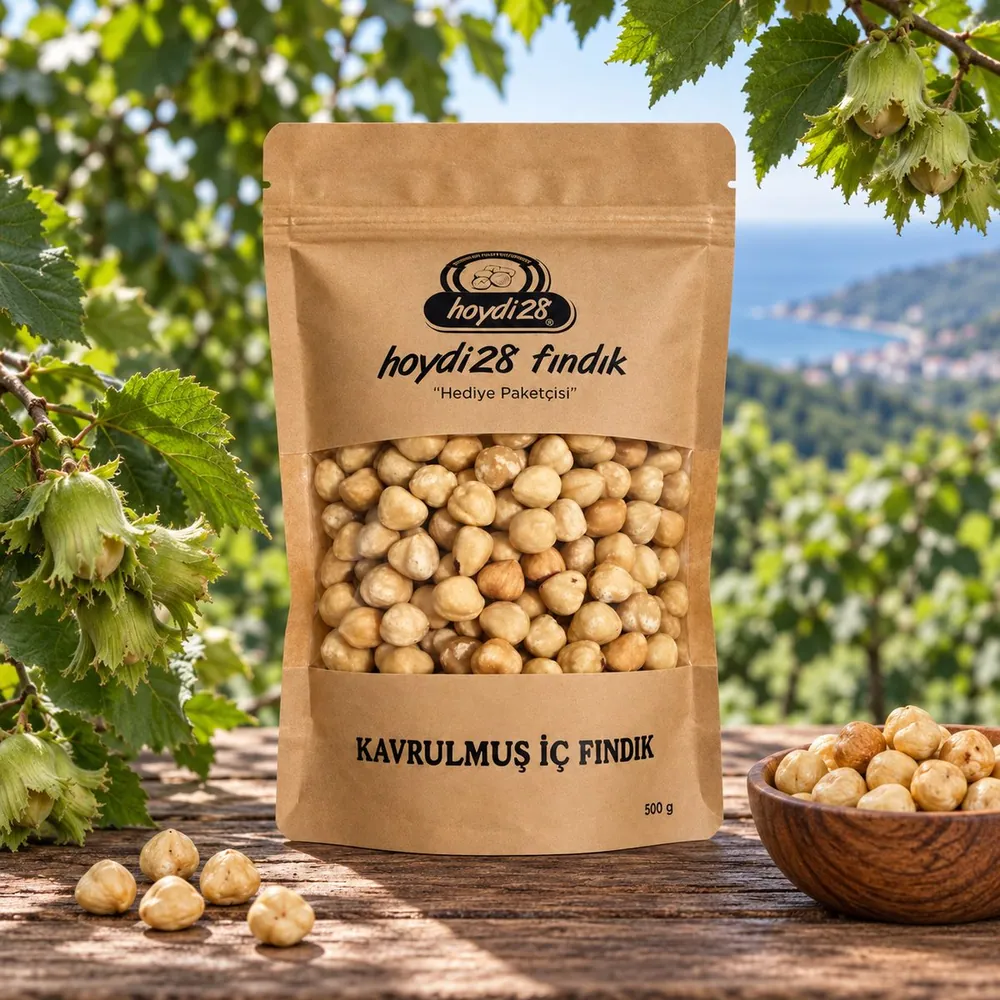
Ayhan Akten, owner of Hoydi28 Fındık in Giresun, summarised the issue in national media: Türkiye supplies 70% of world hazelnut production but earns a limited income because it sells raw material; developing and exporting value-added products could raise that income significantly.
Akten also argued that state incentives would be more effective if based on **product and brand** rather than region.
An Italian chocolate manufacturer's investment in alternative hazelnut production in Australia failed to match the quality sought, and the supply route returned to Türkiye.
However, plantations are known to be expanding in Georgia and Azerbaijan. Türkiye's quality advantage is not a permanent guarantee.
Giresun Tombul Hazelnut was registered as a designation of origin in Türkiye in 2001 and in the European Union in 2022.
A geographical indication protects the product against imitation and also justifies a price premium. "Giresun quality" trades as a separate class on exchanges, and it sits at the top of the TMO price list.
Buying branded, processed domestic products is part of this chain. Revenue from hazelnut butter or cookies stays in Türkiye, whereas the added value of hazelnuts exported by the sack is created in another country.
This is not an accusation, raw material exports also contribute to the economy. But seeing the whole picture helps make sense of the question: why does the capital of hazelnuts not earn what it should?
Black Sea Hazelnut and Products Exporters' Association (KFMİB), 2025/26 season export data.
Turkish Grain Board (TMO), 2026/27 season in-shell hazelnut purchase prices and criteria, August 2026.
Republic of Türkiye Ministry of Trade, Directorate General for Exports, "Hazelnuts and Products" sector report.
Directorate for EU Affairs, announcement of the EU registration of Giresun Tombul Hazelnut, 2022.
How soil, climate and altitude combine to give Giresun hazelnuts their distinctive aroma.
Read article →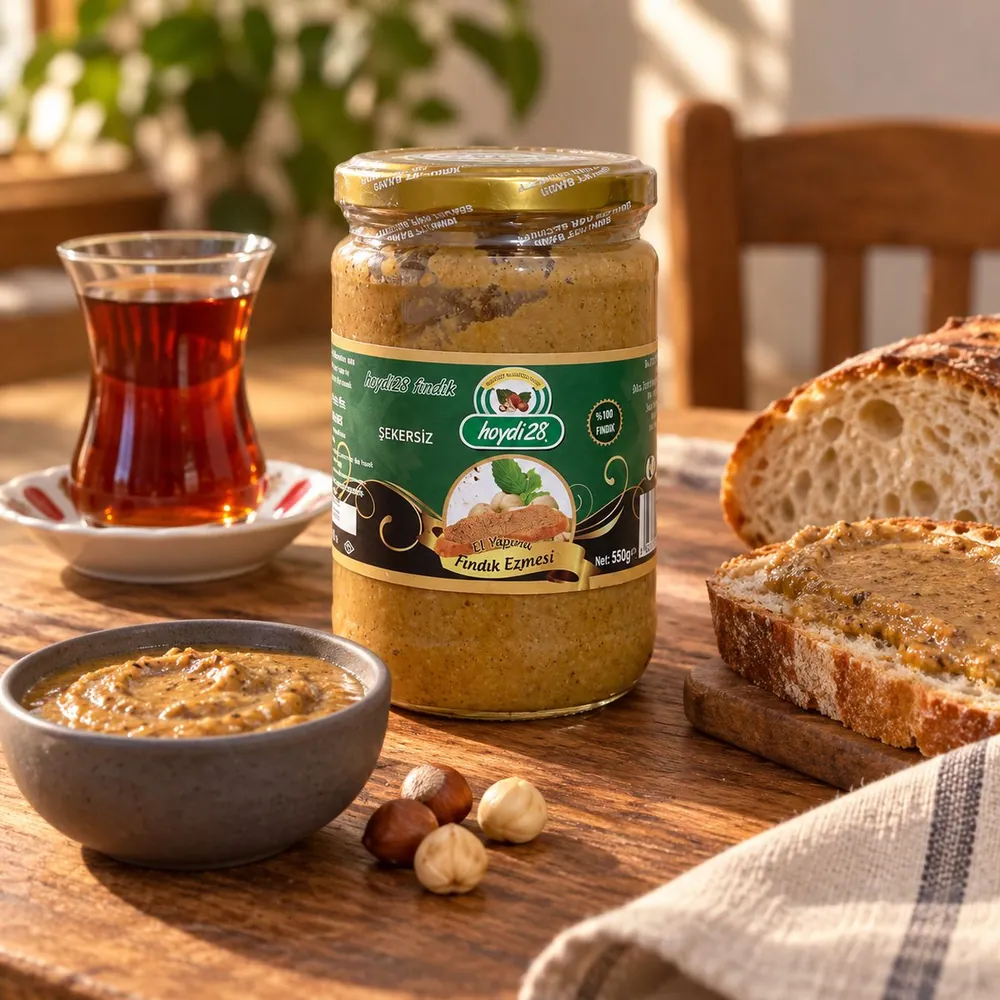
How to keep an opened jar fresh and smooth for months.
Read article →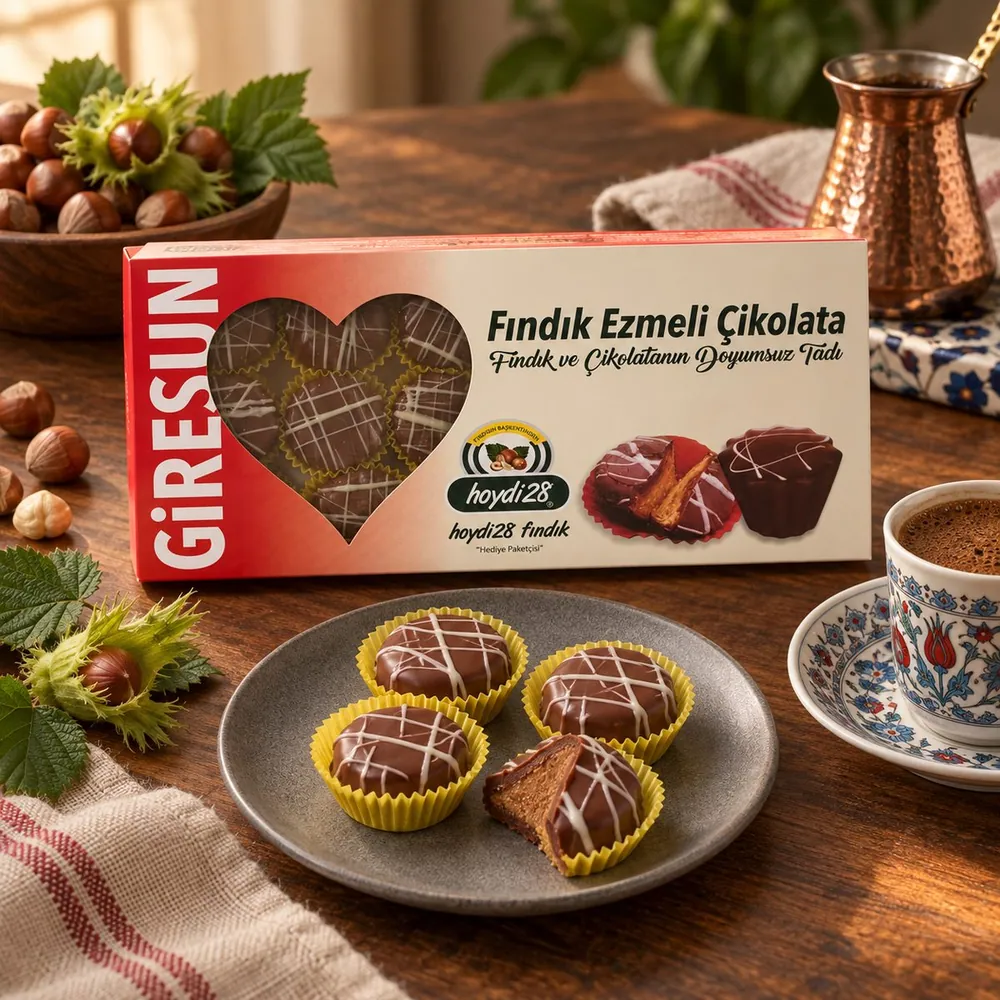
Why hazelnut boxes stand out for New Year and special-occasion gifting.
Read article →Karadeniz Fırtınası is made with hazelnuts alone. We use no fillers, flavourings, preservatives or emulsifiers, what the label says is exactly what’s in the jar.
 Chat on WhatsApp